
jason@hrcstone.com
+8613338485850
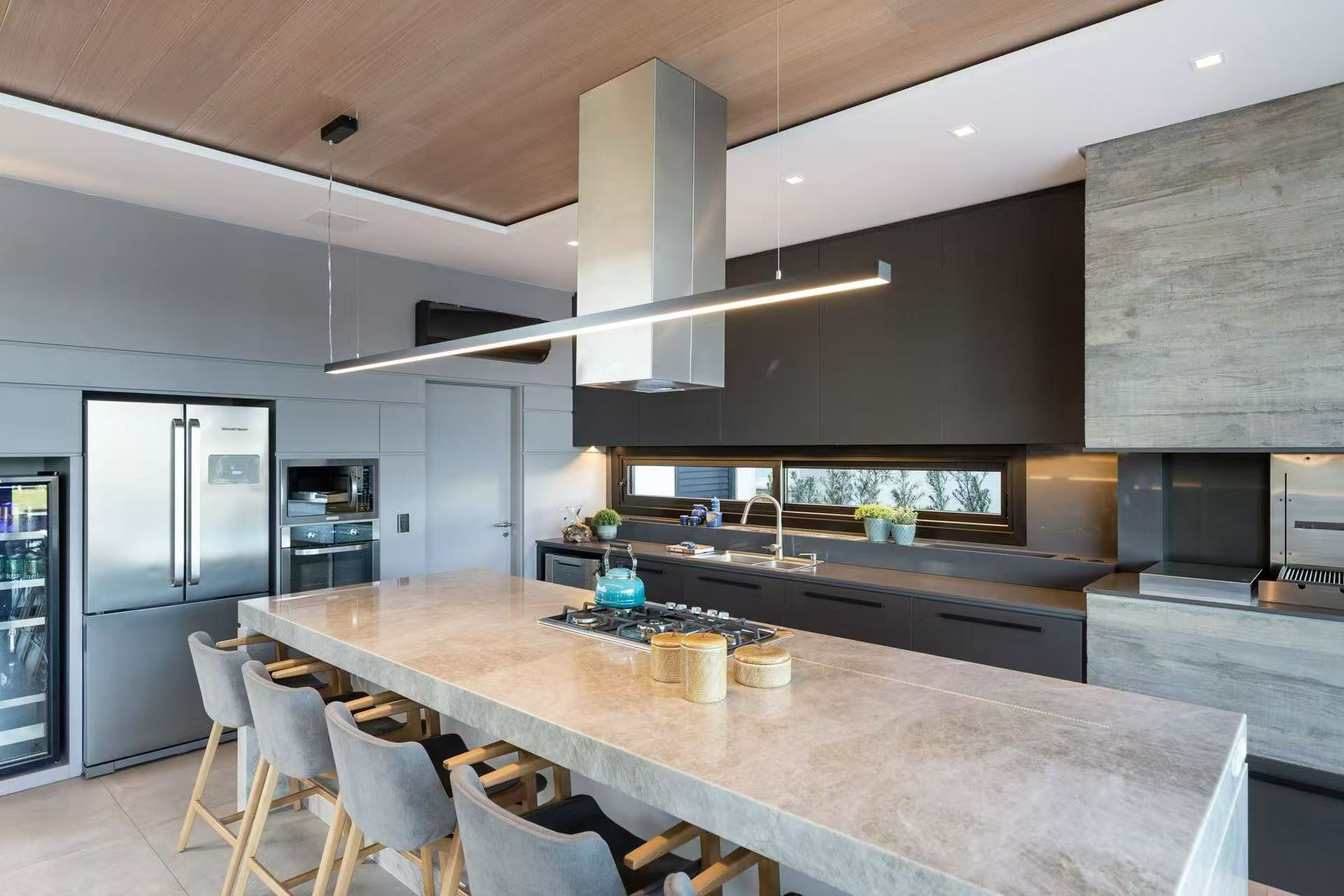 Taj Mahal Quartzite: Where Marble-Like Elegance Meets Exceptional Natural-Stone Performance
Few natural stones have achieved the international recognition of Taj Mahal Quartzite. With its warm cream and ivory background, flowing beige, taupe and soft golden veining, and naturally crystalline structure, this Brazilian quartzite delivers the quiet sophistication designers often seek from marble while offering the harder, more durable performance associated with quartz-rich metamorphic stone.
For luxury kitchens, waterfall islands, bathroom vanities, fireplace surrounds, feature walls, hospitality interiors and bespoke residential projects, Taj Mahal Quartzite has become a benchmark material for warm neutral natural-stone design.
Its appeal is not based on dramatic contrast. Instead, Taj Mahal creates depth through subtle movement, tonal layering and natural mineral variation. This makes it particularly effective in projects where the stone must feel luxurious without dominating the architecture.
Taj Mahal Quartzite is a premium natural quartzite primarily sourced from Brazil. It is recognized for a creamy white, ivory or warm beige background crossed by flowing veins in taupe, sand, amber, beige and occasional soft gold.
As a quartz-rich metamorphic stone, true quartzite is significantly harder and more resistant to scratching and acid etching than calcite-rich marble. Quartzite is commonly associated with a Mohs hardness around 7, although the performance of an individual slab should always be evaluated rather than assumed from its commercial name alone.
This combination explains why Taj Mahal is particularly popular for:
Luxury kitchen countertops
Large waterfall kitchen islands
Full-height backsplashes
Bathroom vanity tops
Shower walls
Fireplace surrounds
Reception counters
Hotel and residential feature walls
Bar and restaurant countertops
Custom furniture surfaces
High-end residential and hospitality interiors
For architects and stone buyers, another advantage is its relatively neutral visual language. Taj Mahal can work with white, cream, beige, greige, walnut, oak, bronze, brass, black and other architectural finishes without creating excessive visual competition.
The defining characteristic of Taj Mahal Quartzite is warm, understated movement.
Unlike high-contrast stones such as Calacatta Viola, Patagonia or some exotic Brazilian quartzites, Taj Mahal usually presents a quieter composition.
A typical slab may contain:
| Visual Characteristic | Typical Appearance |
|---|---|
| Background | Cream, ivory, warm white, pale beige |
| Main Veining | Beige, taupe, sandy brown |
| Secondary Tones | Champagne, amber, muted gold |
| Pattern | Flowing, wispy, layered or gently linear |
| Contrast | Low to medium |
| Overall Character | Warm, sophisticated and understated |
| Natural Variation | Moderate and block-dependent |
The material often develops long, gentle mineral movements rather than isolated dramatic veins. Across a large island or full-height backsplash, these movements can produce a continuous architectural composition.
This is one reason full-slab selection is especially important.
A small Taj Mahal Quartzite sample may accurately show the background color while revealing very little about the overall direction, concentration or spacing of the veins.
Taj Mahal occupies an unusual position within the premium natural-stone market.
It is visually restrained enough for minimalist architecture but sufficiently distinctive to remain recognizable as natural stone.
In practical design terms, it bridges several categories:
Marble aesthetic → Quartzite performance → Warm neutral palette → Large-format architectural application
This combination makes the material highly adaptable.
A polished Taj Mahal waterfall island can become the centerpiece of a luxury kitchen. The same stone with a honed finish can feel quieter and more architectural in a contemporary residence.
When used with natural timber, Taj Mahal reinforces warmth. When paired with dark cabinetry, it provides contrast without the severity of pure white marble. With brushed brass or bronze details, its beige and golden mineral tones become more pronounced.
Taj Mahal should be specified as natural stone rather than a manufactured surface. Performance therefore varies somewhat by quarry section, block, slab structure, fissuring, mineral composition, finishing process and resin treatment.
| Property | Typical Taj Mahal Quartzite Characteristics |
| Stone Type | Natural quartzite |
| Geological Family | Metamorphic, quartz-rich stone |
| Common Origin | Brazil |
| Primary Colors | Cream, ivory, beige, warm white |
| Secondary Colors | Taupe, sand, amber, soft gold |
| Pattern | Flowing / linear / layered movement |
| Hardness | High; true quartzite commonly approaches Mohs 7 |
| Scratch Resistance | High compared with marble |
| Acid-Etching Resistance | Generally high for true quartzite |
| Heat Resistance | High |
| Water Absorption | Generally low, but varies by slab |
| Recommended Sealing | Yes |
| Common Thicknesses | 20 mm and 30 mm |
| Common Finishes | Polished, honed and leathered depending on stock |
| Main Applications | Countertops, islands, walls, vanities, fireplaces and architectural surfaces |
True quartzite is quartz-rich and consequently performs very differently from calcite-rich marble when exposed to scratching or household acids. However, commercial stone names are not geological certifications. Testing or supplier verification is advisable for technically demanding projects.
The kitchen is probably the application most closely associated with Taj Mahal Quartzite countertops.
There are several reasons.
First, the warm neutral background hides everyday visual clutter better than highly contrasting black-and-white stones.
Second, its quartz-rich composition provides strong scratch resistance.
Third, true quartzite is considerably more resistant to acidic etching than marble. Lemon juice, vinegar and wine are therefore less likely to produce the immediate dull etch marks associated with calcite-rich stones.
That does not mean Taj Mahal should be marketed as completely stain-proof or maintenance-free.
Natural quartzite can contain microscopic pores, fissures and mineral boundaries. Appropriate sealing remains advisable, especially around oils, wine, coffee and heavily used food-preparation zones.
For high-use kitchens, we recommend combining correct sealing with routine stone-care practices rather than relying solely on the intrinsic hardness of the material.
A large waterfall island is one of the strongest applications for Taj Mahal Quartzite because it allows the stone's directional movement to become architectural.
Instead of viewing the countertop as an isolated horizontal surface, the top and vertical waterfall panels can be fabricated from sequential slabs or carefully selected slab sections.
The objective is to maintain visual continuity through:
top surface → mitred edge → vertical waterfall panel
For premium projects, the fabrication plan should therefore be established before cutting.
Important considerations include:
Vein direction
Slab sequence
Island dimensions
Finished edge thickness
Mitred returns
Sink and cooktop locations
Potential fissures
Cutout positions
Waterfall vein alignment
Backsplash continuity
Material allowance for fabrication risk
This becomes especially important for oversized islands where several slabs are required.
Both finishes can work exceptionally well, but they create noticeably different architectural effects.
Polishing increases surface reflection and emphasizes the crystalline depth of the quartzite.
A polished finish is particularly suitable for:
Luxury kitchens
Waterfall islands
Hotel reception counters
Formal bathrooms
Statement bar tops
Premium residential interiors
The stronger reflection tends to make cream and amber tones appear richer.
Honing creates a softer, lower-reflection surface.
It works particularly well in:
Contemporary kitchens
Minimalist interiors
Wabi-Sabi inspired spaces
Spa-style bathrooms
Warm modern residences
Hospitality interiors
Honing can visually soften the movement of the stone, producing a quieter and more tactile architectural surface.
Because surface treatments can influence apparent color and stain behavior, project samples should ideally be approved in the actual specified finish.
One of the most frequent searches surrounding this material is Taj Mahal Quartzite vs. marble.
The comparison is understandable because Taj Mahal can create a marble-like visual effect.
The fundamental geological difference, however, is substantial.
| Feature | Taj Mahal Quartzite | Typical Marble |
| Dominant Mineral | Primarily quartz | Primarily calcite/dolomite |
| Hardness | High | Moderate |
| Scratch Resistance | High | Lower |
| Acid Etching | Highly resistant when true quartzite | Susceptible |
| Kitchen Suitability | Excellent | Requires greater care |
| Appearance | Warm, soft movement | Wide range of classic veining |
| Maintenance | Moderate | Higher in active kitchens |
For clients who appreciate marble but are concerned about kitchen wear, Taj Mahal is therefore one of the most compelling natural-stone alternatives.
Calacatta marble and Taj Mahal Quartzite create very different visual experiences.
Calacatta typically emphasizes contrast: a white background intersected by stronger grey, gold or dramatic veins.
Taj Mahal emphasizes tonal harmony: cream and ivory fields with softer beige and taupe movement.
Choose Calacatta marble when dramatic classical veining is the primary design objective.
Choose Taj Mahal Quartzite when the project needs a warmer, quieter stone with stronger resistance to scratching and acidic kitchen conditions.
For high-use residential kitchens, bars and hospitality counters, the practical advantages of quartzite can become particularly important.
The phrase "marble aesthetics with granite durability" is often used to describe Taj Mahal, but the geology should be stated correctly.
Taj Mahal is not granite.
Granite is an igneous rock, while quartzite is a metamorphic rock formed from quartz-rich sandstone subjected to heat and pressure.
Both can perform exceptionally well as architectural surfaces.
The important difference for design is that Taj Mahal offers the softly flowing visual language often associated with marble while retaining the hard quartz-rich structure expected from premium quartzite.
This comparison deserves particular attention because the commercial distinction between these materials is not always consistent.
Both names are associated with warm Brazilian quartzites. Depending on the supplier, quarry source, block and grading system, their appearances can overlap substantially. Industry sources note that trade naming may reflect visual grading as much as a rigid geological distinction.
In general market presentation:
| Feature | Taj Mahal Quartzite | Perla Venata Quartzite |
| Overall Tone | Warm cream / beige | Cream to lighter neutral |
| Typical Veining | Beige, taupe, gold | Beige, taupe, grey or sandy tones |
| Visual Character | Warm and luxurious | Calm and refined |
| Hardness | High | High |
| Kitchen Performance | Excellent | Excellent |
| Market Recognition | Very high | High |
| Best Selection Method | Actual slab inspection | Actual slab inspection |
The most important purchasing principle is simple:
Buy the slab, not merely the commercial name.
Natural variation between blocks can be more significant than the theoretical distinction between two trade names.
This is an important question for architects, fabricators and professional buyers.
The name printed on a slab label should never be treated as a substitute for material verification.
The international stone trade uses commercial names, and similar-looking materials may occasionally be marketed under related names even when their mineral composition differs.
True quartzite should have high quartz content and strong resistance to scratching and acid etching.
When material identity is uncertain, useful evaluation methods include:
Supplier geological documentation
Mohs scratch evaluation
Controlled acid reaction testing
Petrographic analysis for major projects
Physical-property testing when engineering specifications require it
This matters because sealing can reduce staining risk, but a sealer cannot convert a calcite-rich stone into acid-resistant quartzite.
One reason designers repeatedly specify Taj Mahal is its unusually broad compatibility with cabinetry.
One of the strongest contemporary combinations.
White oak reinforces the warm beige minerals within the quartzite and creates a natural, restrained palette.
Ideal for:
Contemporary villas
Scandinavian-inspired interiors
Organic modern kitchens
Coastal luxury residences
Walnut provides deeper contrast while maintaining warmth.
This pairing is particularly effective for oversized islands and high-end residential kitchens where the stone needs to visually lighten darker joinery.
Warm white or off-white cabinetry creates a soft monochromatic scheme.
We generally prefer avoiding excessively cold blue-white paint unless the selected Taj Mahal slabs have correspondingly neutral undertones.
Dark cabinetry makes the warm quartzite appear brighter and more architectural.
The combination works particularly well with brass, bronze or black metal details.
Probably its strongest market.
Use it for countertops, islands, backsplashes, breakfast bars and integrated stone shelves.
Taj Mahal can be used for vanity tops, wall panels, shower surrounds and custom furniture.
Its warm coloration creates a softer atmosphere than stark white stone.
Large-format wall panels, reception desks and feature counters allow the material to communicate luxury without excessive visual complexity.
Its heat resistance and flowing pattern make Taj Mahal an attractive fireplace material, subject to the fireplace system and installation specification.
Its combination of visual refinement and strong surface performance is particularly valuable for premium hospitality counters.
Jewelry stores, fashion boutiques and premium retail interiors can use Taj Mahal for counters, display furniture and feature walls where a neutral but visibly natural material is required.
Quartzite can have strong exterior performance, but exterior specification should never be based solely on the trade name.
The suitability of a specific Taj Mahal material should be evaluated according to:
Water absorption
Freeze-thaw exposure
Climate
Surface finish
Anchoring system
Slab thickness
Structural loading
UV exposure
Resin treatment
Installation method
For BBQ countertops or sheltered exterior surfaces in suitable climates, quartzite can perform well.
For commercial façades or engineered exterior cladding, project-specific technical data and anchoring calculations should be reviewed before specification.
Taj Mahal is natural stone.
Variation is not a manufacturing defect; it is part of the material.
Different blocks may display:
Whiter backgrounds
Deeper cream backgrounds
Stronger golden movement
Greyer undertones
Wider beige veins
Tighter linear patterns
Greater crystalline activity
Natural fissures
Different vein directions
For one-slab kitchen projects, selection is relatively straightforward.
For villas, hotels or multi-unit developments requiring multiple bundles, the process becomes more technical.
We recommend establishing a project grading standard before fabrication begins.
This can define acceptable:
Background color range
Vein intensity
Directional movement
Fissuring
Mineral inclusions
Resin visibility
Surface quality
Slab dimensions
Bundle sequencing
Natural-stone procurement should not end with choosing a stone name.
For premium architectural work, slab allocation directly affects the finished result.
flowchart TD
    A[Project Drawings] --> B[Calculate Finished Stone Quantities]
    B --> C[Select Taj Mahal Quartzite Blocks / Bundles]
    C --> D[Photograph & Digitally Number Every Slab]
    D --> E[Review Color and Vein Direction]
    E --> F[Create Cutting & Slab Allocation Plan]
    F --> G[Coordinate Bookmatch / Vein Match]
    G --> H[Fabrication]
    H --> I[Dry Lay & Quality Inspection]
    I --> J[Export Packing]
    J --> K[Site Installation]
This workflow is especially useful for:
Large kitchen islands
Bookmatched walls
Hotel lobbies
Multiple bathroom packages
Luxury villas
Reception counters
Repeated apartment layouts
Quartzite's hardness is an advantage after installation but creates additional fabrication requirements.
Compared with marble, cutting and edge processing generally require more suitable tooling and careful fabrication control.
Special attention should be paid around:
Sink cutouts
Cooktop openings
Faucet holes
Internal corners
Narrow stone bridges
Long cantilevered sections
Mitred waterfall edges
Vein transitions
Natural fissures
For oversized fabricated components, temporary reinforcement or engineered support may be required during transportation and installation.
Fabricators should evaluate the actual slab before determining final reinforcement strategy.
A common misconception is that hard stone does not require sealing.
Hardness and porosity are different properties.
Quartzite may be extremely hard while still allowing some liquid absorption through microscopic pores or fissures.
A suitable penetrating impregnating sealer can therefore help reduce staining risk from:
Oil
Coffee
Red wine
Sauces
Cosmetics
Grease
Sealing frequency should be based on the actual stone, finish, sealer chemistry and usage conditions rather than an arbitrary calendar rule.
For normal maintenance, use:
Clean water
Soft microfiber cloths
pH-neutral stone cleaner
Mild cleaning products approved for natural stone
Avoid relying on aggressive chemicals simply because quartzite is chemically more resistant than marble.
For long-term surface appearance, prompt spill removal and appropriate cleaning remain preferable to harsh corrective cleaning.
There is no meaningful universal price for Taj Mahal Quartzite because the commercial value changes substantially according to grade and supply conditions.
The major variables include:
Cleaner, larger blocks with attractive movement command higher prices.
Certain markets may place a premium on cleaner or more desirable cream/ivory backgrounds.
Long, elegant movement suitable for islands can be more valuable than irregularly distributed veining.
Large slabs provide better cutting yield for oversized islands and architectural panels.
20 mm and 30 mm slabs have different processing, weight and logistical costs.
Polished, honed and specialty finishes involve different production processes.
Premium slab production requires careful reinforcement, resin treatment, polishing and quality control.
One slab, one bundle and multiple-container procurement operate under entirely different pricing structures.
Waterfall edges, bookmatching, mitres, curved profiles and large cutouts affect final installed cost significantly.
For B2B purchasing, comparing only the square-meter or square-foot price can therefore be misleading.
For design professionals, specification should begin with the intended visual result rather than simply the material name.
Useful documentation may include:
High-resolution slab photographs
Slab dimensions
Bundle numbers
Finish samples
Vein direction
Digital slab layouts
Material samples
Technical data where available
For large projects, full-slab digital photography can be incorporated into renderings or cutting plans before fabrication.
This helps align the architect's concept with the actual natural material available.
Construction companies need consistency, fabrication accuracy and schedule control.
For larger Taj Mahal Quartzite packages, procurement should address:
material reservation → slab approval → shop drawings → cutting optimization → fabrication → dry lay → inspection → packing → shipping
The stone itself is only one component of project risk.
Incorrect vein allocation, insufficient spare material, inconsistent bundles or inaccurate fabrication can create significantly greater costs than a small difference in raw slab price.
For wholesalers, Taj Mahal has strong commercial value because it serves several customer groups simultaneously:
Kitchen fabricators
Designers
Luxury homeowners
Architects
Developers
Hospitality contractors
Inventory planning should focus on commercially usable bundles rather than isolated attractive slabs.
Important wholesale criteria include:
Consistent bundle appearance
Marketable slab dimensions
Clean surface processing
Good polishing
Attractive vein movement
Competitive thickness
Reliable repeat supply
For project supply, we evaluate Taj Mahal Quartzite at both the individual-slab and bundle level.
Our selection process focuses on:
Color Consistency: ensuring adjacent slabs can work together.
Vein Direction: identifying suitable slabs for islands, waterfalls and wall sequences.
Structural Condition: reviewing natural fissures, reinforcement and sensitive fabrication areas.
Slab Yield: matching dimensions to project cutting requirements to control waste.
Surface Quality: checking polishing, resin, flatness and visible processing issues.
Project Allocation: reserving visually compatible slabs for areas that will be viewed together.
For large commercial or residential packages, this approach can be more important than selecting the lowest-cost slab.
Yes. Taj Mahal Quartzite is a natural stone commercially associated primarily with Brazilian quartzite.
No. True Taj Mahal Quartzite is quartzite, not marble.
Yes. True quartzite is substantially harder than typical calcite marble.
True quartzite is highly resistant to the acid etching commonly seen in marble. Because commercial names are not geological guarantees, questionable slabs should be tested before specification.
Like other natural stones, it can potentially absorb staining agents depending on porosity and surface treatment. Proper sealing helps reduce this risk.
Generally, yes. A quality penetrating sealer is recommended where staining exposure is expected.
Yes. Its hardness, heat resistance, acid resistance and neutral appearance make it particularly suitable for premium kitchen countertops.
Yes. This is one of its most popular applications. Careful slab sequencing and vein matching improve the result.
Typical colors include cream, ivory, warm white, beige, taupe, sand, amber and subtle gold.
Yes. Polished and honed finishes are both common, with other finishes available depending on the slab supplier and processing facility.
Not necessarily. The commercial names can overlap, and visual differences depend heavily on individual blocks and supplier grading. Both names are commonly associated with Brazilian cream quartzites.
Yes. It is commonly used for vanity tops, walls, shower surrounds and other premium bathroom surfaces.
Yes, subject to the fireplace construction, installation system and applicable technical requirements.
Potentially, but exterior suitability should be evaluated using the actual material's technical properties, climate exposure, finish and installation system.
20 mm and 30 mm are among the most common slab thicknesses in international stone supply.
True quartzite has strong scratch resistance due to its high quartz content, although normal protective practices are still recommended.
Yes. It can be specified for hospitality, retail, restaurants, reception counters and other premium commercial interiors where both aesthetics and durability matter.
Price reflects quarry grade, block quality, slab dimensions, processing, market demand, freight, fabrication complexity and the visual quality of individual bundles.
For high-end projects, yes. Full-slab or full-bundle inspection is preferable because natural color, vein movement and fissuring vary.
Select material based on approved slabs or bundles, establish grading standards, calculate fabrication yield, reserve sufficient matching material and confirm slab allocation before cutting.
Taj Mahal Quartzite succeeds because it does not depend on a short-lived decorative trend.
Its cream, ivory, beige and taupe palette works naturally with timber, metal, plaster, neutral cabinetry and contemporary architectural materials. At the same time, its quartz-rich structure provides the performance required for demanding countertops and architectural surfaces.
For a single residential island, the priority may simply be finding one exceptional slab.
For a luxury villa, hotel, restaurant or multi-unit development, the priorities become more complex: batch consistency, slab yield, vein direction, fabrication planning, dry-lay inspection and installation coordination.
That distinction is important.
Premium natural stone is not simply purchased by name. It is selected, graded, allocated and fabricated according to the architecture.
When Taj Mahal Quartzite is approached this way, it becomes more than a countertop material. It becomes a highly versatile architectural stone capable of carrying the same visual language from kitchens and bathrooms to hospitality spaces, feature walls, furniture and large-scale bespoke interiors.
For current Taj Mahal Quartzite slabs, wholesale bundles, 20 mm or 30 mm material, polished or honed surfaces, kitchen projects and architectural specifications, we recommend reviewing the actual available slabs before final confirmation.
High-resolution slab photographs, bundle matching, cutting optimization and project-based material selection can help architects, contractors, fabricators and distributors achieve substantially better visual consistency while reducing unnecessary material waste.
For large projects, the correct question is therefore not only:
“How much does Taj Mahal Quartzite cost?”
It is:
“Which Taj Mahal Quartzite slabs will produce the best finished result for this specific project?”
That is where professional stone selection begins.
Contact: Jason Wu
Phone: +8613313887269
E-mail: jason@hrcstone.com
Whatsapp:+8613338485850
Add: Room 401-6, No.751, Fanghu Road, Huli District, Xiamen
We chat