
jason@hrcstone.com
+8613338485850
By XiaMen HRC Stone Co., Ltd. | HRCSTONE
Platinum Diamond Granite is a distinctive natural granite valued for its dramatic dark background, layered mineral composition, and contrasting silver, white, charcoal, and warm brown details. Its sophisticated appearance makes it a compelling choice for luxury kitchen countertops, waterfall islands, bathroom vanity tops, architectural feature walls, staircases, flooring, dining tables, and bespoke stone furniture.
At XiaMen HRC Stone Co., Ltd., we approach Platinum Diamond Granite as both a natural decorative material and a project-oriented architectural surface. We help buyers evaluate slab appearance, thickness, surface finish, dimensional requirements, fabrication details, and export specifications to support applications ranging from individual residential renovations to large commercial developments.
Selecting the right Platinum Diamond Granite involves more than choosing a dark stone from a small sample. We recommend evaluating the actual slabs, identifying the most suitable mineral patterns, coordinating connected surfaces, and approving fabrication drawings before cutting. These steps help us achieve a more cohesive appearance across countertops, waterfall edges, wall panels, stair components, and custom furniture.
Whether we are supplying granite slabs to importers and distributors or fabricating finished components for architects, contractors, designers, and stone fabricators, our focus is on material selection, practical application, precise processing, and dependable project coordination.
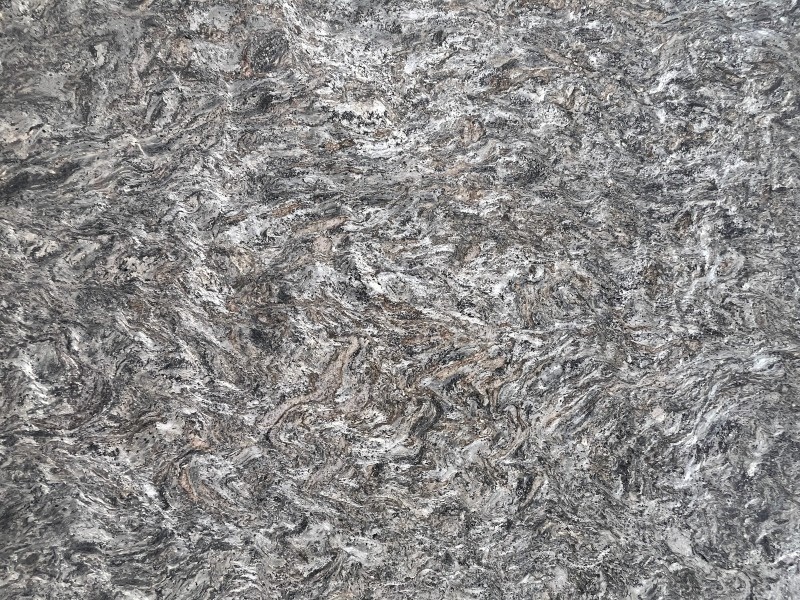
Material: Natural granite
Visual character: Dark black, charcoal, and brown background with silver-grey, white, and occasional warm mineral movement
Supply forms: Raw slabs, cut-to-size pieces, tiles, countertops, vanity tops, wall panels, stairs, and custom furniture
Typical thickness options: 15 mm and 18 mm, subject to actual stock and project requirements
Surface finishes: Polished, honed, leathered, and other technically suitable finishes subject to availability
Main applications: Kitchens, bathrooms, feature walls, hotels, restaurants, villas, stairs, and architectural interiors
Natural granite varies from slab to slab. Product photographs and samples should be treated as visual references rather than guarantees of identical mineral distribution.
Platinum Diamond Granite is a natural granite characterized by a dark, mineral-rich background and contrasting lighter structures. Depending on the individual slab, the base color may range from deep black and charcoal to dark brown, while silver-grey, white, and warmer mineral details create depth and visual movement.
Unlike uniformly colored black granite, Platinum Diamond Granite offers a more complex surface appearance. Its mineral composition can introduce irregular patterns, layered transitions, and areas of contrasting intensity. This variation makes the material particularly suitable for interiors that require a dark architectural surface with more visual interest than a consistent, solid color.
We recommend considering three principal characteristics when evaluating this granite:
Background tone: The balance of black, charcoal, and brown determines whether the finished installation looks predominantly cool and monochromatic or warmer and more varied.
Mineral contrast: Silver-grey and white mineral structures create visual definition against the darker background. Their size, density, and distribution influence the overall character of each slab.
Pattern continuity: The direction and arrangement of mineral features affect how adjacent pieces appear when installed together, especially on large kitchen islands, bookmatched wall panels, and waterfall edges.
Because Platinum Diamond Granite is a natural material, these characteristics cannot be assumed to remain identical across an entire shipment. We therefore encourage project buyers to review current inventory and approve the actual slabs allocated to their orders.
Buyers may encounter related search terms such as Platinum Granite, Platinum Black, Platinum Stone, and Platinum Diamond Granite. These names can overlap in commercial listings, but they should not automatically be treated as exact geological or commercial equivalents.
We recommend confirming the material identity through the supplier's current product photographs, slab inspection, technical documentation, and written quotation. Where consistency matters, the approved sample, actual slab images, and material description should form part of the purchase specification.
For international projects, the commercial name alone is insufficient to guarantee a particular quarry origin, mineral composition, grade, or performance characteristic. We advise confirming the stated origin and relevant technical information before placing a production order.
The following table provides a practical purchasing framework for Platinum Diamond Granite. Final specifications should be confirmed against the actual inventory, production capabilities, and approved project drawings.
Specification | Typical offering or consideration |
|---|---|
Material type | Natural granite |
Commercial name | Platinum Diamond Granite |
Typical appearance | Dark black, charcoal, and brown with silver-grey and white mineral details |
Typical origin stated in commercial listings | Brazil; confirm the origin of the specific lot |
Thickness options | 15 mm and 18 mm, subject to availability; other thicknesses require confirmation |
Surface treatments | Polished, honed, leathered, and other suitable finishes |
Supply formats | Slabs, tiles, cut-to-size pieces, countertops, vanity tops, wall panels, stair components, and table tops |
Edge fabrication | Straight, eased, beveled, mitered, and other profile options where technically feasible |
Custom processing | CNC openings, sink cutouts, cooktop openings, mitered waterfall components, and dimension-specific fabrication |
Suitable project categories | Residential, hospitality, commercial interiors, and selected architectural applications |
Quality approval | Actual slab review, dimensional inspection, finish inspection, and drawing approval |
Export preparation | Protective surface separation, reinforced crates, component identification, and shipment documentation as required |
Thickness affects the weight, visual proportions, edge profile, installation method, and structural design of a granite component. We recommend selecting thickness according to the application rather than choosing a material thickness solely on the basis of price.
15 mm granite: A potential option for selected wall panels, furniture components, and other applications where the design and supporting structure permit a thinner stone. The fabricator and project team should confirm handling requirements, reinforcement where necessary, and installation suitability.
18 mm granite: A potential option for countertops, vanity tops, and selected interior components. Support conditions, span, cutouts, edge details, and local installation requirements must still be evaluated.
For thicker visual profiles, we can assess mitered edge construction or other fabrication solutions, subject to slab dimensions and processing capabilities. A thick-looking countertop does not necessarily require a solid block of granite with the full visible edge depth.
Before production, we recommend confirming the finished thickness, permitted tolerances, edge profile, cutout dimensions, support arrangement, and installation details in the approved drawings.
The appeal of Platinum Diamond Granite lies in its layered appearance. The dark background establishes a strong architectural foundation, while the lighter mineral structures create contrast and movement.
Slabs with a predominantly black or charcoal background are appropriate for projects seeking a more restrained, contemporary appearance. They can provide a strong visual foundation for light-colored cabinetry, brushed metal hardware, timber finishes, and minimalist architectural details.
When a project calls for a consistent dark appearance across multiple components, we recommend grouping slabs by background tone and evaluating the visible surface area of each finished piece.
Silver-grey mineral features introduce contrast without necessarily making the surface appear excessively bright. Depending on their distribution, these features can create a subtle layered effect or become a defining element of the design.
For large islands and feature walls, we recommend identifying the most visually prominent silver-grey structures before cutting. This allows the design team to determine which portions of the slab should remain visible on the main surface and which can be allocated to secondary components.
White mineral structures can create a sharper contrast against the dark base. They may be especially noticeable on polished surfaces under directional lighting.
For countertops, tables, and vanity tops, we recommend positioning the most distinctive features with the overall composition in mind. Sink openings, cooktop cutouts, faucets, and seams can interrupt the natural pattern, so their locations should be reviewed before fabrication.
Some slabs contain warmer brown or gold-toned areas that soften the contrast between black and silver. These warmer zones can coordinate well with wood cabinetry, bronze hardware, beige flooring, and warm interior lighting.
Because the strength of these tones varies, we recommend selecting actual slabs according to the intended interior palette rather than relying on a generic product description.
Platinum Diamond Granite combines a dark architectural appearance with natural mineral variation, making it suitable for projects that require a distinctive surface without relying on an artificial printed pattern.
Each slab develops its own visual composition. Differences in background tone, mineral density, and pattern direction allow designers to choose material that complements a specific room, furniture piece, or architectural feature.
The combination of black, charcoal, silver, white, and brown can work with contemporary, transitional, industrial, and selected luxury interior styles. The final effect depends on slab selection, lighting, surrounding materials, and finish.
Platinum Diamond Granite can be considered for countertops, islands, vanity tops, stairs, wall panels, tiles, and furniture. The suitability of each application depends on the available slab dimensions, material condition, finish, and project-specific engineering requirements.
Large uninterrupted surfaces allow more of the natural mineral composition to remain visible. This is especially relevant for kitchen islands, reception counters, feature walls, and dining tables.
With appropriate material selection and installation planning, Platinum Diamond Granite can be specified for private residences, hotels, restaurants, bars, and other interior environments. High-traffic and wet-area applications require appropriate finish selection, maintenance planning, and confirmation of relevant performance characteristics.
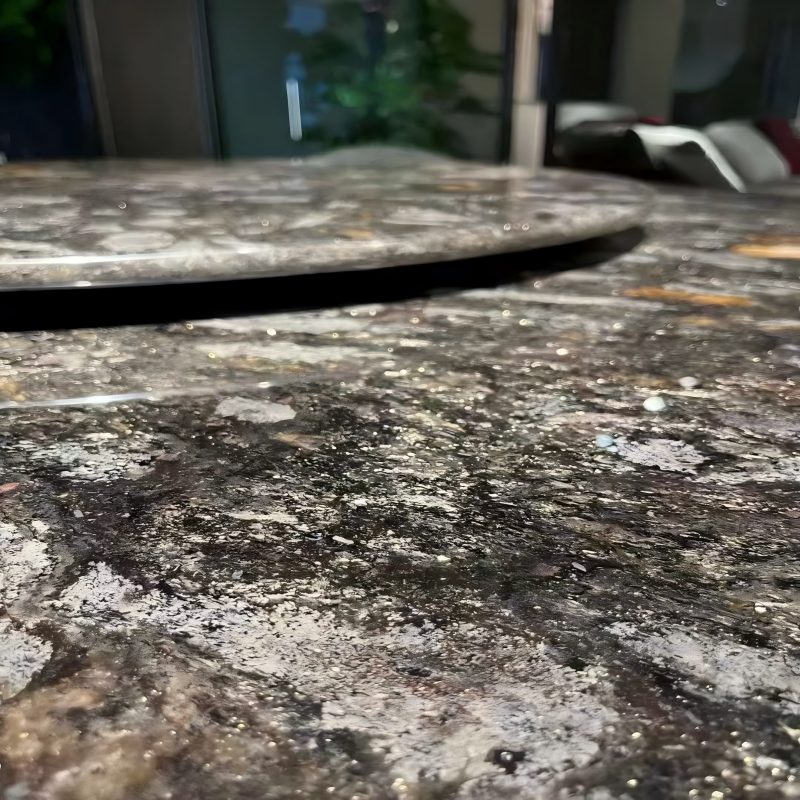
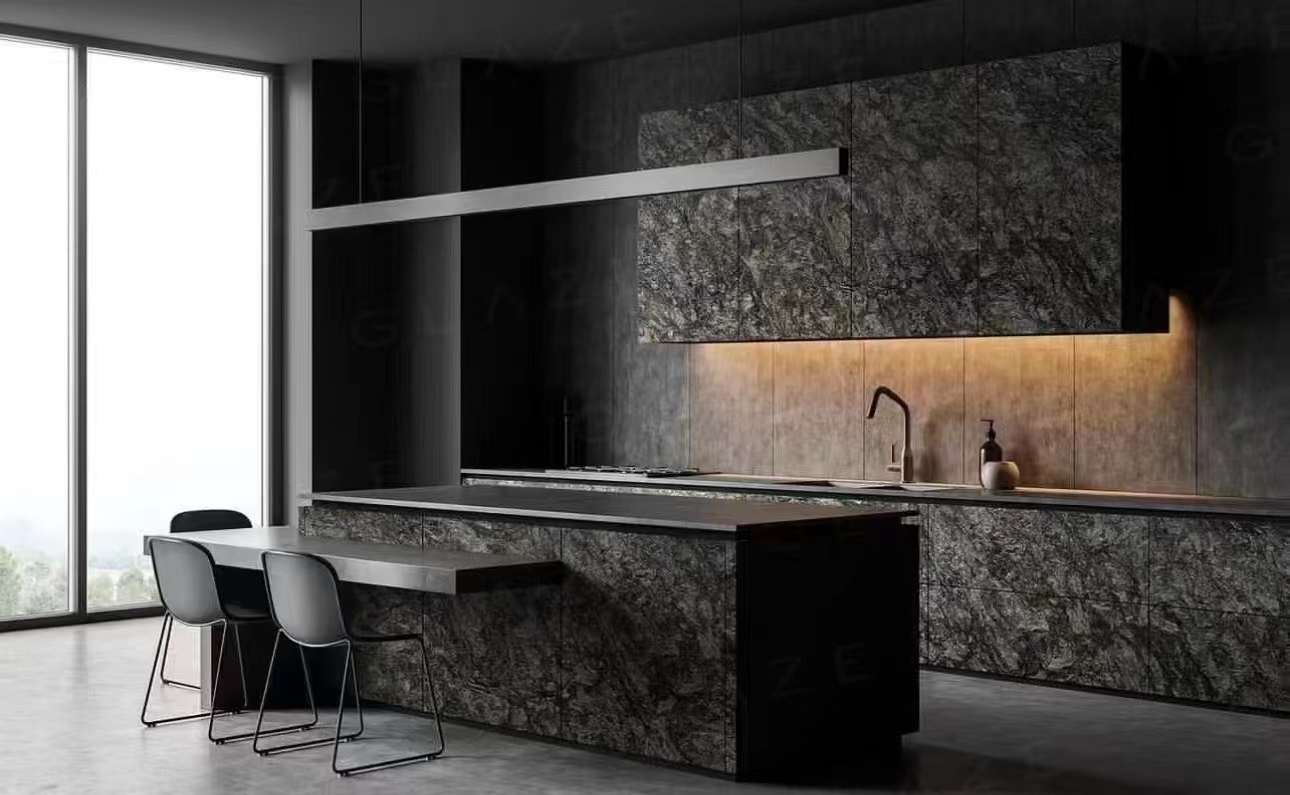
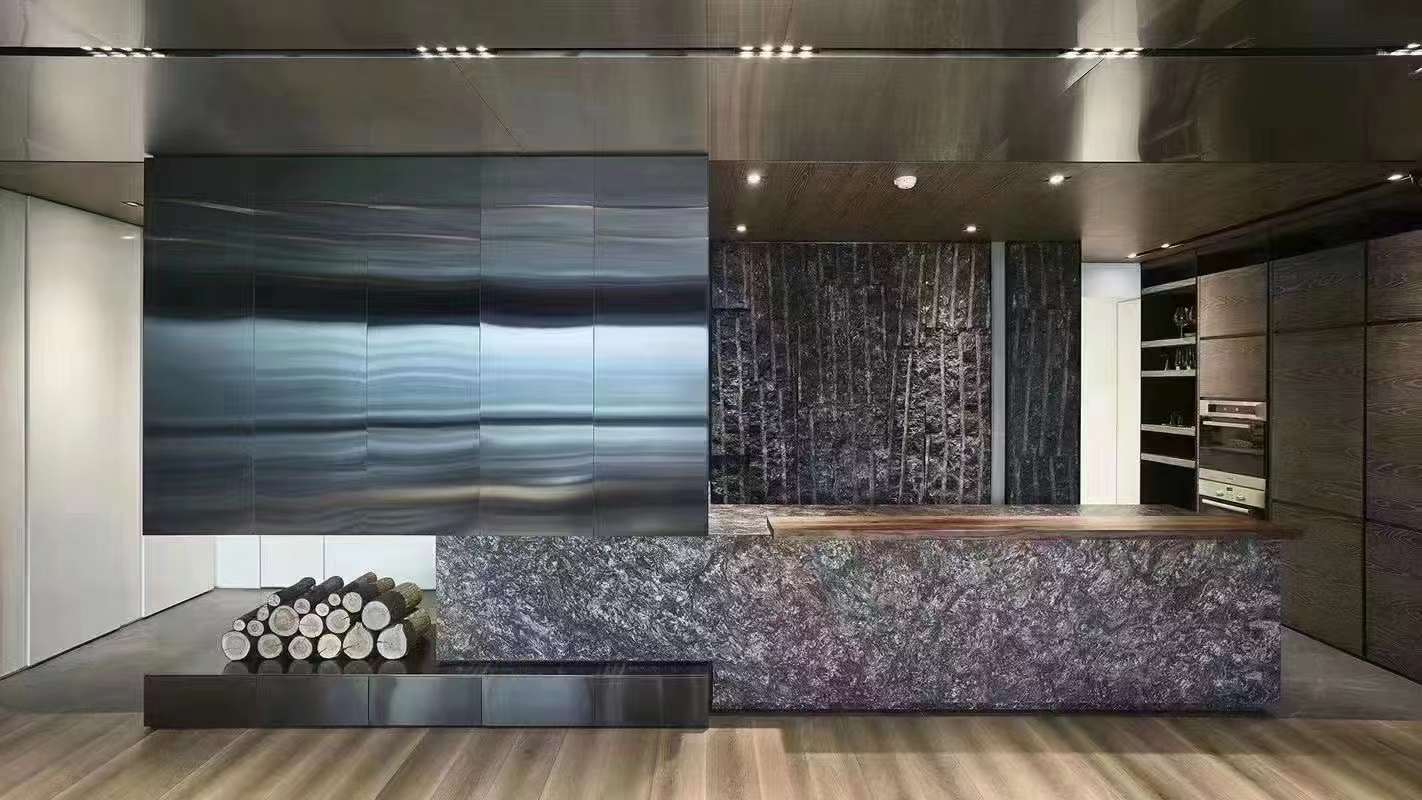
Platinum Diamond Granite countertops offer a dramatic alternative to conventional solid-black work surfaces. Their dark mineral background can establish visual depth in a kitchen, while silver-grey and white details introduce natural variation across the countertop.
We recommend this material for homeowners, kitchen designers, fabricators, and project contractors who want to coordinate a distinctive granite surface with cabinetry, appliances, splashbacks, and surrounding finishes.
A successful granite countertop project begins with the actual slab, not simply the nominal countertop dimensions. The position of a sink, cooktop, faucet, seam, or backsplash can change the appearance of the finished surface.
We recommend following this planning sequence:
Measure the finished countertop and establish the required slab dimensions.
Review actual Platinum Diamond Granite slabs for background color and mineral distribution.
Position sink and cooktop openings on the proposed cutting layout.
Identify prominent silver and white mineral features that should remain visible.
Coordinate seams, backsplash pieces, exposed edges, and adjoining sections.
Confirm the edge profile, thickness, tolerances, and support requirements.
Approve the final fabrication drawings before cutting.
For kitchen projects with several connected sections, we also recommend grouping the selected slabs according to their background tone and visual character. This helps reduce abrupt differences between adjoining countertop sections.
The edge profile contributes to the overall design of a granite countertop.
Straight or eased edge: Creates a clean, understated appearance for contemporary kitchens.
Beveled edge: Adds a defined detail without creating an excessively decorative profile.
Mitered edge: Allows the countertop to achieve a thicker visual profile when adjoining pieces are accurately fabricated and aligned.
Custom profile: Can be considered for traditional, transitional, or bespoke kitchen designs where the project specification calls for a distinctive edge.
We recommend confirming the selected edge detail on the fabrication drawing, especially where a mineral feature approaches an exposed edge or a mitered return.
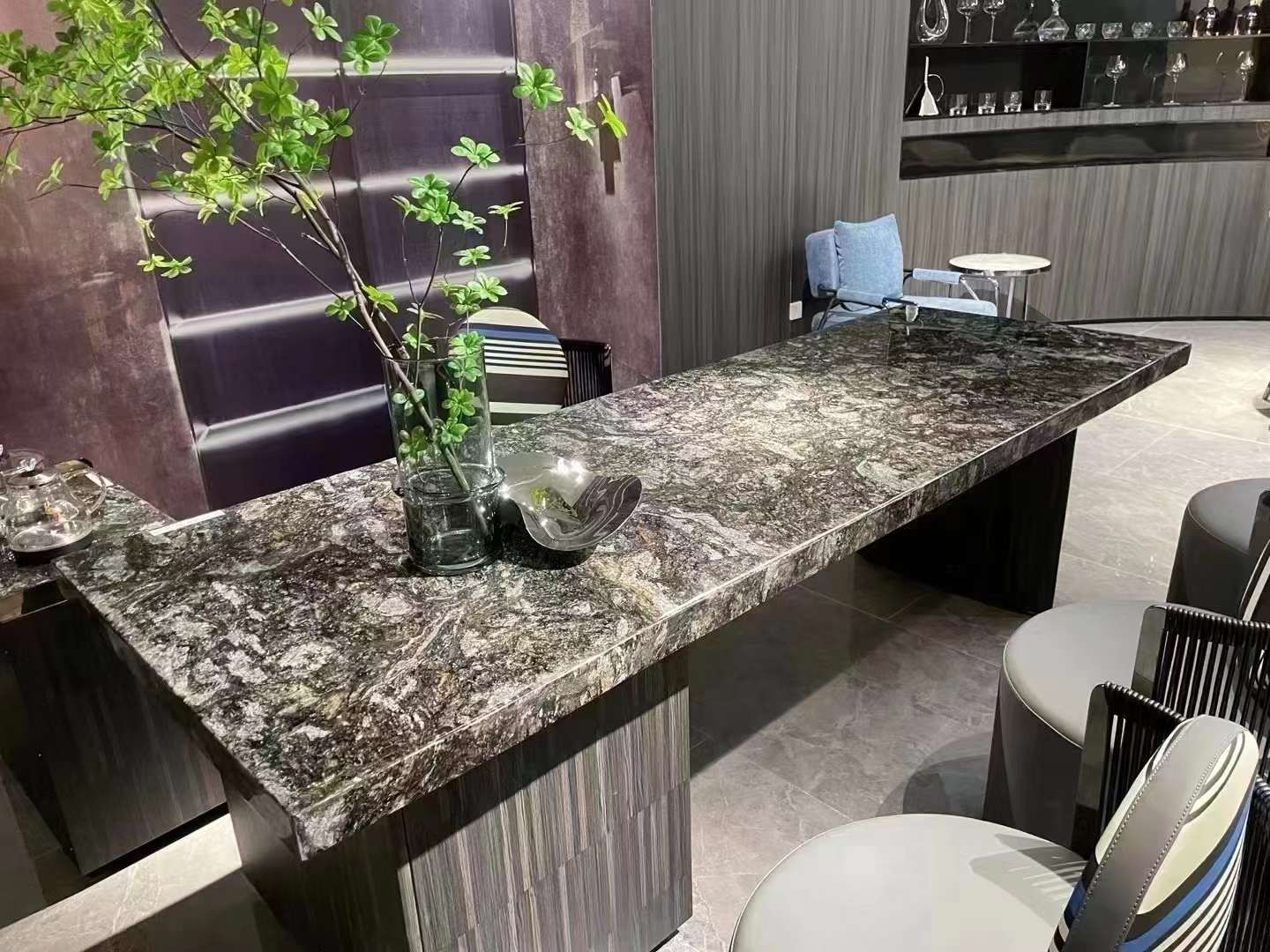

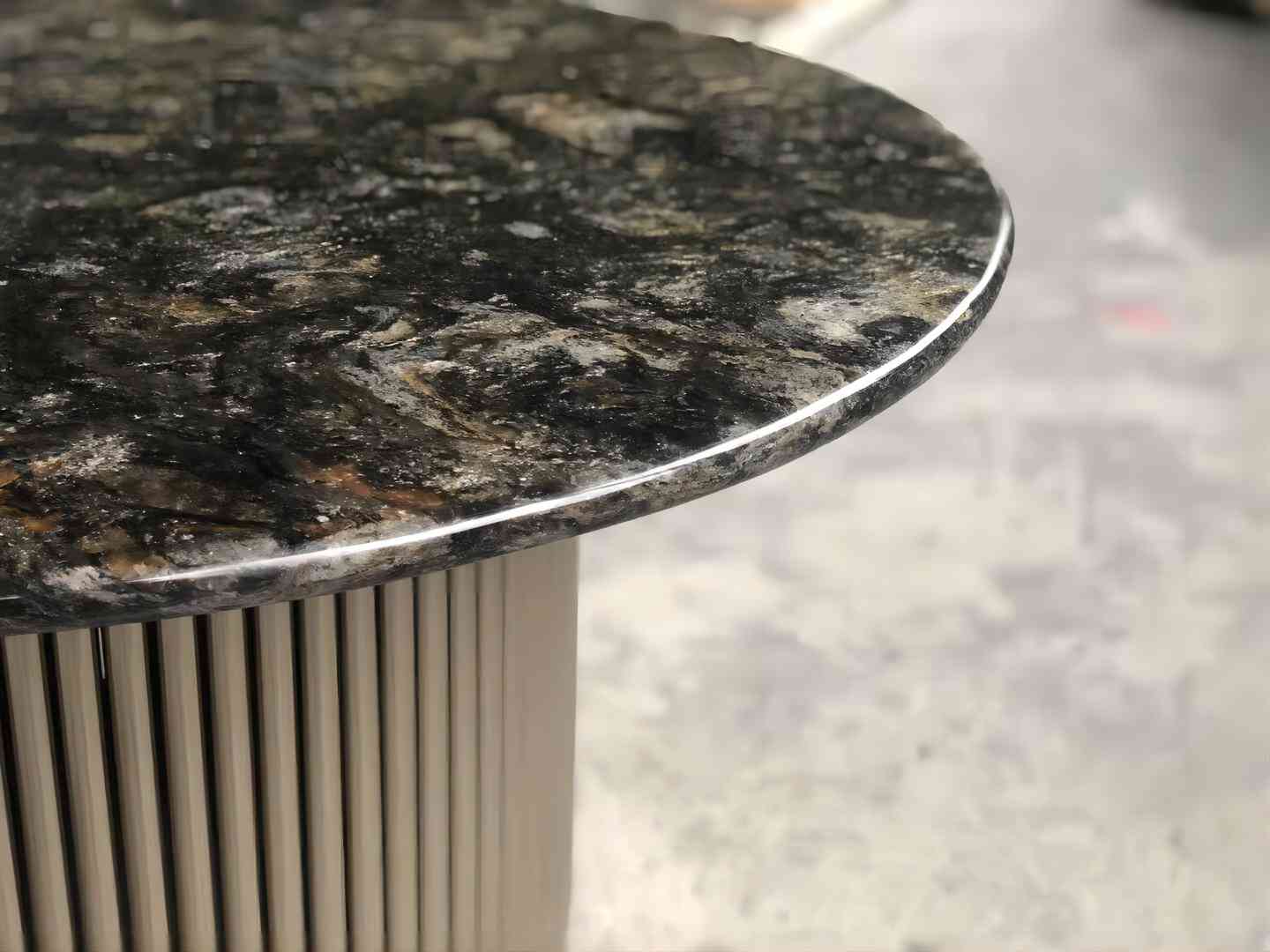
A kitchen island offers a large, highly visible surface on which Platinum Diamond Granite can display its complete mineral composition. Compared with smaller countertop sections, a larger island may preserve more of the transition between the dark background and lighter mineral structures.
A waterfall island extends the countertop material down one or both sides to the floor or to a specified lower termination point. This design creates a continuous stone feature, but it requires careful coordination between the horizontal top and the vertical panels.
Slab selection and layout: We identify the available slab dimensions and determine whether the selected material can accommodate the island top and the required side panels.
Mineral direction: We review the main silver, white, and brown features to determine how they should appear on the top and waterfall sides.
Miter alignment: We coordinate the top and side-panel edges so the pattern transition appears intentional at the corner. Natural stone cannot always produce perfectly continuous veining, so the achievable result should be established from the actual slab.
Cutout coordination: Any sink, appliance, electrical outlet, or other opening must be incorporated into the approved layout.
Trial assembly: Where the project requires close pattern coordination, we recommend a dry-lay or trial alignment before final packing.
Item | Information to confirm |
|---|---|
Island dimensions | Overall length, width, and finished height |
Stone thickness | Actual slab thickness and required finished edge appearance |
Waterfall panels | Number, dimensions, and sides requiring stone cladding |
Corner details | Miter angle, edge finish, and alignment requirements |
Pattern placement | Preferred mineral direction and visible feature areas |
Openings | Sink, cooktop, outlets, and other cutouts |
Support | Cabinet structure and any required reinforcement |
Approval | Final drawings, actual slab allocation, and trial alignment |
For architects and fabricators, these details should be agreed upon before the stone enters production. This reduces the risk of discovering dimensional or pattern conflicts after the material has been cut.

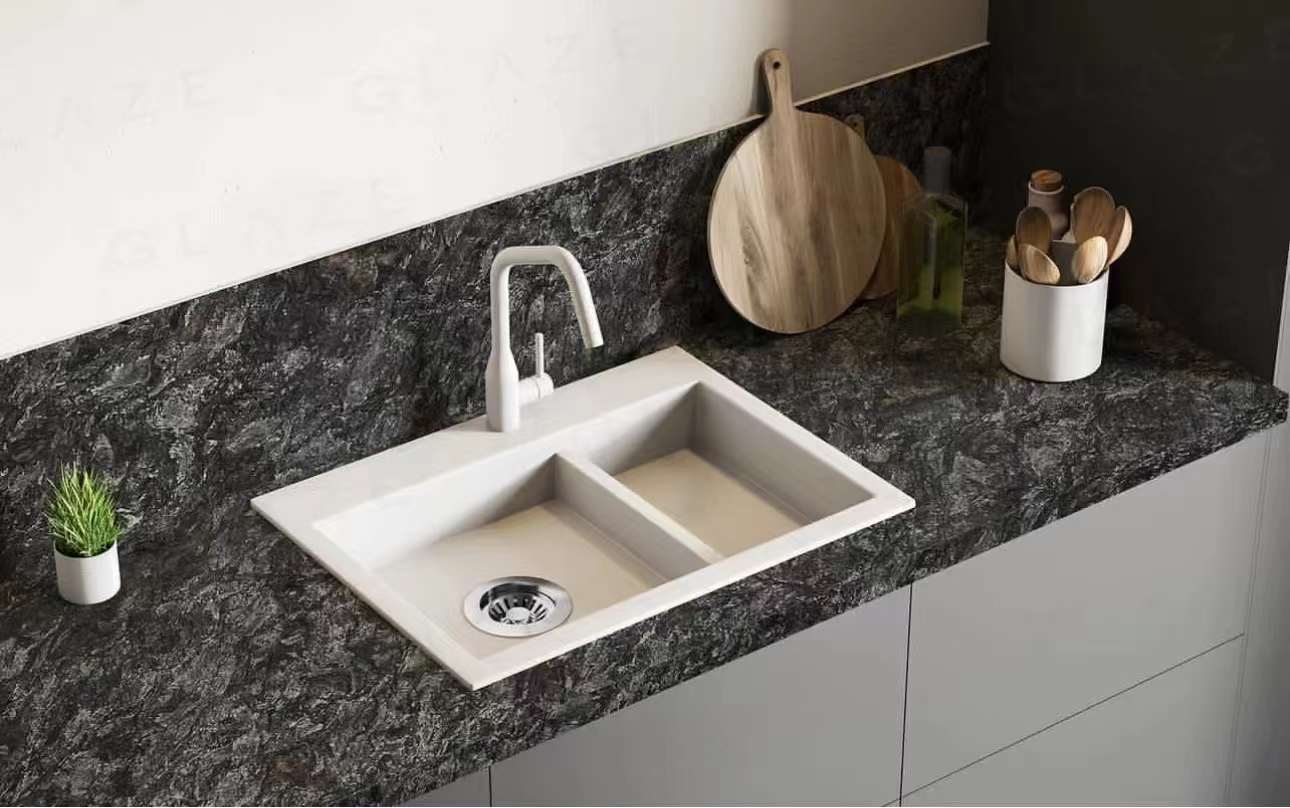
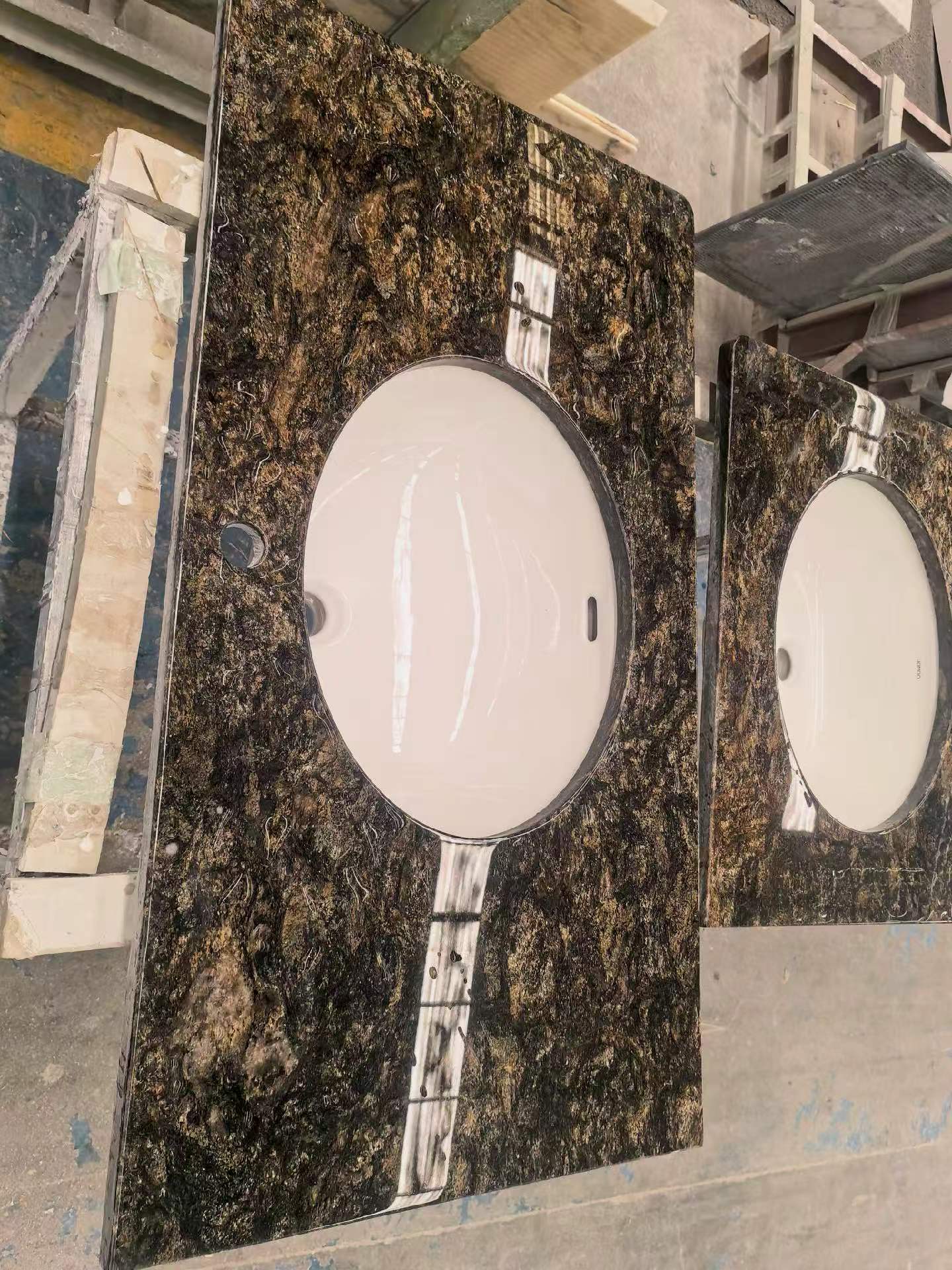
Platinum Diamond Granite can create a strong visual contrast in bathrooms, particularly when paired with light porcelain tiles, white ceramic basins, timber cabinetry, or brushed-metal fixtures.
Vanity tops typically require more detailed fabrication than an uninterrupted stone surface because the basin, faucet, backsplash, and cabinet dimensions must work together.
We recommend confirming the following before fabrication:
Finished vanity dimensions and cabinet support.
Undermount, top-mounted, or vessel basin configuration.
Basin cutout dimensions and corner radii.
Faucet holes and accessory openings.
Backsplash height and side-splash requirements.
Exposed edges and finish consistency.
Sealing and routine maintenance recommendations appropriate to the installed stone.
Installation details for moisture exposure and cleaning access.
For hotel bathrooms and multi-unit residential projects, we recommend standardizing approved dimensions and fabrication drawings wherever possible. We also recommend reviewing the actual slab allocation to keep the appearance reasonably consistent between vanity tops in adjoining rooms.
Granite is generally valued for its hardness and durability, but suitability depends on the specific material, fabrication, finish, and installation conditions.
For bathroom vanity tops, we recommend confirming the stone's condition, cutout geometry, support requirements, and sealing needs. Standing water, unsuitable cleaning products, and poor installation details should not be ignored simply because the material is granite.
For shower floors or other areas where people walk on wet stone, the surface finish and slip resistance require particular attention. A polished finish that works well on a vanity top may not be appropriate for every wet walking surface.



As a feature-wall material, Platinum Diamond Granite can establish a dark architectural backdrop in living rooms, hotel lobbies, reception areas, restaurants, and executive interiors.
Large-format stone panels offer more opportunities to display the mineral composition across a continuous visual field. However, the design must account for panel dimensions, wall structure, joint locations, fixing systems, and the weight of the finished stone.
We recommend developing a wall elevation that identifies the location and dimensions of every panel. The drawing should also indicate the preferred mineral direction, joint positions, edge treatments, electrical openings, and any interfaces with other finishes.
The actual slabs should then be allocated to the elevation. This enables the project team to distribute the strongest mineral features intentionally and avoid unnecessary visual interruptions across adjacent panels.
For large commercial installations, we recommend confirming the proposed fixing system, substrate, panel weight, and installation method with the responsible design professional and qualified installer. Stone thickness alone does not establish whether a wall installation is structurally suitable.
Platinum Diamond Granite can also be fabricated for reception desks, hotel counters, bar fronts, and selected commercial furniture.
These installations may combine horizontal tops, vertical cladding, mitered corners, access panels, and integrated equipment. We recommend treating the entire counter as one coordinated fabrication package rather than ordering each visible piece independently.
A complete package should include:
Overall counter dimensions and elevation drawings.
Individual panel dimensions and stone thickness.
Edge profiles, returns, and miter details.
Equipment openings and service-access requirements.
Slab allocation and visible mineral placement.
Support and fixing requirements.
Component numbering and installation references.
This approach is especially useful when a reception desk includes several visible stone faces that need to appear consistent.
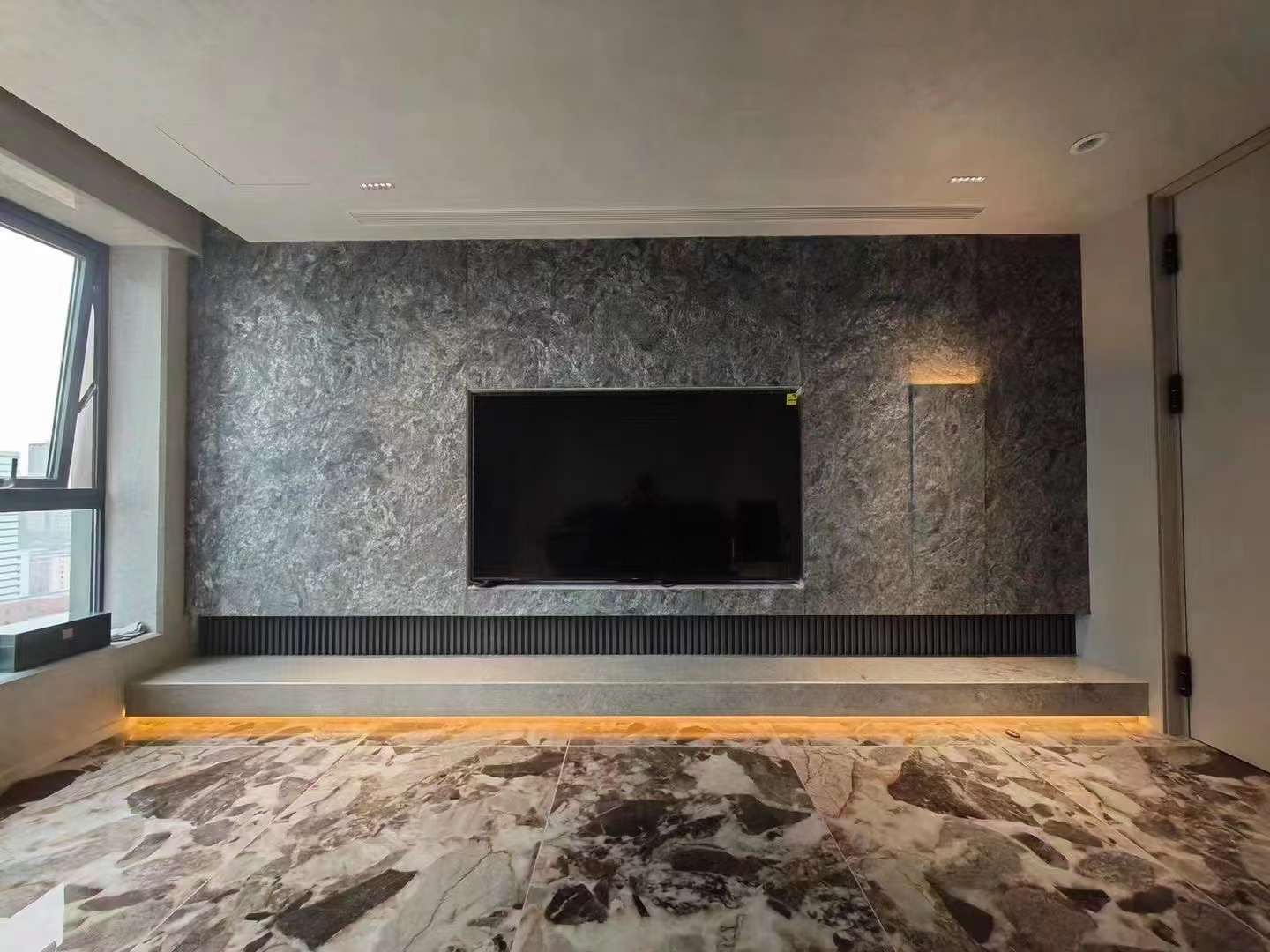
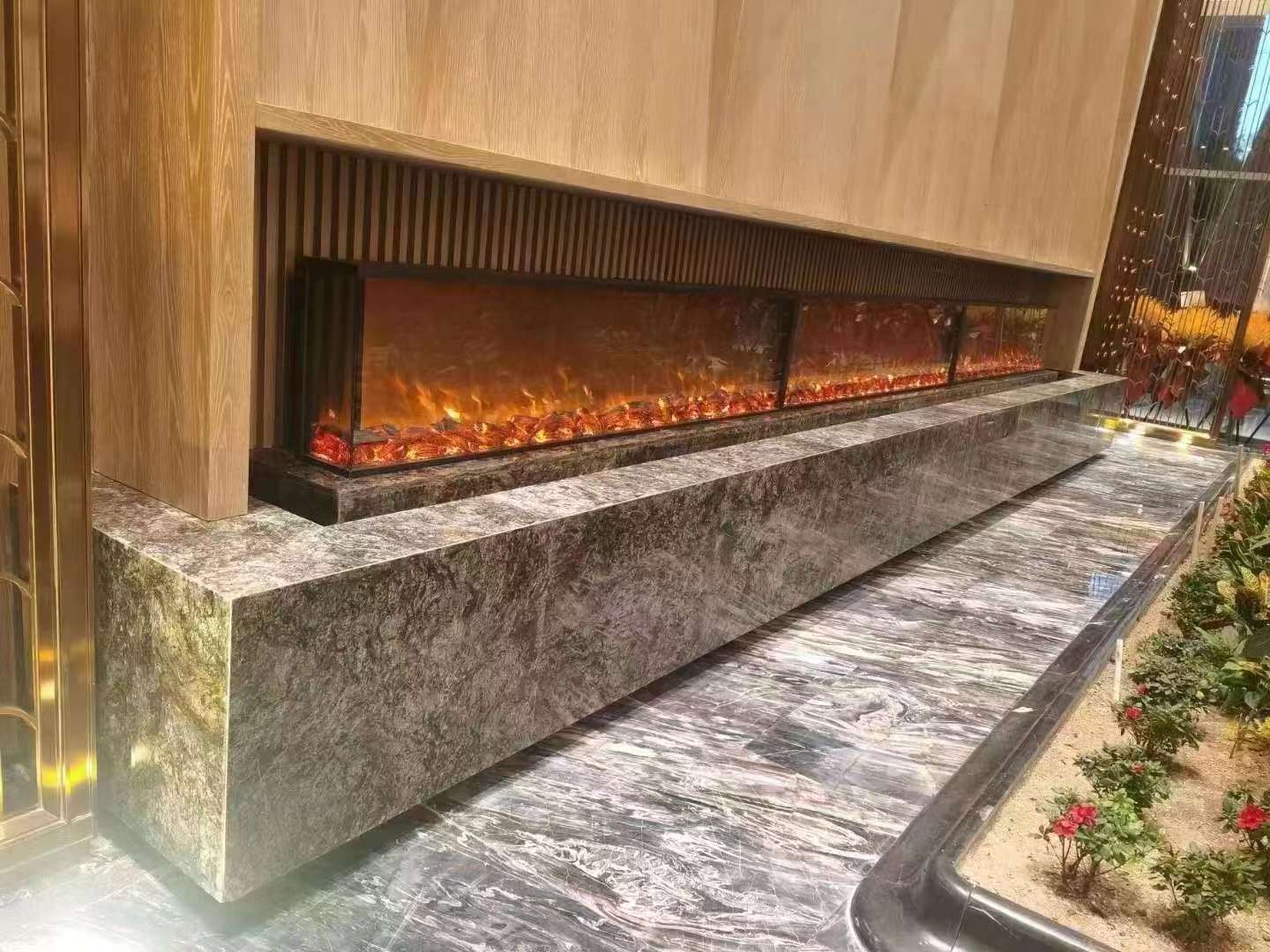
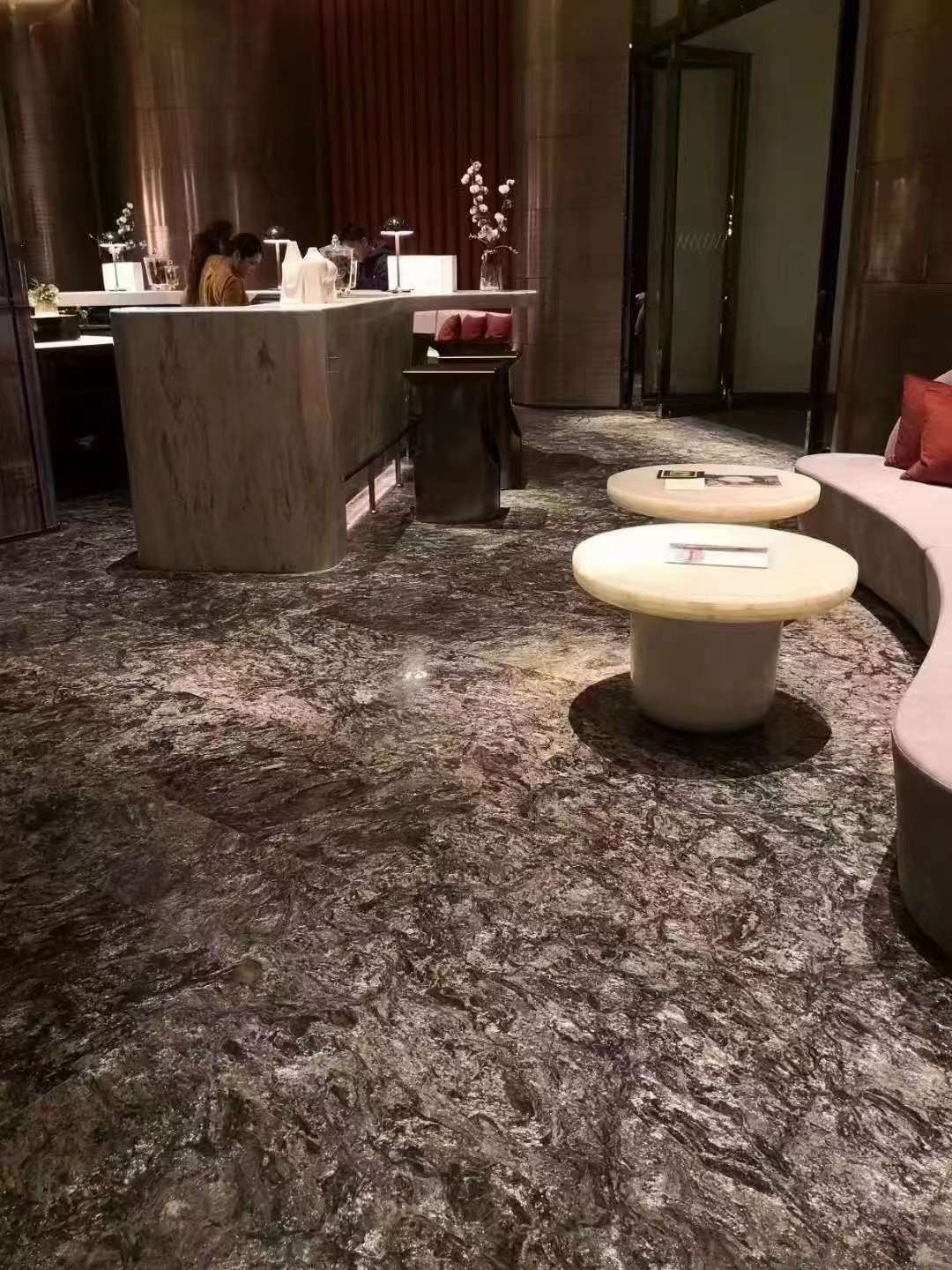
Platinum Diamond Granite can be considered for stair treads, risers, landings, and selected floor-tile applications. The dark color palette creates a strong architectural effect in entrance halls, villas, hotels, and commercial interiors.
Stairs require precise dimensional control because each component must coordinate with the finished floor levels, stair geometry, nosing details, and installation tolerances.
We recommend preparing a complete stair schedule showing the dimensions, quantity, thickness, edge details, and numbering of every tread, riser, and landing piece.
For a multi-flight staircase, slab allocation should follow the installation sequence. Grouping the pieces by tone and mineral density helps prevent unnecessary changes in appearance between adjacent steps.
Before fabrication, we recommend confirming:
The finished dimensions and quantity of each component.
The actual slab allocation and mineral direction.
The nosing and exposed-edge details.
The surface finish and applicable slip-resistance requirements.
The installation substrate and support conditions.
The numbering system and packing sequence.
For tiled surfaces, we recommend establishing a consistent layout before cutting. This is particularly important when the design uses larger tiles, narrow grout joints, or several adjoining rooms.
Tile size, thickness, finish, grout width, installation method, and substrate condition should be selected according to the project requirements. For wet floors, public circulation areas, and exterior applications, the suitability of the selected finish and stone must be assessed for the intended conditions.
We recommend providing tile layout drawings for large projects so that the production team can group the material and identify each piece before packing.
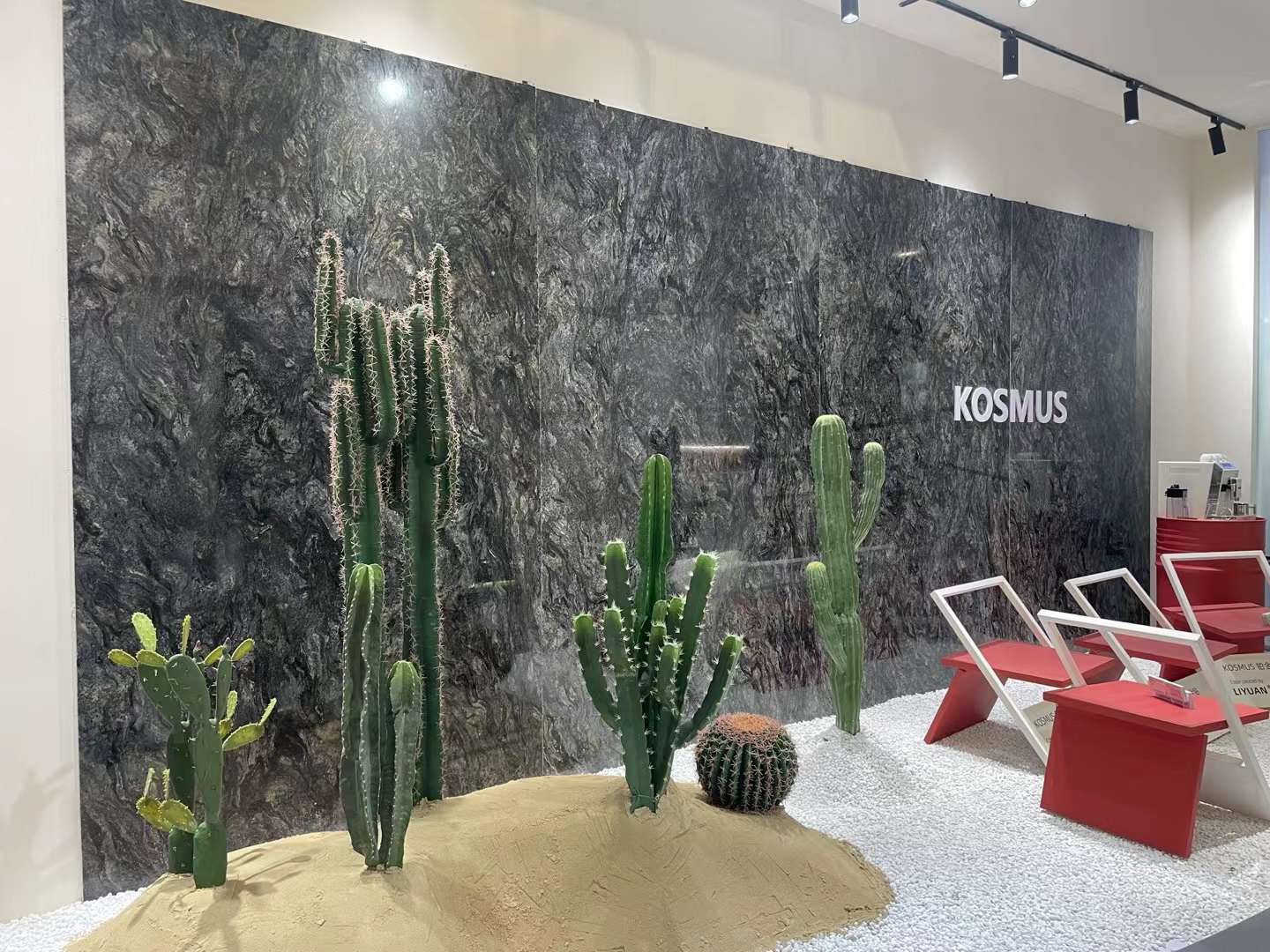
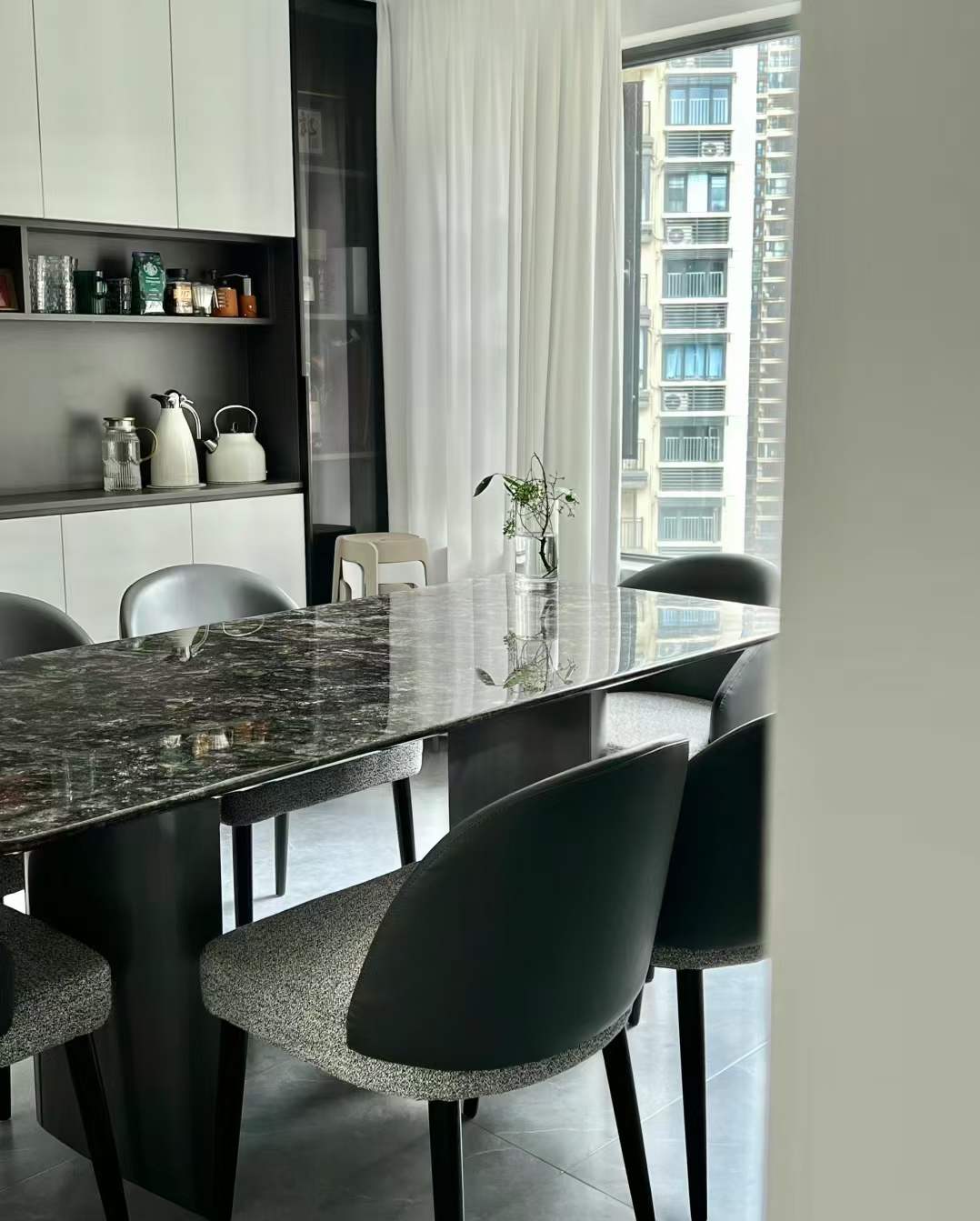
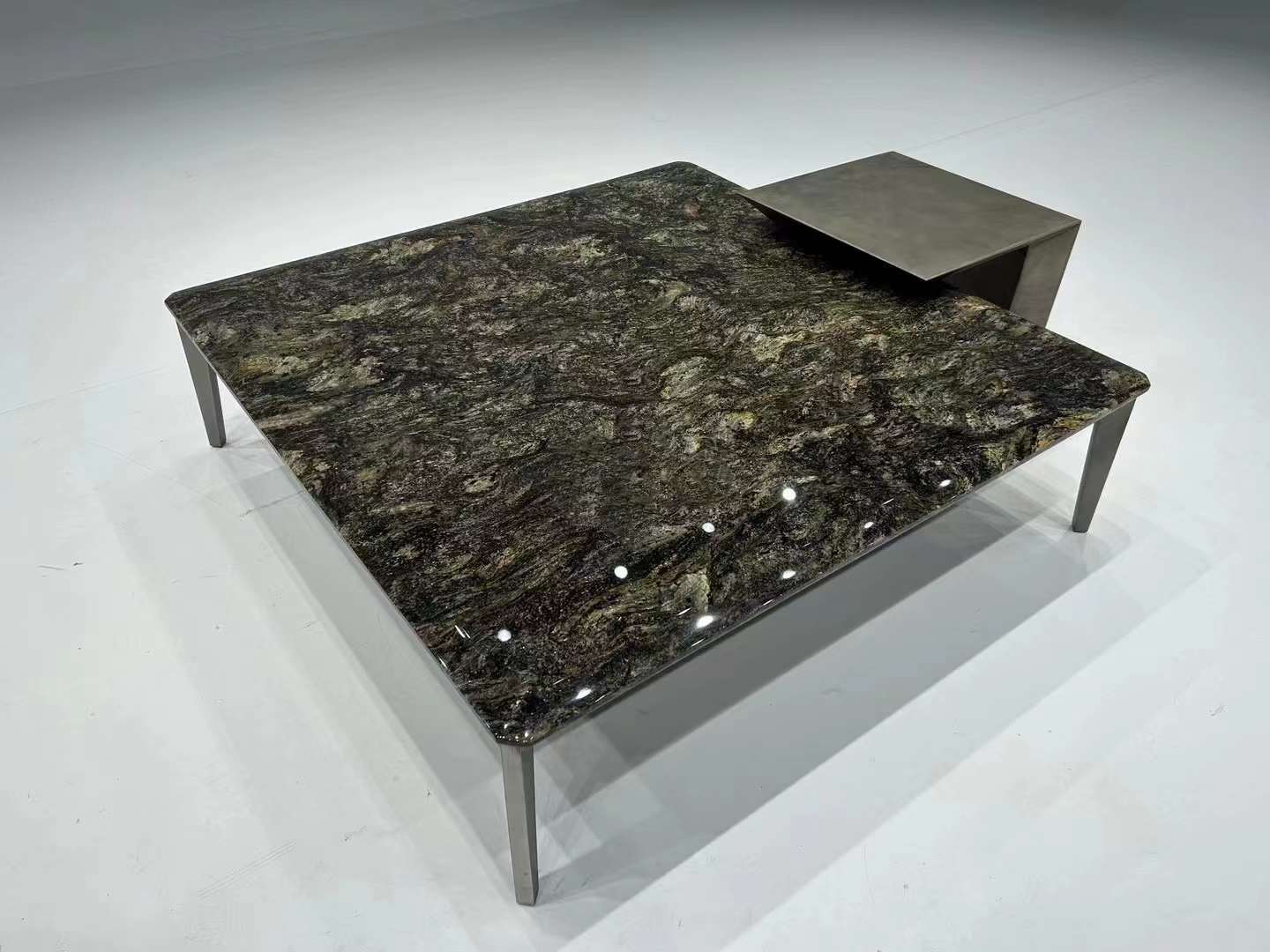
Platinum Diamond Granite offers opportunities for custom furniture where the stone itself becomes the primary design feature. Dining tables, coffee tables, console tables, bar tops, and selected bespoke furniture pieces can all benefit from its contrast between dark background areas and lighter mineral structures.
Unlike a conventional countertop, a furniture top is often viewed from several directions and may have a relatively exposed perimeter. We therefore recommend considering the tabletop shape, edge treatment, support structure, and mineral composition together.
A large dining tabletop can preserve a substantial portion of the slab's natural pattern. For rectangular, oval, and custom-shaped tops, we recommend positioning the finished outline directly on the selected slab before cutting.
Where several matching tables are required for a hotel or restaurant, actual slab selection becomes particularly important. We recommend establishing a common visual standard for the batch and allocating the slabs accordingly.
Smaller furniture pieces provide more flexibility in selecting distinctive areas of a slab. A compact tabletop can emphasize a concentrated silver-white feature, while a longer console or bar top may benefit from a more directional mineral pattern.
The finished dimensions should be checked against the usable slab area, including allowance for edge fabrication, cutouts, and natural imperfections that may affect the final layout.
Stone tabletops are heavy and can be vulnerable to damage if they are inadequately supported or subjected to concentrated loads.
We recommend confirming the finished weight, base geometry, support points, overhang, attachment method, and transportation arrangements with the furniture designer or fabricator. Large unsupported spans and vulnerable cutout areas require particular attention.
For custom furniture, we also recommend a trial assembly when the stone top, base, and fixing components are produced separately.
The appropriate supply format depends on the buyer's production capabilities, project scale, and delivery requirements.
Supply format | Best suited to | Main purchasing consideration |
|---|---|---|
Granite slabs | Importers, wholesalers, and stone fabricators | Usable yield, slab dimensions, thickness, and visual consistency |
Granite tiles | Distributors and flooring or wall projects | Tile dimensions, finish, thickness, and tone grouping |
Countertop blanks | Fabricators and kitchen businesses | Blank dimensions, edge allowances, and machining requirements |
Finished countertops | Residential and commercial projects | Approved measurements, openings, edges, and installation interfaces |
Vanity tops | Bathroom suppliers and project contractors | Basin cutouts, faucet holes, backsplashes, and support |
Wall panels | Architects, contractors, and stone installers | Panel schedule, fixing method, joints, and mineral placement |
Stair components | Stair fabricators and building contractors | Tread and riser dimensions, nosing, finish, and numbering |
Table tops | Furniture manufacturers and custom-project buyers | Shape, edge details, support, and slab layout |
Custom components | OEM buyers and project fabricators | Drawings, tolerances, approved material, and inspection criteria |
For wholesale buyers, slab selection has a direct impact on production yield and the consistency of finished orders.
We recommend requesting current slab photographs with dimensions and thickness clearly identified. Where possible, buyers should also review video of the actual material under neutral lighting to understand the background tone, mineral distribution, surface condition, and visible variation.
A useful slab-selection record includes the slab identification, dimensions, thickness, finish, inspection images, and allocation to the intended order.
Buying raw slabs gives fabricators greater control over cutting, edge profiles, and finished dimensions. However, it also requires suitable machinery, experienced operators, and an effective plan for material utilization.
Finished cut-to-size products reduce the need for some on-site processing and may simplify project coordination. They require more detailed drawings, measurement verification, and fabrication approval before production.
We recommend comparing the total delivered cost of the required finished components rather than comparing raw slab prices alone.
The finish affects the color depth, reflection, texture, maintenance requirements, and practical suitability of Platinum Diamond Granite.
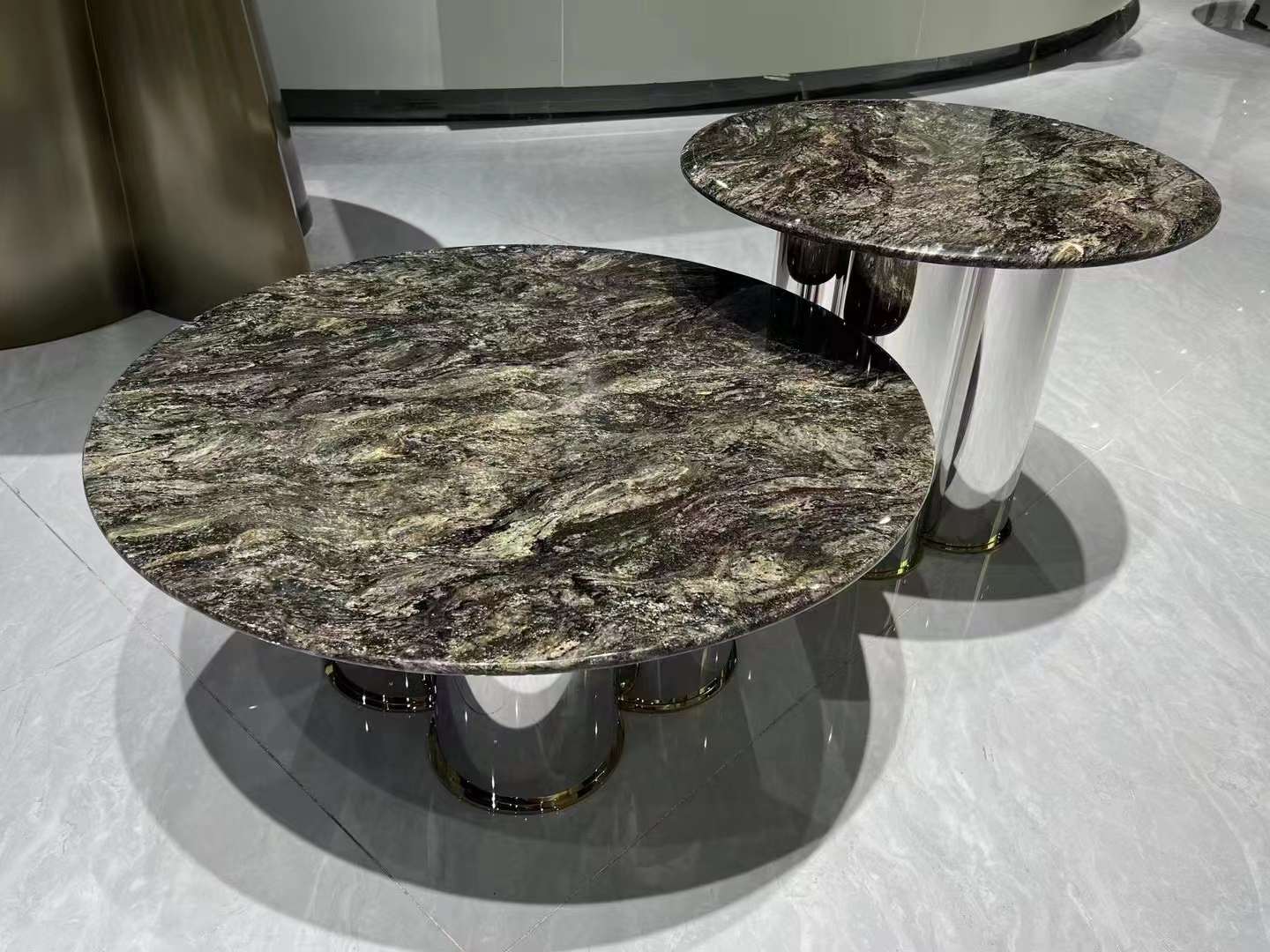
Polished Platinum Diamond Granite
A polished surface creates a reflective appearance and can make the dark background and silver-white mineral features more pronounced. We commonly recommend considering this finish for countertops, vanity tops, table tops, and feature surfaces where a refined glossy appearance is desired.
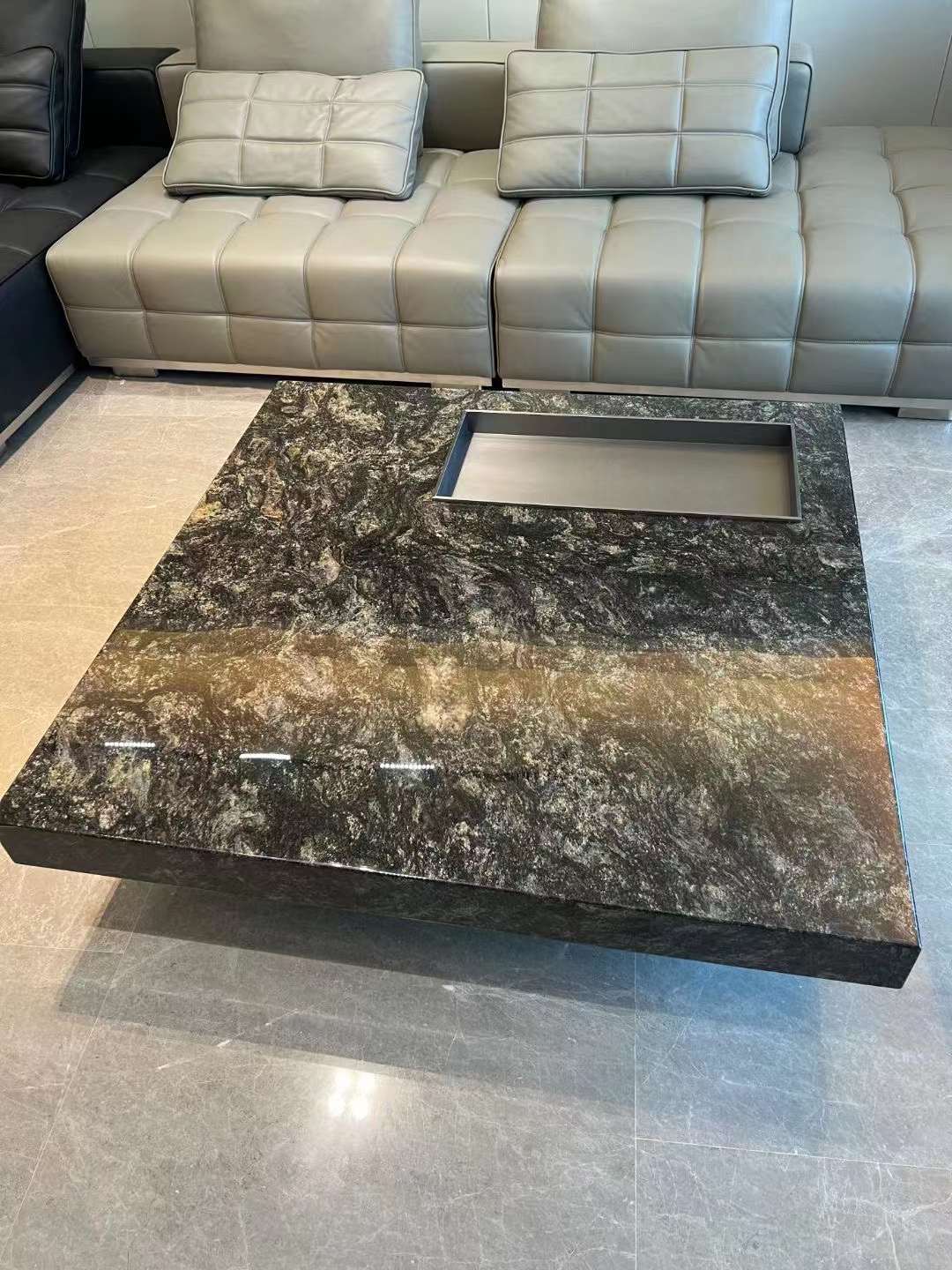
Honed Platinum Diamond Granite
A honed finish reduces surface reflection and provides a softer, low-gloss appearance. It can complement minimalist interiors and designs that favor subdued material expression. Maintenance and cleaning behavior should be assessed for the selected stone and application.
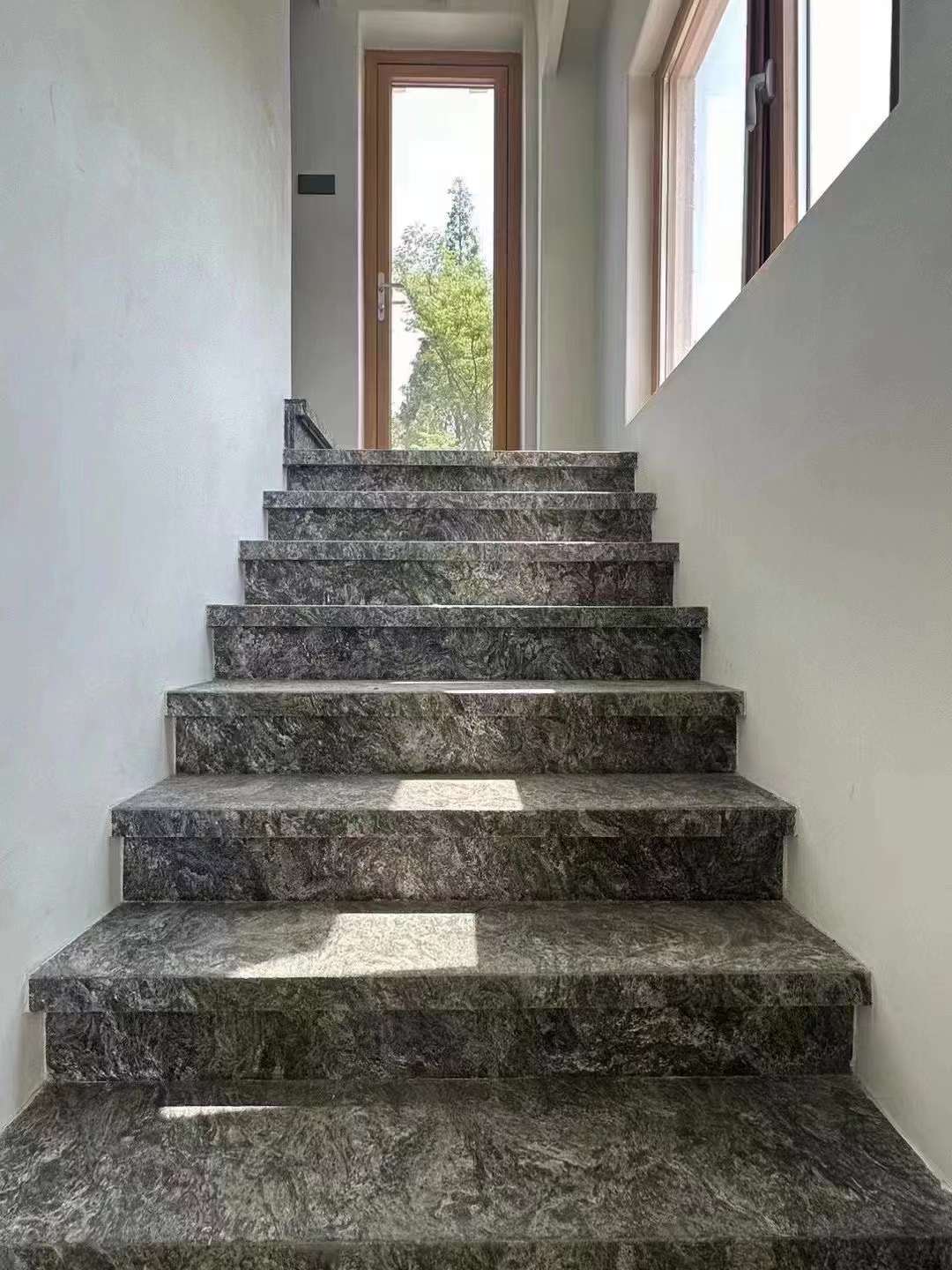
Leathered Platinum Diamond Granite
A leathered finish provides a textured tactile surface with less reflection than a conventional polish. It may be considered for selected countertops, bars, and furniture, subject to the actual stone's response to processing and the buyer's maintenance preferences.
Other finishes, including flamed treatments, should not be assumed available or suitable for every commercial variety of Platinum Diamond Granite. We recommend confirming the stone's compatibility with the proposed finish before finalizing the specification.
Application | Finish to evaluate | Key consideration |
|---|---|---|
Kitchen countertop | Polished, honed, or leathered | Appearance, cleaning, and intended use |
Waterfall island | Usually coordinated with the top finish | Consistency across horizontal and vertical surfaces |
Bathroom vanity | Polished, honed, or leathered | Water exposure and maintenance |
Feature wall | Polished or honed | Reflection, lighting, and panel composition |
Dining table | Polished, honed, or leathered | Visual effect, cleaning, and edge details |
Interior floor | Project-appropriate finish | Slip resistance and expected traffic |
Exterior or wet-area paving | Specifically evaluated finish | Weather exposure, drainage, and slip resistance |
The final finish should be approved against the actual material, not selected from a generic finish description alone.
One of the most important steps in specifying Platinum Diamond Granite is controlling natural variation through a documented selection process.
We first establish whether the project requires a predominantly black appearance, a stronger silver-white contrast, or a warmer brown undertone. This objective provides a consistent basis for evaluating slabs.
We recommend examining full-slab photographs and, when necessary, videos that show the entire surface. Close-up images can help reveal local mineral details, but they should not replace an overall view.
For projects involving several slabs, we recommend creating groups based on background tone, contrast, and pattern intensity. This is particularly useful for large islands, connected countertops, reception desks, and multi-panel walls.
The cutting plan should identify the position of each finished component on the selected slab. This allows the buyer to review the appearance of countertops, wall panels, stair treads, and furniture tops before production.
We recommend obtaining written approval for finished dimensions, thickness, finish, openings, edges, tolerances, and component identification.
The final inspection should verify the approved dimensions and visible finish, check exposed edges and cutouts, and confirm that numbered components match the approved drawings.
For multi-piece projects, we recommend providing packing references that identify each component and its intended installation location.
If the project requires a cleaner dark appearance, prioritize slabs with broader black or charcoal areas.
If the design calls for greater contrast, prioritize slabs with more prominent silver-grey and white mineral features.
If the interior includes warm timber or bronze accents, evaluate slabs with suitable brown or golden undertones.
If several connected surfaces are required, review the entire slab allocation together.
If a waterfall or feature wall is the focal point, position the most important mineral features on the principal visible surfaces.
If repeatability is essential for a commercial development, define an acceptable visual range rather than expecting every natural slab to be identical.
A successful natural-stone project requires coordination between material selection, shop drawings, fabrication, inspection, and installation. We recommend establishing these requirements before production begins, particularly when the order includes multiple finished components.
Depending on the available material and production requirements, Platinum Diamond Granite can be considered for:
Slab cutting and dimension-specific processing.
Countertops and kitchen islands.
Sink and cooktop openings.
Straight, beveled, eased, and selected custom edge profiles.
Mitered waterfall panels and returns.
Bathroom vanity tops and backsplashes.
Wall cladding and architectural panels.
Stair treads, risers, and landings.
Floor and wall tiles.
Dining tables, coffee tables, console tops, and bar counters.
CNC processing and other approved custom details.
Each service should be confirmed against the actual stone, the available machinery, and the project drawings. Not every slab can accommodate every design, particularly when dimensions, natural imperfections, and distinctive mineral features affect usable yield.
We recommend defining measurable acceptance criteria before production. Depending on the order, these may include:
Finished length, width, thickness, and permitted dimensional tolerances.
Cutout dimensions and locations.
Edge-profile accuracy and miter alignment.
Surface finish and visible processing marks.
Inspection of exposed edges, corners, and vulnerable openings.
Review of visible natural fissures and other material characteristics.
Consistency with the approved slab allocation and fabrication drawings.
Component identification and packing-list accuracy.
Natural mineral features should be distinguished from processing damage. Buyers and suppliers should agree on the acceptance criteria for natural fissures, filled areas, color variation, and other relevant characteristics before the production lot is approved.
Granite is heavy, and finished components can be vulnerable to impact during handling and transportation. Large countertops, narrow stair pieces, mitered panels, and table tops with unsupported areas require packaging appropriate to their geometry and weight.
We recommend a packaging plan that addresses the following requirements:
Surface protection: Finished faces should be separated with suitable protective materials that do not stain or damage the stone.
Edge and corner protection: Exposed edges, mitered returns, and cutout areas should receive additional protection where impact could cause damage.
Crate construction: Reinforced export crates should be designed around the dimensions, weight, and configuration of the actual shipment. Wood packaging should comply with applicable import requirements, including ISPM 15 where required.
Component identification: Each piece should carry a clear reference corresponding to the packing list and, for project orders, the approved shop drawings.
Load security: The packing arrangement should prevent uncontrolled movement during transportation and allow safe handling by the receiving team.
Shipment documentation: The commercial invoice, packing list, shipping documents, and any required certificates should match the agreed order details.
For large projects, we recommend reviewing the packing plan before dispatch. Proper identification is particularly valuable when several crates contain components for different floors, rooms, stair flights, or installation sequences.
The long-term appearance of Platinum Diamond Granite depends on the specific stone, finish, installation, exposure, and maintenance practices.
Although granite is generally valued for its durability, it should not be treated as completely stain-proof, scratch-proof, or maintenance-free. Appropriate care helps preserve the surface and reduces the likelihood of avoidable damage.
We recommend using a soft cloth or non-abrasive sponge with a cleaner suitable for natural stone. Wipe away food residues, spills, and standing water rather than allowing them to remain on the surface for extended periods.
Avoid harsh or unverified cleaning products, particularly acidic cleaners that may affect mineral components, surface treatments, or adjacent materials. Follow the instructions provided by the stone-care product manufacturer.
Whether a sealer is needed, and how often it should be reapplied, depends on the stone's absorbency, surface finish, previous treatment, and intended application.
We recommend testing the actual material and following the sealer manufacturer's instructions rather than applying a fixed maintenance schedule to every slab.
For kitchen countertops, spills should be cleaned promptly, particularly substances that may stain or leave residues. The stone's resistance to a specific substance should be confirmed rather than assumed from the word "granite."
We recommend using cutting boards instead of cutting directly on the stone, avoiding direct impacts from heavy objects, and using suitable heat protection where required.
Even durable granite can chip at vulnerable edges or around cutouts if subjected to impact or excessive stress. Trivets and protective pads also help prevent damage to cookware, adjacent materials, and the finish.
Application | Recommended maintenance focus |
|---|---|
Kitchen countertop | Prompt spill removal, suitable cleaning products, and appropriate sealer evaluation |
Bathroom vanity | Water and residue removal, suitable cleaning, and periodic condition checks |
Dining table | Non-abrasive cleaning and protection from impact or abrasive objects |
Feature wall | Gentle cleaning and inspection of joints and installed components |
Interior flooring | Regular dust removal, suitable floor cleaner, and finish-appropriate maintenance |
Commercial counters | Cleaning procedures appropriate to the frequency and type of use |
For commercial installations, we recommend providing the owner or facility manager with a written maintenance guide appropriate to the actual stone and finish.
The price of Platinum Diamond Granite depends on more than the quoted price per square meter. Actual slab characteristics, usable yield, thickness, finishing, fabrication complexity, order quantity, packaging, and shipping arrangements all affect the final project cost.
We recommend evaluating quotations on a like-for-like basis.
Differences in background tone, mineral distribution, surface condition, and usable area can affect the commercial value of individual slabs. If a project requires a particular dark appearance or stronger silver-white contrast, the selection criteria may narrow the available inventory.
Thickness affects material consumption, weight, handling, and fabrication. Large or unusual dimensions may also influence usable yield and production planning.
Polished, honed, leathered, and other finishes can involve different processing requirements. The actual cost depends on the selected finish, the material's suitability, and the supplier's production capabilities.
A simple slab order differs significantly from a fully fabricated kitchen island or architectural package. Cutouts, mitered corners, curved profiles, intricate edges, multiple finished dimensions, and close pattern coordination can increase processing time and material waste.
The usable yield is the portion of the purchased material that can be converted into acceptable finished components. Natural imperfections, slab dimensions, cutout positions, and the required mineral layout may reduce yield.
For this reason, we recommend evaluating the total slab requirement against the cutting plan rather than estimating quantities from the finished area alone.
Wholesale orders, repeat orders, and large projects may have different production and logistics economics from small custom orders. However, the actual benefit depends on material availability, processing requirements, and shipping arrangements.
Crate dimensions, gross weight, loading arrangements, destination, freight method, insurance, and applicable import charges may affect the delivered cost.
Cost component | Questions to confirm |
|---|---|
Material | Is the quoted commercial material clearly identified? |
Grade and selection | Are actual slabs selected and approved? |
Thickness | Is the quoted thickness the actual finished thickness? |
Finish | Does the quotation include the required surface treatment? |
Fabrication | Are openings, edges, miters, and custom dimensions included? |
Yield | Does the price include the material required for the approved cutting layout? |
Quality control | Are inspection criteria and approval stages defined? |
Packaging | Are suitable export crates and protective materials included? |
Shipping | Is the quotation EXW, FOB, CIF, or another agreed delivery basis? |
Exclusions | Are duties, taxes, installation, and other excluded costs stated clearly? |
We recommend comparing the total cost of producing and delivering the required components, not merely the lowest initial slab price.
Selecting a supplier requires assessing material accuracy, communication, production capabilities, and quality-control procedures.
For importers, wholesalers, fabricators, and project buyers, we recommend reviewing the following factors.
The supplier should clearly identify the commercial material, confirm the stated origin where relevant, and provide current photographs of the actual slabs being offered.
For cut-to-size orders, we recommend confirming that the supplier can interpret drawings, coordinate openings and edges, manage component numbering, and meet the agreed dimensional requirements.
A reliable production process should include defined inspection criteria, drawing approval, and a clear method for addressing discrepancies before dispatch.
Written confirmation of the order specifications, material allocation, finish, quantity, packing, and shipping terms helps avoid misunderstandings between the buyer, supplier, fabricator, and installer.
International stone orders require appropriate packaging, accurate shipping documents, and coordination of transport requirements. We recommend confirming the supplier's process for handling these requirements before committing to a project.
We recommend that importers focus on actual slab dimensions, usable yield, visual consistency, stock availability, repeat-order expectations, and landed cost. Clear product descriptions and accurate slab photographs also help distributors present the material to their own customers.
Fabricators should prioritize slab quality, cutting allowances, material condition, finish availability, and the accuracy of the dimensional information supplied. Actual slab selection helps determine whether a proposed cutting plan is practical.
Design professionals should establish the intended visual effect, identify the focal surfaces, and specify the preferred range of background tones and mineral patterns. Drawings should communicate the desired pattern placement and the relationships between adjoining stone components.
Contractors and developers should consider the entire procurement sequence, including quantities, approved drawings, production lead times, inspection, packing, shipment, and installation coordination.
Homeowners should confirm the final dimensions, selected slab appearance, finish, edge profile, cutouts, installation scope, and maintenance requirements before approving fabrication.
Hospitality projects often require several related components across multiple rooms or public areas. We recommend using a coordinated material-selection and component-numbering system to support consistent procurement and installation.
Platinum Diamond Granite is a natural granite commercially described by its dark black, charcoal, or brown background with silver-grey, white, and occasional warm mineral features. Its appearance varies between slabs, making actual material selection important for projects requiring a specific visual result.
Some commercial listings identify Platinum Diamond Granite as Brazilian granite. We recommend confirming the quarry origin of the specific material offered by the supplier, as commercial names alone do not establish geological origin.
Yes, it can be suitable for kitchen countertops when the selected material, thickness, finish, fabrication, and installation are appropriate for the application. Sink openings, cooktop cutouts, seams, and edge details should be confirmed on approved fabrication drawings.
Yes. Waterfall islands can be fabricated using coordinated horizontal tops and vertical side panels. We recommend reviewing the actual slab and planning the mineral direction, miter alignment, panel dimensions, and support requirements before cutting.
Yes, subject to appropriate fabrication and installation. The basin configuration, faucet openings, backsplash, cabinet support, finish, and maintenance requirements should be confirmed before production.
Yes. It can be fabricated into wall panels for residential and commercial interiors. Panel dimensions, stone weight, joints, fixing systems, substrate conditions, and installation methods should be assessed by the project team.
Available slab dimensions depend on the actual inventory. We recommend requesting current slab measurements and confirming the required thickness, usable area, and quantity before ordering.
Yes, custom fabrication may include countertops, vanity tops, tiles, stair components, wall panels, table tops, and other dimension-specific pieces. Feasibility depends on the available slabs, cutting layout, material condition, and approved drawings.
Polished finishes emphasize reflection and color depth. Honed finishes provide a lower-gloss appearance, while leathered finishes introduce texture. The best choice depends on the intended application, design preference, maintenance expectations, and suitability of the specific stone.
Yes. Natural variations may occur in background tone, mineral density, color transitions, and visible features. We recommend reviewing actual slabs and approving the intended material allocation before fabrication, particularly for connected surfaces.
Pricing depends on the material grade, slab dimensions, thickness, finish, quantity, usable yield, fabrication requirements, packaging, and shipping arrangements. Custom components generally require more detailed cost assessment than raw slabs because cutting and processing affect material utilization.
We recommend routine cleaning with products suitable for natural stone, prompt removal of spills, and protection against impacts and abrasive materials. Sealing requirements should be determined by the actual stone, finish, and intended use.
Yes, it can be considered for hotel interiors, reception counters, bars, restaurants, and selected commercial applications. Project orders should include approved specifications, slab allocation, fabrication drawings, inspection criteria, and packaging requirements.
We recommend providing the intended application, required dimensions, quantity, thickness, finish, fabrication details, drawings, and destination. For projects with several connected pieces, slab-selection preferences and pattern-coordination requirements should also be included.
At XiaMen HRC Stone Co., Ltd., we support natural-stone buyers with material selection, slab supply, custom fabrication coordination, and export-oriented project requirements.
We welcome inquiries from stone importers, wholesale distributors, fabricators, interior designers, architects, contractors, developers, and homeowners seeking Platinum Diamond Granite for residential or commercial applications.
To help us prepare an accurate quotation, please provide the following information:
Product: Platinum Diamond Granite
Supply format: Slabs, tiles, countertops, vanity tops, wall panels, stairs, or custom components
Thickness: Required thickness, such as 15 mm or 18 mm, subject to availability
Finish: Polished, honed, leathered, or another specified finish
Quantity: Number of slabs, pieces, square meters, or project requirements
Fabrication: Dimensions, cutouts, edge profiles, miter details, and other processing requirements
Drawings: CAD, PDF, shop drawings, or dimensioned sketches where applicable
Destination: Delivery address or destination port
Selection preferences: Preferred dark background, silver-white contrast, and mineral distribution
Natural stone slabs, tiles, custom fabrication, and project supply.
Website: www.hrcstone.com
Email: Jason@hrcstone.com
WhatsApp: +86 133 3848 5850
Request a Quotation by Email
Platinum Diamond Granite is a strong candidate for projects that require a dark natural stone with layered mineral variation and a distinctive architectural presence. Its suitability extends across countertops, kitchen islands, bathroom vanity tops, feature walls, stairs, flooring, dining tables, and selected custom furniture applications.
We recommend making five decisions before production:
Define the appearance: Establish the desired balance of black, charcoal, brown, silver, and white mineral features.
Approve actual slabs: Review current material rather than relying exclusively on small samples or generic product photographs.
Coordinate finished components: Map countertops, waterfall sides, wall panels, stairs, and furniture tops onto the selected slabs.
Confirm technical requirements: Approve thickness, finish, dimensions, edge details, installation conditions, and quality criteria.
Plan delivery: Coordinate component identification, protective packaging, documentation, and shipment requirements.
By integrating these decisions into the procurement process, we can help buyers make more informed material selections, reduce avoidable fabrication conflicts, and improve coordination between stone suppliers, fabricators, designers, and installers.
Contact: Jason Wu
Phone: +8613313887269
E-mail: jason@hrcstone.com
Whatsapp:+8613338485850
Add: Room 401-6, No.751, Fanghu Road, Huli District, Xiamen
We chat