
jason@hrcstone.com
+8613338485850
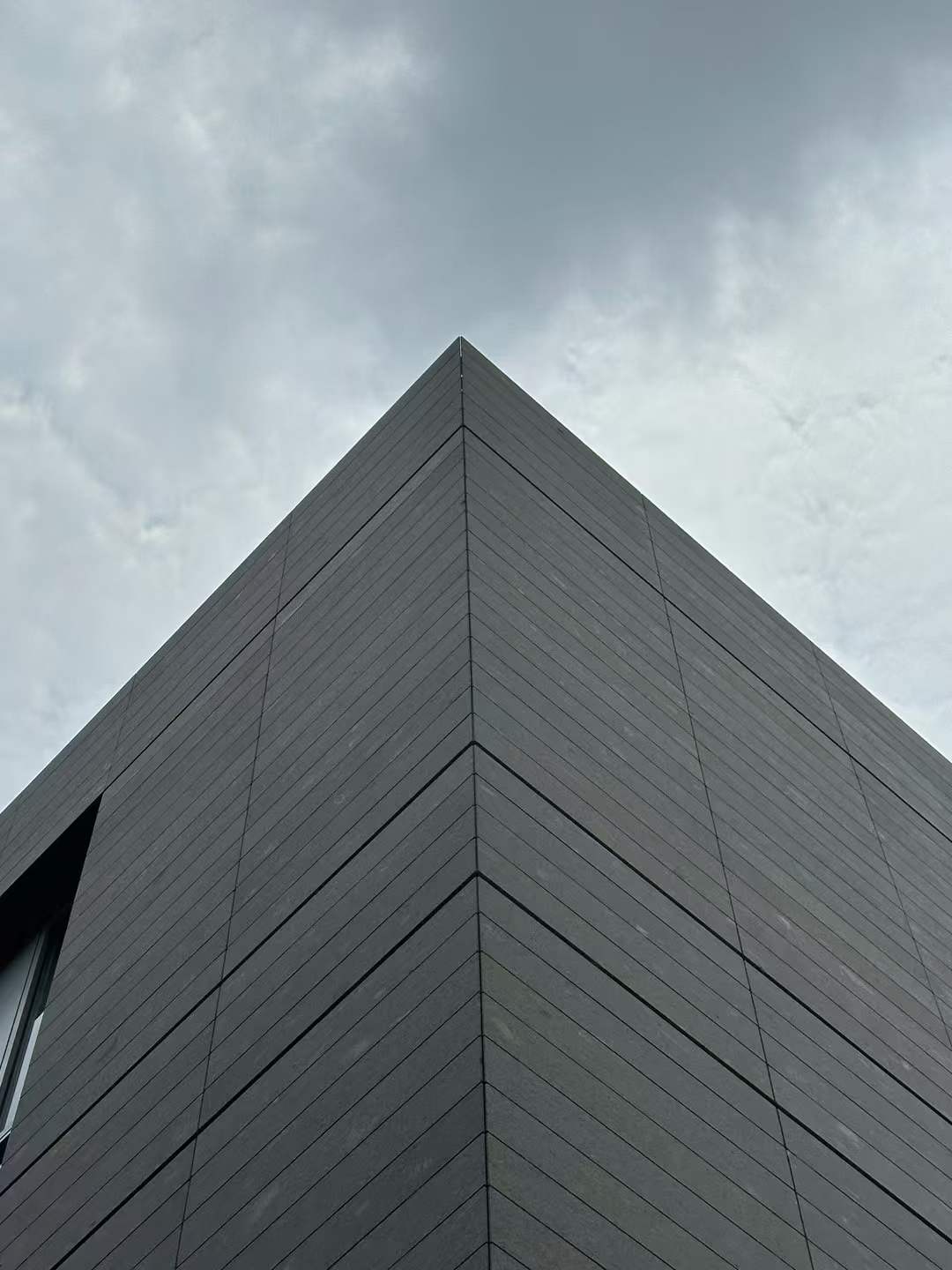
In contemporary architecture, the most valuable natural stones are not necessarily those with the most dramatic veining. For large-scale projects, designers often need something more disciplined: visual consistency, architectural texture, dimensional versatility, reliable fabrication, and suitability for both interior and exterior applications.
Peperino Grigio, also known internationally as Peperino Grey, Peperino Grigio Trachyte, Grey Volcanic Tuff, Peperino Vitorchiano, and Trachite Tuscia, is an Italian volcanic natural stone that answers this requirement exceptionally well.
Quarried in Italy, particularly within the historic volcanic stone districts of Lazio, Peperino Grigio is recognized for its restrained grey background and finely dispersed mineral inclusions. Rather than dominating an architectural composition, it creates a neutral mineral surface that works with timber, metal, glass, concrete, plaster, and other natural stones.
We consider Peperino Grigio particularly relevant for architects, designers, contractors, developers, stone distributors, and specialist fabricators looking for an Italian grey natural stone for flooring, exterior wall cladding, stairs, landscaping, countertops, fireplaces, bathrooms, custom furniture, and architectural elements.
Peperino Grigio is a natural volcanic stone from Italy. Depending on the quarry, geological classification, and commercial source, it may be described as volcanic tuff, ignimbrite, trachyte, or Peperino stone.
This distinction matters.
Peperino Grigio should not simply be treated as another grey marble or conventional granite. Its volcanic origin contributes to the fine-grained, mineral-rich appearance that gives the material its distinctive architectural character.
Italian geological and commercial references describe Peperino from the Viterbo area as volcanic rock, including ignimbritic varieties. Historic use of Peperino in central Italy also demonstrates that the material belongs to a long-established tradition of architectural stone rather than being a recently introduced decorative surface. (Frosini Pietre)
The stone generally presents:
a medium to charcoal-grey background;
fine black, silver-grey, and lighter mineral particles;
a subtle salt-and-pepper appearance;
relatively low directional movement compared with strongly veined marble;
an understated matte character when honed;
stronger texture when bush-hammered, sandblasted, or flame-finished.
This makes Peperino Grigio particularly suitable for architecture where materiality should be visible without overwhelming the overall design language.
Buyers searching international stone databases may encounter this material under several related names.
Common commercial and geological references include Peperino Grigio, Peperino Grey, Peperino Grigio Trachyte, Peperino Vitorchiano, Peperino di Viterbo, Peperino di Soriano, Trachite Tuscia, Lavagrigia, Grey Volcanic Tuff, and Peperino Grey Trachyte. Stone industry databases specifically associate Peperino Grigio with the Viterbo and Soriano nel Cimino areas of Lazio, Italy.
For international architectural specifications, however, we recommend using Peperino Grigio as the primary commercial name and supplementing it with the geological or alternative trade name only where necessary.
The strongest design characteristic of Peperino Grigio is its controlled visual rhythm.
Unlike Calacatta marble, Patagonia quartzite, or strongly directional gneiss, Peperino Grigio does not depend on dramatic veining. Its personality comes from the distribution of small mineral fragments across a relatively consistent grey field.
The result is a surface that appears simple from a distance but becomes increasingly detailed at closer viewing distances.
This is particularly valuable for large architectural surfaces.
On a 10 m² kitchen island, subtle mineral movement provides depth without competing with cabinetry.
Across hundreds of square metres of wall cladding, the relatively controlled appearance can produce a continuous architectural envelope.
For exterior paving, the granular texture helps the material visually integrate with concrete, landscaping, timber, and metal.
For commercial interiors, the neutral grey palette allows furniture, lighting, art, and branding elements to remain dominant.
One Italian supplier describes the stone as having a uniformly distributed salt-and-pepper coloration and lists its slab variation as limited. (Payanini)
Natural stone specifications require more care than simply copying a single technical-data table.
Published Peperino data vary considerably according to quarry location, geological layer, test method, specimen condition, and commercial variety. For this reason, technical values found online should be treated as reference data rather than universal values applicable to every Peperino Grigio block.
One published commercial technical card reports the following values for Peperino Grigio: (Payanini)
| Property | Published Reference Value |
|---|---|
| Origin | Italy |
| Classification | Natural Stone |
| Average Block Availability | Medium / Large |
| Typical Application | Interior / Exterior |
| Slab Variation | Limited |
| Compressive Breaking Load | 1214 kg/cm² |
| Breaking Load After Freeze-Thaw Cycles | 1037 kg/cm² |
| Water Imbibition Coefficient | 0.000600 |
| Frictional Wear | 7.30 mm |
| Mass per Unit Volume | 2616 kg/m³ |
However, other Italian Peperino sources publish substantially different values. For example, one quarry-related reference reports apparent density of 2616 kg/m³, compressive strength of 65.8 MPa, flexural strength of 11.3 MPa, open porosity of 10.50%, and atmospheric-pressure water absorption of 3.41%. (Frosini Pietre)
Another international stone database reports still different figures for Peperino Vitorchiano, including bulk density around 2.25 t/m³ and water absorption around 8.5%.
Peperino Grigio should therefore not be marketed as a universally “near-zero absorption” stone based on one data sheet.
For decorative residential applications, published reference data may be sufficient for preliminary material evaluation.
For façades, freeze-thaw environments, swimming pools, high-traffic commercial flooring, structural applications, or projects governed by ASTM/EN requirements, we recommend confirming the actual quarry source and current batch-specific laboratory test report before final approval.
This is especially important for architects and contractors preparing material submittals.
Understanding where Peperino Grigio sits within the natural-stone spectrum helps prevent incorrect material selection.
| Feature | Peperino Grigio | Granite | Marble | Basalt |
|---|---|---|---|---|
| Visual Character | Fine volcanic, salt-and-pepper | Crystalline/granular | Veined/crystalline | Dense, dark, minimal |
| Typical Color | Grey | Wide range | Wide range | Dark grey/black |
| Design Language | Italian minimalist / architectural | Versatile | Luxury/decorative | Contemporary/industrial |
| Veining | Usually minimal | Low to moderate | Often prominent | Very low |
| Exterior Potential | Good with correct specification | Excellent | Material-dependent | Excellent |
| Textured Finishes | Excellent | Excellent | Good | Excellent |
| Large-Surface Continuity | Very good | Good | Depends on selection | Very good |
| Architectural Texture | High | Medium | High but decorative | High |
Peperino Grigio occupies an interesting position between decorative stone and architectural building stone.
It is more textural than many uniform granites, less visually dominant than heavily veined marble, and generally warmer and more organic in appearance than very dark basalt.
Surface finish is one of the most important design decisions when specifying Peperino Grigio.
The same stone can move from refined contemporary interior material to rugged exterior paving simply through surface processing.
Published Italian suppliers list finishes including honed, brushed, sanded, bush-hammered, waterjet-and-brushed, and flame-finished surfaces. (Payanini)
A honed finish creates a smooth, low-reflection surface that emphasizes the grey base while retaining the fine volcanic pattern.
We recommend honed Peperino Grigio for:
interior flooring;
bathroom walls;
fireplace surrounds;
vanity tops;
reception desks;
feature walls;
furniture;
kitchen surfaces where appropriate.
The absence of a high-gloss reflection reinforces the stone's quiet architectural character.
Brushing introduces subtle tactile movement while maintaining a sophisticated appearance.
This finish works particularly well for:
luxury residential interiors;
hospitality projects;
spa environments;
bathrooms;
feature walls;
custom furniture;
transitional indoor/outdoor areas.
Bush hammering creates a strongly textured surface and increases tactile grip.
Architecturally, this treatment moves Peperino away from furniture stone and toward building material.
Typical applications include:
exterior paving;
steps;
plazas;
pedestrian areas;
landscape architecture;
pool surrounds;
exterior walls.
Slip-resistance requirements should nevertheless be confirmed using the specified finish and relevant project testing.
A flame-finished surface creates a more rugged, natural texture suitable for many exterior environments.
It can be particularly effective for:
outdoor flooring;
courtyards;
landscape paving;
steps;
commercial entrances;
façade elements.
These treatments provide architects with additional control over roughness, visual depth, and surface reflection.
For large projects, we recommend producing finish samples from the actual selected material rather than approving the stone based solely on catalogue photography.
The versatility of Peperino Grigio is one of its strongest commercial advantages.
Italian suppliers list applications including interior and exterior floors and cladding, stairs, tables, sinks, kitchen tops, and shower bases. (Payanini)
Peperino Grigio can create sophisticated monochromatic façades without the artificial uniformity associated with manufactured materials.
Its subtle volcanic particles become visible as viewing distance decreases, giving the building skin a natural hierarchy of detail.
For large façade projects, we recommend evaluating:
stone thickness;
anchoring system;
panel dimensions;
wind load;
freeze-thaw requirements;
water absorption;
flexural strength;
anchor pull-out performance where required;
selected surface finish;
sealing requirements;
local building regulations.
Final façade engineering should always be based on the approved stone batch and project-specific testing.
Grey volcanic stone works naturally with contemporary landscape design.
Bush-hammered, flamed, sanded, or other textured Peperino surfaces can be considered for:
garden paths;
patios;
courtyards;
terraces;
public plazas;
pedestrian zones;
exterior staircases;
pool environments;
landscape walls.
Its neutral grey palette integrates particularly well with green landscaping, water features, weathered steel, dark metal, and timber.
In hospitality design, Peperino Grigio offers an alternative to heavily veined marble.
It can create a sophisticated floor without visually overwhelming furniture, lighting, artwork, or architectural details.
Potential applications include:
hotel lobbies;
corridors;
restaurants;
retail stores;
galleries;
office reception areas;
luxury boutiques.
For high-traffic applications, abrasion resistance, surface finish, maintenance regime, and slip performance should be evaluated during material approval.
Peperino Grigio can also create highly distinctive minimalist kitchens.
A large grey island with a honed or brushed finish works especially well with:
natural oak;
walnut;
blackened steel;
brushed stainless steel;
bronze;
warm white plaster;
microcement;
matte lacquer cabinetry.
Unlike dramatic marble islands, Peperino creates luxury through material authenticity and proportion rather than decorative veining.
For countertop projects, sealing, stain resistance, edge detailing, fabrication tolerances, and maintenance expectations should be discussed before fabrication.
Peperino Grigio is particularly effective in monochromatic bathroom architecture.
The stone can be fabricated into:
vanity tops;
wall panels;
flooring;
shower surrounds;
shower bases;
integrated basins;
custom sinks;
shelving;
bathtub surrounds.
Using one material across multiple elements can create the monolithic aesthetic frequently associated with contemporary Italian interior design.
Wet-area specifications should account for surface grip, waterproofing systems, stone treatment, joint design, and maintenance.
The mineral texture of Peperino works exceptionally well around fireplaces.
Instead of relying on strong veining, the material creates depth through fine granular variation.
Possible fabrication approaches include:
full-height fireplace walls;
large-format surrounds;
mitred stone volumes;
hearth slabs;
carved fireplace elements;
book-matched architectural panels where slab characteristics permit.
Peperino has a long association with architectural stonework, making stairs and dimensional elements particularly natural applications.
We can consider it for:
stair treads;
risers;
landings;
window sills;
wall copings;
columns;
door surrounds;
benches;
fountains;
custom architectural profiles.
Historical Italian references also document Peperino's long-standing use in architectural and ornamental construction.
Minimalism places unusual demands on natural materials.
When ornamentation is removed, proportion, texture, joint alignment, surface finish, and material consistency become much more visible.
Peperino Grigio works because it has enough natural variation to avoid appearing artificial while remaining visually controlled enough for large architectural compositions.
Pair honed Peperino Grigio with:
warm oak;
walnut;
off-white plaster;
brushed stainless steel;
bronze;
neutral textiles.
Combine textured Peperino with:
black steel;
exposed concrete;
glass;
dark timber;
oxidized metal.
Its restrained mineral pattern works naturally with:
pale timber;
linen;
lime plaster;
neutral ceramics;
minimal furniture.
For hotels and restaurants, Peperino can establish a sophisticated architectural background while allowing lighting, furniture, artwork, and decorative metals to carry the visual emphasis.
Different projects require different supply formats.
Depending on current quarry and block availability, Peperino Grigio may be supplied or processed as:
raw blocks;
gangsaw slabs;
standard slabs;
cut-to-size panels;
flooring tiles;
wall cladding;
stair treads and risers;
countertops;
vanity tops;
fireplace pieces;
dimensional architectural stone;
custom CNC components.
Published supplier information describes average Peperino Grigio block dimensions as medium to large with medium availability. (Payanini)
For major commercial projects, block selection should ideally take place before mass production.
Although Peperino Grigio is generally more visually consistent than strongly veined marble or quartzite, it remains a natural stone.
Variations can occur in:
grey background intensity;
particle distribution;
mineral concentration;
pores and volcanic features;
structural markings;
density;
block-to-block appearance.
For a 500 m² façade or 1,500 m² flooring project, these differences become far more important than they are for a single vanity.
We therefore recommend a controlled selection workflow.
flowchart TD
    A[Architectural Requirement] --> B[Confirm Application]
    B --> C[Select Quarry / Block]
    C --> D[Produce Finish Samples]
    D --> E[Architect Approval]
    E --> F[Slab Production]
    F --> G[Slab Inspection & Numbering]
    G --> H[Cut-to-Size Production]
    H --> I[Dry Layout / Matching]
    I --> J[Quality Inspection]
    J --> K[Protective Packing]
    K --> L[Project Delivery]
For visually continuous areas, we recommend cutting adjacent panels from the same block or compatible production batch whenever possible.
This improves color continuity and simplifies installation sequencing.
Façade supply is fundamentally different from selling individual slabs.
The stone must be considered as part of an engineered system.
Before production, the project team should establish:
panel dimensions;
stone thickness;
anchoring details;
finish direction;
acceptable natural variation;
dimensional tolerances;
corner details;
joint widths;
panel numbering;
packing sequence.
For projects with repeating modules, optimized cutting layouts can significantly improve block yield and reduce material waste.
We recommend completing these decisions before mass cutting, not after fabrication has begun.
For design professionals, our role extends beyond quoting a square-metre price.
Material specification requires understanding how a stone behaves across the entire project.
We can evaluate Peperino Grigio according to:
intended architectural style;
interior versus exterior use;
expected traffic;
required finish;
panel dimensions;
slab thickness;
color consistency;
fabrication complexity;
installation environment;
required quantity.
The objective is not simply to supply grey stone. It is to make sure the selected block, finish, fabrication method, and installation sequence support the original design intent.
Contractors usually require different information from designers.
A contractor may prioritize:
dimensional accuracy;
technical data;
consistent thickness;
tolerance control;
drawing coordination;
packing sequence;
installation numbering;
replacement-piece availability;
delivery schedule.
For cut-to-size Peperino Grigio projects, detailed shop drawings and stone schedules can be used to coordinate production.
Each piece can be numbered according to elevation, floor, room, or installation zone.
This becomes particularly important for hotels, villas, commercial buildings, and façade projects containing hundreds or thousands of individual stone pieces.
For distributors, Peperino Grigio fills a useful position between decorative luxury slabs and architectural grey building stone.
Potential customer groups include:
architects;
landscape designers;
kitchen studios;
fabricators;
interior designers;
residential contractors;
commercial contractors;
hospitality designers.
A mixed inventory of honed slabs and textured architectural material can address multiple segments rather than depending on countertop demand alone.
Peperino Grigio and Silver Grey Kosmus Granite can both be considered for sophisticated grey architectural palettes, but their visual personalities are fundamentally different.
Silver Grey Kosmus Granite generally creates stronger mineral movement and a more expressive crystalline appearance.
Peperino Grigio is quieter.
For an architect seeking a statement stone with visible geological movement, Silver Grey Kosmus may become the visual focal point.
For an architect seeking a calm architectural surface that supports the surrounding design, Peperino Grigio may be the more appropriate choice.
This distinction is important because natural stone should be selected according to design function, not color alone.
For international projects, we recommend quality control at multiple stages rather than inspecting only the finished pieces.
Confirm overall color, structural condition, available dimensions, and compatibility with the project quantity.
Review slab appearance before cutting.
Produce physical samples in the specified finish.
Check dimensions, thickness, squareness, holes, grooves, mitres, and edge profiles against approved drawings.
For important walls, floors, fireplaces, and feature areas, dry layout helps control visual sequencing.
Mark pieces according to shop drawings or installation zones.
Use reinforced export packing appropriate to the dimensions, weight, and transport method.
This workflow is particularly important for international hotel, villa, commercial, and façade projects where replacement pieces can cause significant delays.
Correct installation is essential to the long-term performance of any natural stone.
Installation systems should be selected according to the stone thickness, substrate, panel dimensions, environment, and local regulations.
For interior flooring, appropriate natural-stone adhesives and compatible grouts should be selected.
For exterior façades, anchoring and engineering requirements must be determined by the façade consultant or structural engineer.
For wet environments, waterproofing and drainage remain critical regardless of the stone itself.
We also recommend testing sealers on representative samples before full application because surface treatment can change the color and appearance of grey stone.
Routine maintenance generally involves:
removing loose abrasive dirt;
using appropriate pH-compatible stone cleaners;
avoiding untested aggressive chemicals;
cleaning spills promptly;
periodically reviewing sealant performance where sealing is specified.
Before requesting a quotation, architects, contractors, and distributors should ideally provide:
| Project Information | Example |
|---|---|
| Material | Peperino Grigio |
| Application | Exterior Wall Cladding |
| Quantity | 1,200 m² |
| Thickness | 30 mm |
| Finish | Bush-Hammered |
| Panel Size | According to Shop Drawings |
| Edge Processing | Cut / Chamfered |
| Project Location | Australia |
| Required Standard | Project Specific |
| Packing | Export Wooden Crates |
| Additional Requirement | Numbered by Elevation |
The more complete the specification, the more accurately we can evaluate material yield, fabrication requirements, packing, production time, and project cost.
No. Peperino Grigio is an Italian volcanic natural stone rather than a conventional calcitic marble. Geological descriptions commonly classify Peperino varieties as volcanic tuff, ignimbrite, or related volcanic rock. (Frosini Pietre)
Peperino is historically associated with central Italy, particularly the Viterbo area of Lazio. Commercial Peperino Grigio varieties are commonly linked with Vitorchiano and Soriano nel Cimino.
It is primarily grey, normally displaying fine darker and lighter mineral inclusions that create a restrained salt-and-pepper appearance.
Yes, Peperino Grigio is widely offered for exterior flooring and cladding. However, the specific quarry, batch, thickness, finish, anchoring system, climate, and relevant test results should be evaluated for major exterior projects. (Payanini)
Yes. Its grey palette and architectural texture make it particularly attractive for contemporary façades. Engineering requirements should be established according to panel dimensions, thickness, fixing system, wind loads, and project standards.
Yes. Interior and exterior flooring are among its established applications. Finish selection should correspond to traffic and slip-resistance requirements. (Payanini)
Yes. Italian suppliers list kitchen tops among possible applications. For practical kitchen use, appropriate sealing, maintenance, fabrication details, and stain testing should be considered. (Payanini)
Yes. It can be used for bathroom floors, walls, vanity tops, shower components, and custom basins when correctly specified and installed.
Common finishes include honed, brushed, sanded, bush-hammered, waterjet-and-brushed, and flame-finished surfaces. Other custom textures may be possible depending on the fabricator and project. (Payanini)
It may be considered for pool surroundings with an appropriate textured finish, but slip resistance, water exposure, treatment, climate, and project-specific technical requirements should be verified.
Published technical references include data after freeze-thaw testing, but values vary among Peperino sources. For cold-climate exterior projects, we recommend obtaining test documentation for the actual material being supplied rather than relying on generic online data. (Payanini)
Compared with strongly veined natural stones, it generally offers relatively controlled visual variation. Nevertheless, it remains natural stone, and block-to-block differences should be expected.
Commercial references describe average block dimensions as medium to large. Actual slab dimensions depend on current block availability and quarry production. (Payanini)
Yes. It can be fabricated into flooring, wall panels, stairs, countertops, architectural components, and other project-specific dimensions.
Yes. Its combination of neutral aesthetics, multiple finishes, dimensional fabrication possibilities, and interior/exterior applications makes it particularly relevant to hospitality, retail, office, and public-space projects.
Sealing requirements depend on the specific stone, finish, application, exposure, and desired maintenance performance. A sealer trial should be completed before full application.
It works particularly well with oak, walnut, bronze, stainless steel, black metal, architectural glass, concrete, plaster, and other neutral natural stones.
For large projects, we recommend selecting compatible blocks, producing finish samples, inspecting slabs, establishing an acceptable variation range, and organizing cut pieces according to installation zones.
The enduring appeal of Peperino Grigio comes from restraint.
It does not need oversized veins or dramatic color contrasts to communicate that it is natural stone.
Its grey volcanic surface gives architects a material capable of moving between architecture, landscape, interiors, furniture, and custom fabrication while maintaining one coherent visual language.
For a private villa, it can connect the kitchen, bathroom, fireplace, stairs, terrace, and landscape.
For a hotel, it can move from lobby flooring to reception desks and exterior paving.
For a commercial building, it can establish a consistent grey architectural identity across façades, entrance areas, walls, and floors.
That continuity is where Peperino Grigio becomes more than a decorative stone.
It becomes an architectural material.
For professional projects, we supply natural stone according to the requirements of architects, designers, contractors, developers, fabricators, and distributors.
Our project workflow can cover:
material and block selection;
current slab selection;
finish development;
physical sample preparation;
cut-to-size fabrication;
countertops and vanity tops;
stairs and dimensional stone;
façade and wall panels;
custom CNC fabrication;
drawing-based production;
dry layout and matching;
piece numbering;
dimensional inspection;
export packing;
international project coordination.
For large commercial or residential projects, we recommend providing the project location, application, estimated quantity, thickness, surface finish, drawings, and required technical standards during the initial inquiry.
This allows us to evaluate Peperino Grigio not simply as a slab material, but as a complete architectural stone solution.
Natural stone availability changes continuously. Current blocks and slabs should therefore be reviewed before final material approval, particularly when a project requires consistent color across a large quantity.
Peperino Grigio is most compelling when the design calls for a quiet, sophisticated grey natural stone rather than a decorative statement surface. Its strength is the ability to create architectural continuity while retaining the depth, mineral texture, and individuality of genuine Italian stone.
For façades, exterior paving, freeze-thaw environments, wet areas, or other technically demanding applications, published generic values should be used only during preliminary evaluation. Final specifications should reference the actual quarry source, approved finish, production batch, relevant laboratory testing, and local engineering requirements.
For large projects, early block selection and finish approval can substantially improve visual consistency, production efficiency, and final installation quality.
Contact: Jason Wu
Phone: +8613313887269
E-mail: jason@hrcstone.com
Whatsapp:+8613338485850
Add: Room 401-6, No.751, Fanghu Road, Huli District, Xiamen
We chat