
jason@hrcstone.com
+8613338485850
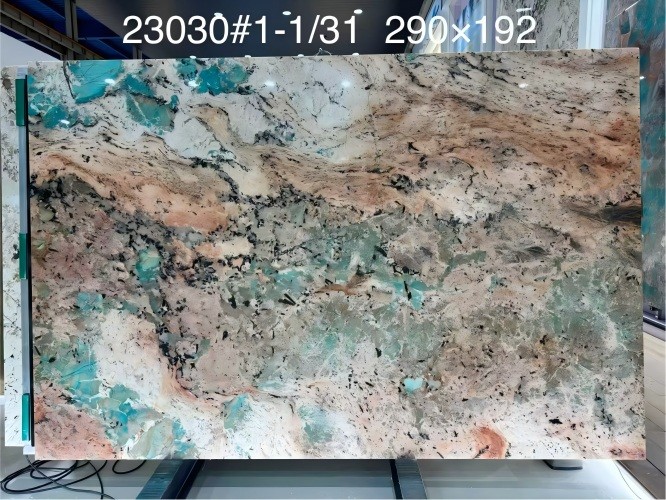
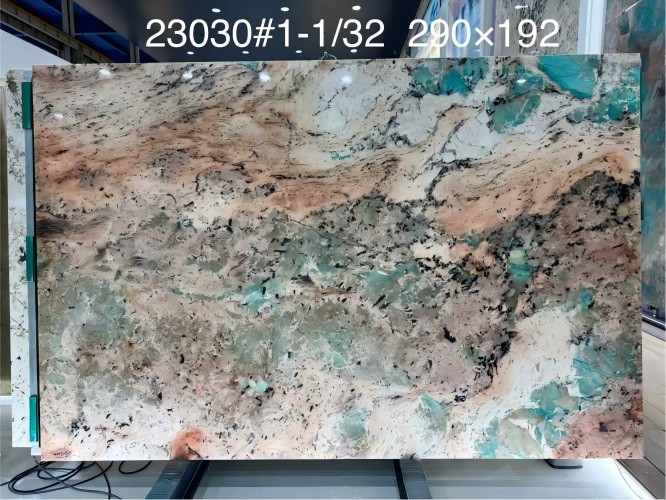
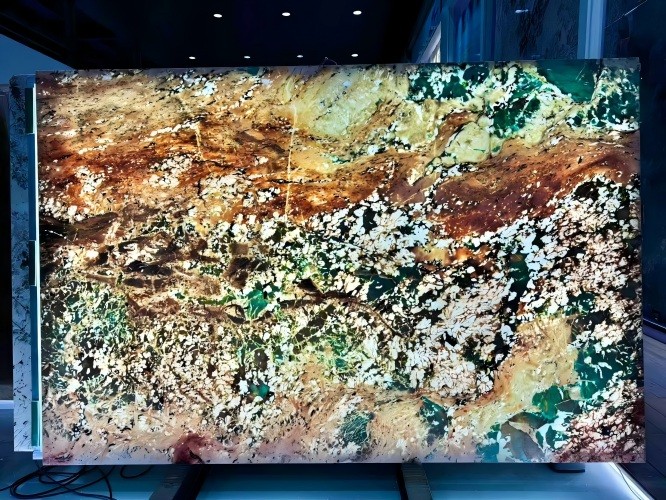
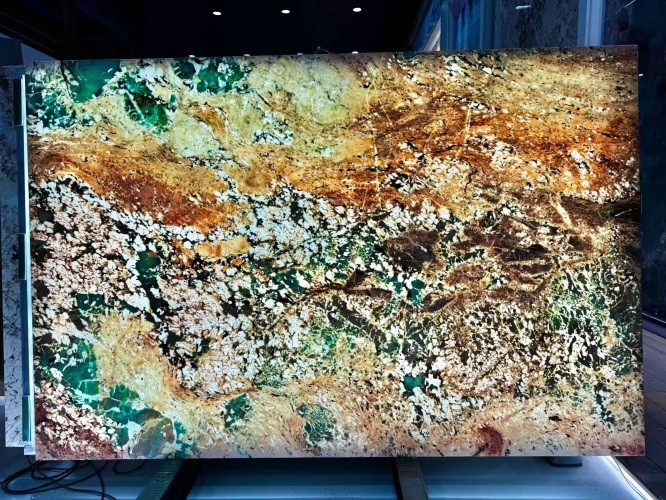
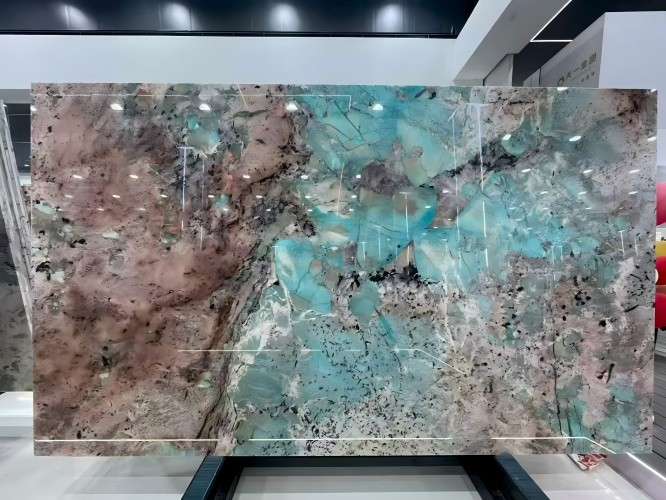
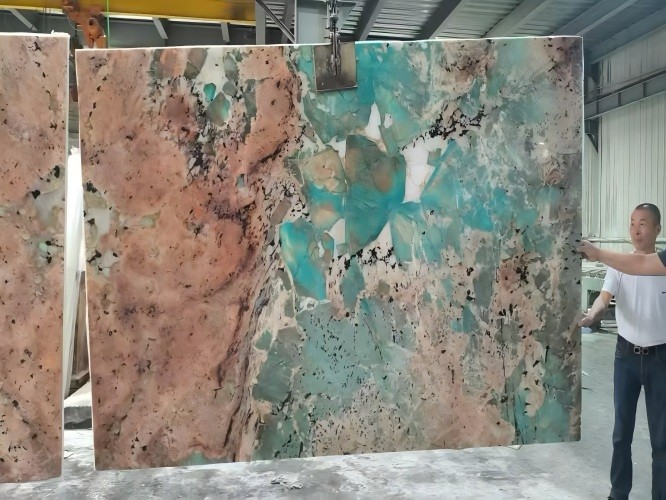
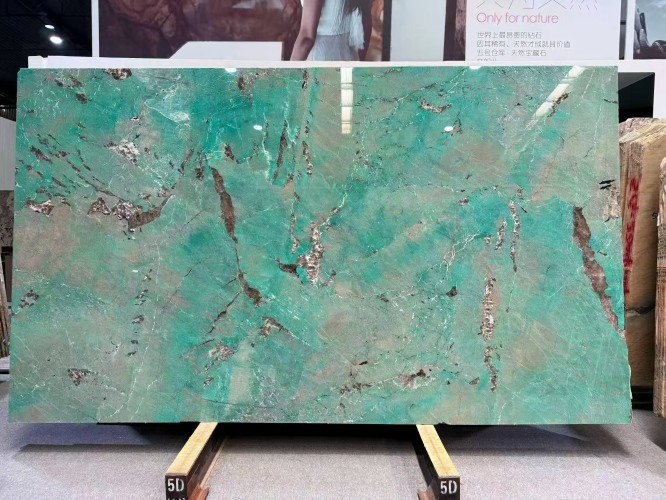
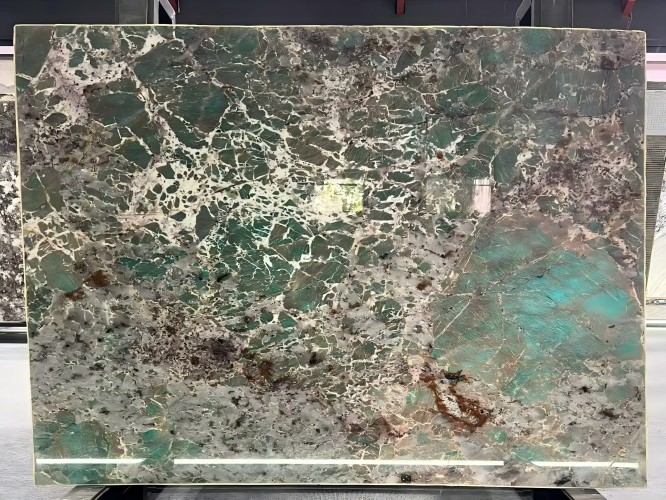
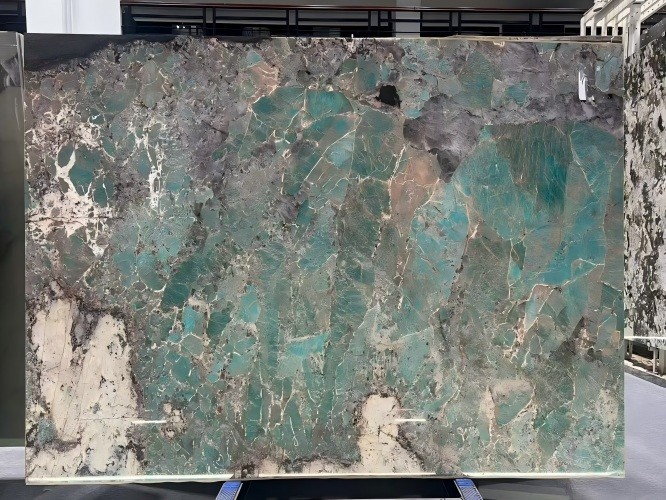
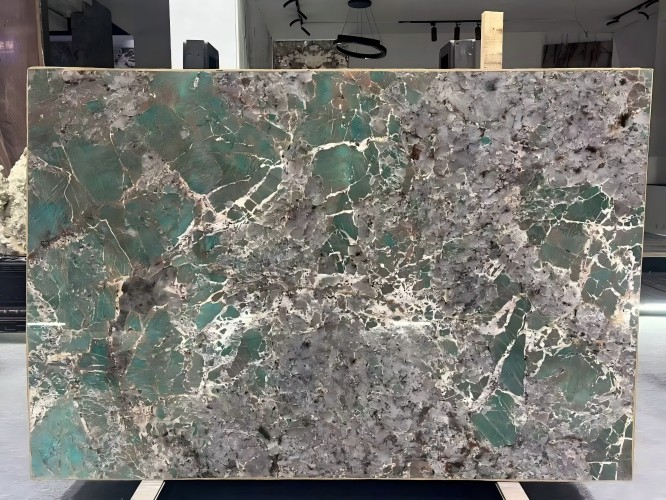
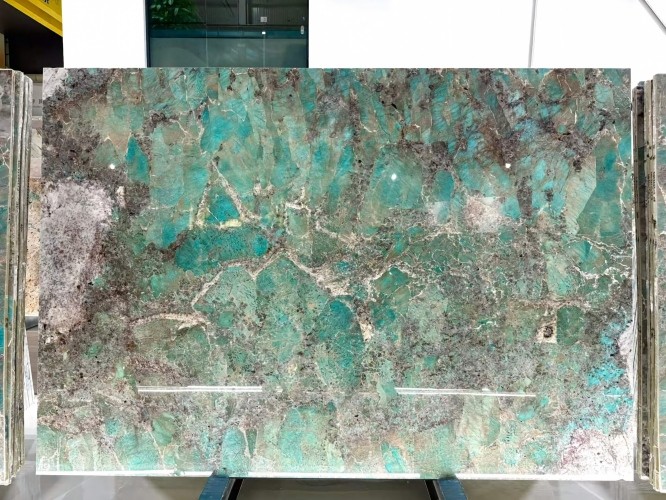
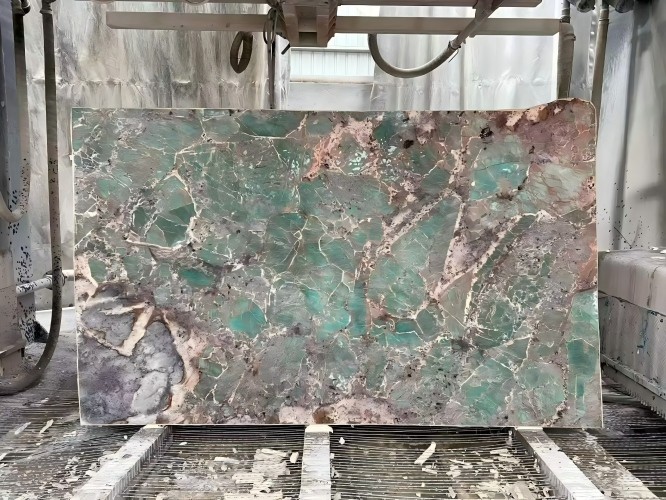
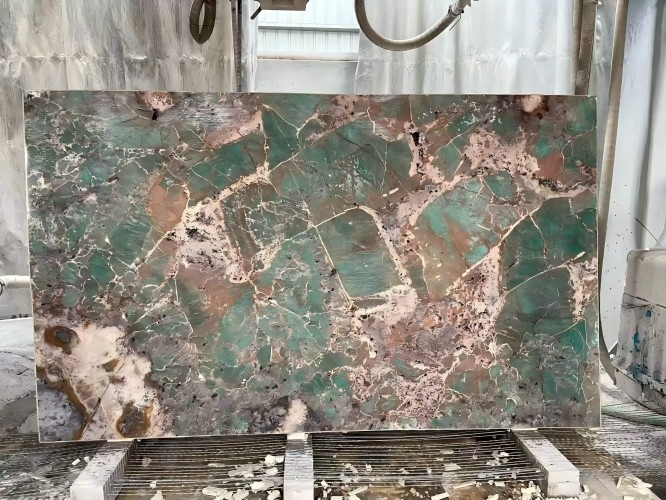
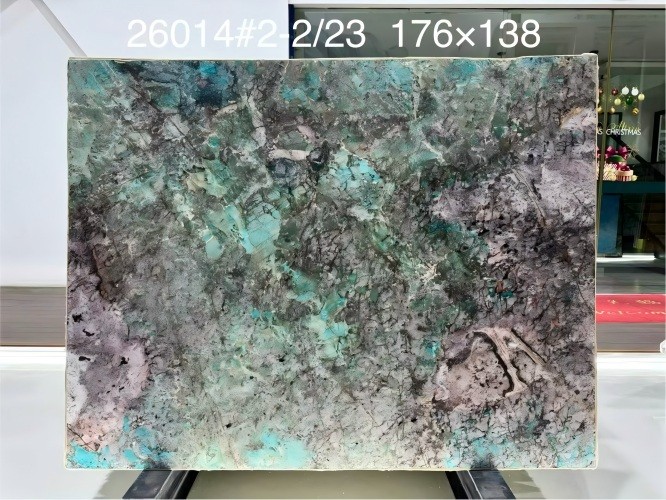
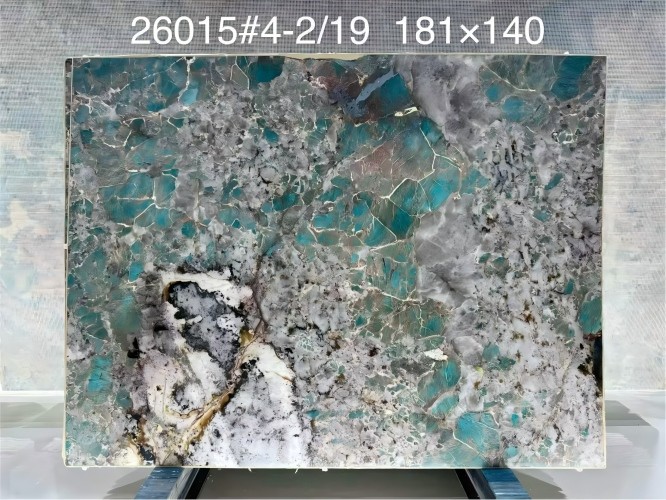
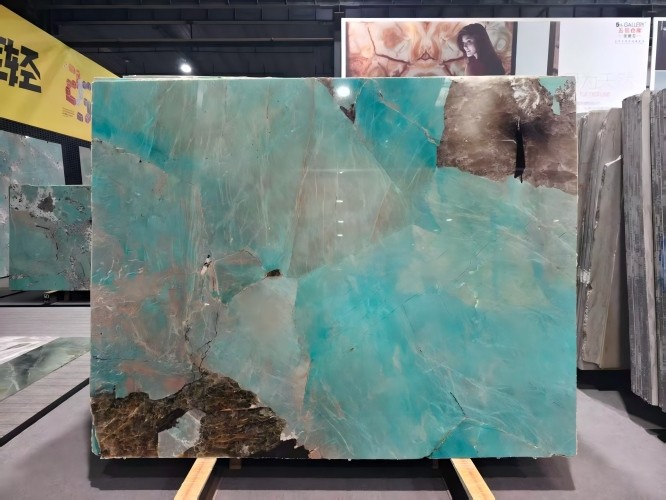
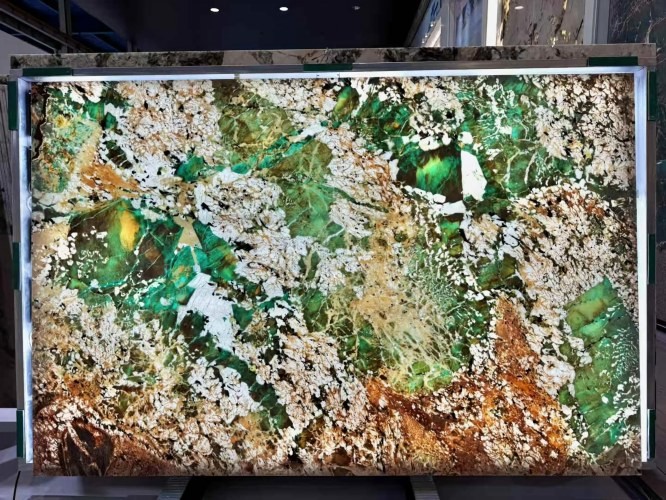
Amazonita Granite is a striking natural stone recognized for its vivid green, turquoise, aqua, and blue-green coloration, often complemented by white, grey, and darker mineral structures. Its distinctive geological patterns create a visual identity that differs significantly from conventional black, grey, beige, and white granite. For architects, interior designers, stone fabricators, developers, and homeowners seeking a memorable natural material, Amazonita Granite offers an opportunity to transform functional surfaces into defining architectural features.
Amazonita Granite is a striking natural stone recognized for its vivid green, turquoise, aqua, and blue-green coloration, often complemented by white, grey, and darker mineral structures. Its distinctive geological patterns create a visual identity that differs significantly from conventional black, grey, beige, and white granite. For architects, interior designers, stone fabricators, developers, and homeowners seeking a memorable natural material, Amazonita Granite offers an opportunity to transform functional surfaces into defining architectural features.
We supply natural stone and customized stone solutions for residential, commercial, hospitality, and architectural projects. Our approach to Amazonita Granite focuses on material selection, slab inspection, fabrication planning, dimensional accuracy, and project-specific finishing. Rather than treating every slab as interchangeable, we recognize the importance of evaluating each slab's actual color distribution, mineral movement, surface condition, and usable area before fabrication.
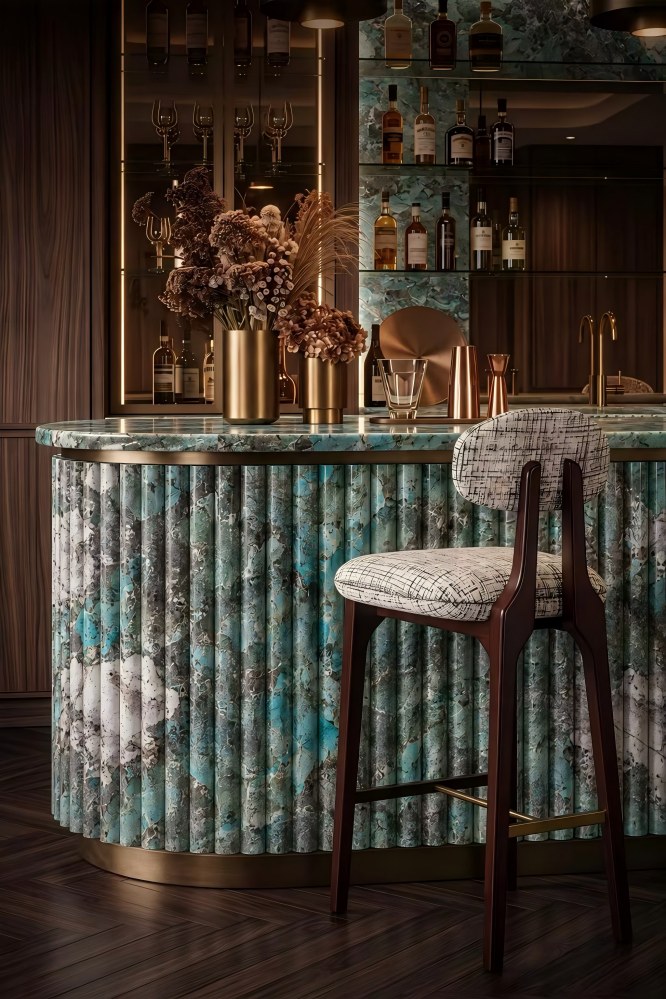
Amazonita Granite is particularly suitable for statement kitchen countertops, waterfall kitchen islands, luxury bathroom vanity tops, feature walls, reception counters, bar tops, dining tables, and bespoke stone furniture. Its green and turquoise palette can complement warm timber, brushed brass, bronze, matte black fixtures, cream cabinetry, and contemporary neutral interiors.
For professional buyers, the selection process extends beyond the stone's name. The appearance of the completed installation depends on the actual slab, the location of cutouts, the relationship between adjacent pieces, the selected surface finish, and the fabrication details. We therefore recommend reviewing actual slab photographs, confirming finished-piece layouts, and approving technical drawings before production begins.
Amazonita Granite is a commercial natural-stone name associated with distinctive green, turquoise, and blue-green decorative stone. The market also uses related spellings and search variations, including Amazonite Granite, Amazonita Stone, Amazonite Stone, and Amazon Green Granite. Naming conventions can vary between suppliers and markets, so buyers should verify the specific material being offered rather than relying on the name alone.
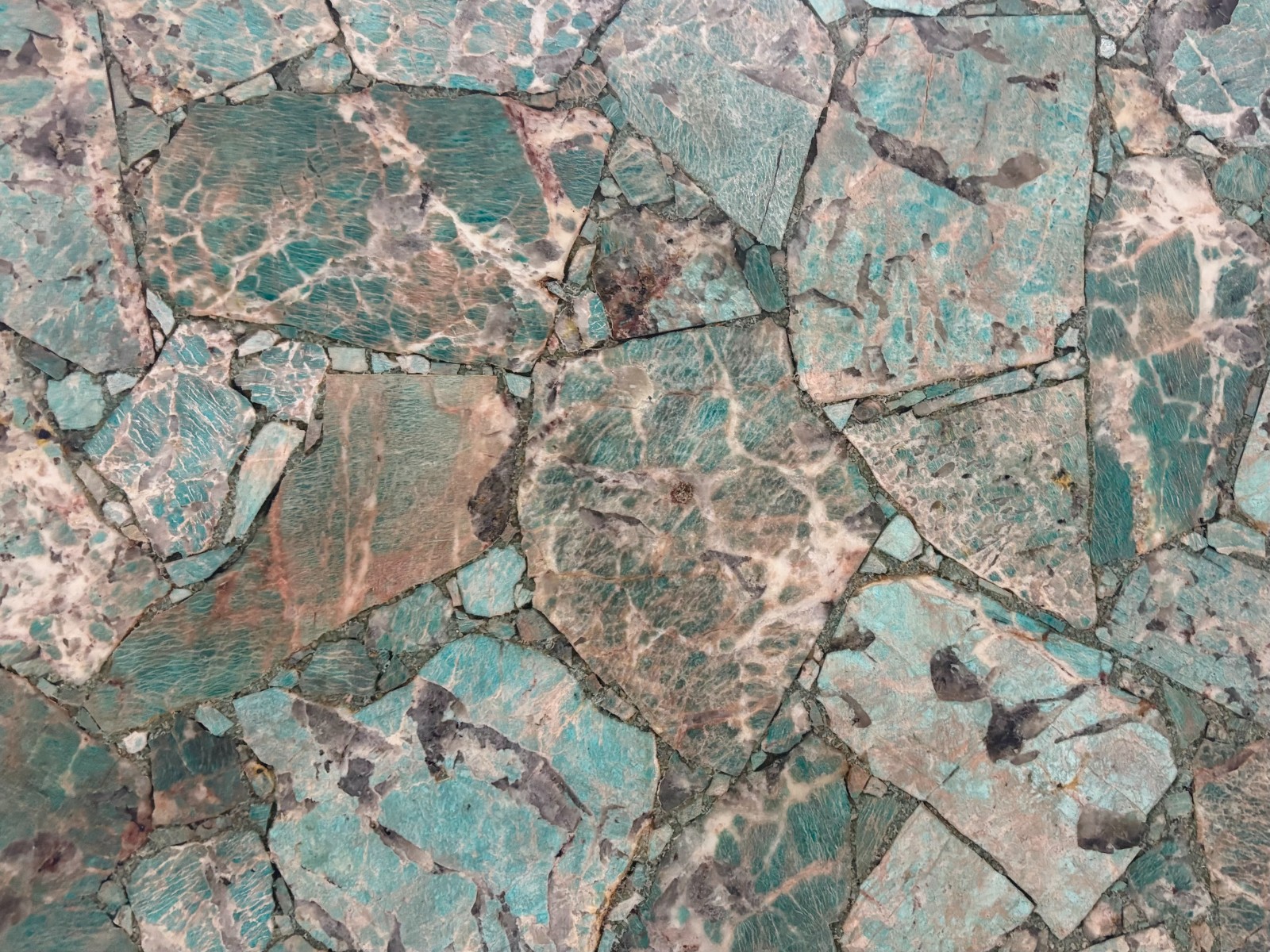
The defining visual feature is the interaction between green and blue-green mineral areas and contrasting white, grey, or darker structures. Depending on the individual slab, the overall appearance may be predominantly emerald green, soft aqua, intense turquoise, or a balanced combination of green and blue. Larger mineral formations can create dramatic movements across the slab, making the stone particularly effective on expansive surfaces where its natural pattern can be appreciated.
Although the name contains the word granite, commercial stone names do not always provide a complete geological classification. The precise mineral composition, geological identity, and technical properties should be confirmed through supplier documentation or suitable testing when those details are important to a specification. We recommend evaluating the actual material, its performance data, and the intended application before final approval.
Distinctive color: Green, turquoise, aqua, blue-green, white, grey, and occasional darker mineral areas.
Natural pattern variation: Every slab may differ in color balance, mineral distribution, and visual movement.
Statement-surface potential: Large slabs can create visually prominent islands, countertops, wall panels, and furniture tops.
Custom fabrication options: Suitable pieces may be processed into countertops, vanity tops, wall panels, tiles, bar tops, and custom furniture.
Multiple finish possibilities: Polished, honed, brushed, or other suitable finishes may be available depending on the material and processing requirements.
Project-specific selection: Actual slab review is essential when color consistency, vein placement, and coordinated components matter.
The appeal of Amazonita Granite lies in the relationship between its color and its geological pattern. A well-selected slab can provide a strong focal point without relying on additional decorative materials.
Amazonita Granite can be supplied as slabs and fabricated components for residential, commercial, and hospitality projects. Final specifications should be confirmed against the selected material and current production capabilities.
Specification | Available options or considerations |
|---|---|
Commercial name | Amazonita Granite / Amazonite Granite |
Related market names | Amazon Green Granite, Amazon Green Quartzite, Verde Paraíba |
Material classification | Confirm the specific geological material with the supplier |
Main colors | Green, turquoise, blue-green, aqua, white, grey |
Pattern | Irregular mineral movement and contrasting natural structures |
Thickness | 15 mm / 18 mm, subject to availability and project requirements |
Surface finishes | Polished, honed, brushed or other suitable finishes |
Supply formats | Slabs, tiles, panels, countertops and cut-to-size components |
Fabrication options | Edge profiling, CNC openings, mitred edges, waterfall panels and custom shapes |
Project types | Residential interiors, hotels, restaurants, bars and commercial spaces |
Important material-classification note: Amazonita Granite is a recognized commercial search term, but some products sold under Amazon Green Granite, Amazonite Granite, and related names are classified as natural quartzite. StoneContact, for example, identifies Amazon Green Quartzite as a Brazilian natural quartzite and lists Amazonita Granite among its additional names. We recommend confirming the actual material classification, technical documentation, and testing results before specifying the stone in a contract or architectural schedule.
The names Amazonita Granite and Amazon Green Quartzite can overlap in the natural-stone marketplace. However, commercial naming should not replace geological identification. The correct classification matters when architects specify performance requirements, fabricators select tooling, and buyers compare technical data.
Comparison point | Amazonita Granite | Amazon Green Quartzite |
|---|---|---|
Market usage | A commonly used decorative-stone name | A commercially used quartzite name |
Visual identity | Green, turquoise, blue-green and contrasting mineral movement | Green mineral fields with white, grey and sometimes brown or darker structures |
Geological classification | Must be verified for the specific product | Identified as quartzite in relevant supplier and trade listings |
Design applications | Countertops, islands, walls, vanities and furniture | Countertops, islands, walls, stairs, fireplaces and furniture |
Selection priority | Actual slab appearance and verified material identity | Actual slab appearance, technical suitability and verified material identity |
Related trade listings also use the name Amazon Green Quartzite for material originating in Brazil, including the Paraíba region.
For project documentation, we recommend using the supplier's confirmed material name together with the selected slab reference, finish, thickness, and applicable technical data. This reduces the risk of confusion when different suppliers use different commercial names for visually similar stones.
Color selection is one of the most important steps in purchasing Amazonita Granite. The difference between a predominantly green slab and one with extensive turquoise or white mineral areas can significantly change the appearance of a finished kitchen, bathroom, or feature wall.
Green-dominant slabs are suitable for projects seeking a stronger connection with natural landscapes, botanical colors, and richly colored architectural materials.
We recommend reviewing the distribution of emerald, forest-green, and aqua areas across the entire slab. For a kitchen island, the most attractive green sections should be positioned within the principal viewing area rather than being unintentionally removed by a sink opening, cooktop cutout, or edge treatment.
Turquoise-dominant slabs can create a brighter, more expressive effect. They are particularly effective in contemporary kitchens, statement bars, boutique hotels, and interiors that combine natural stone with brass, bronze, dark timber, or warm neutral finishes.
Before approval, we recommend comparing the saturation of the turquoise zones with the white and darker mineral structures. The objective is to select a slab whose overall composition complements the intended interior palette.
Some slabs contain prominent white or pale mineral areas. These lighter structures can help balance the intensity of the green and blue-green colors.
For large walls and islands, the relative position of these areas matters as much as their color. A slab with a balanced distribution may work well across several components, whereas a slab with one concentrated white section may be better suited to a single focal surface.
Darker mineral structures create stronger visual separation between the green, turquoise, and lighter areas. This can be useful in interiors with black fixtures, dark cabinetry, or dramatic lighting.
For connected surfaces, we recommend grouping slabs according to overall color balance and pattern density before fabrication.
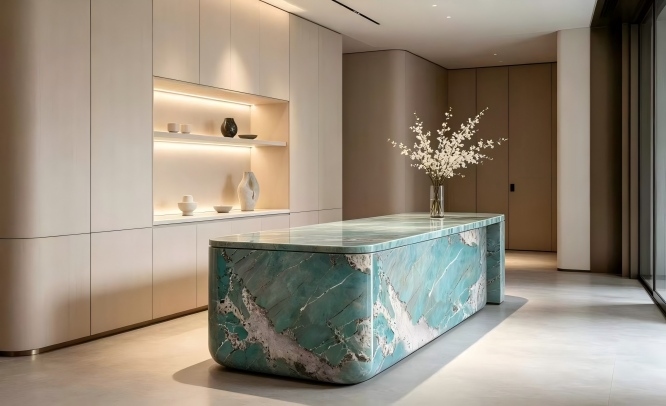
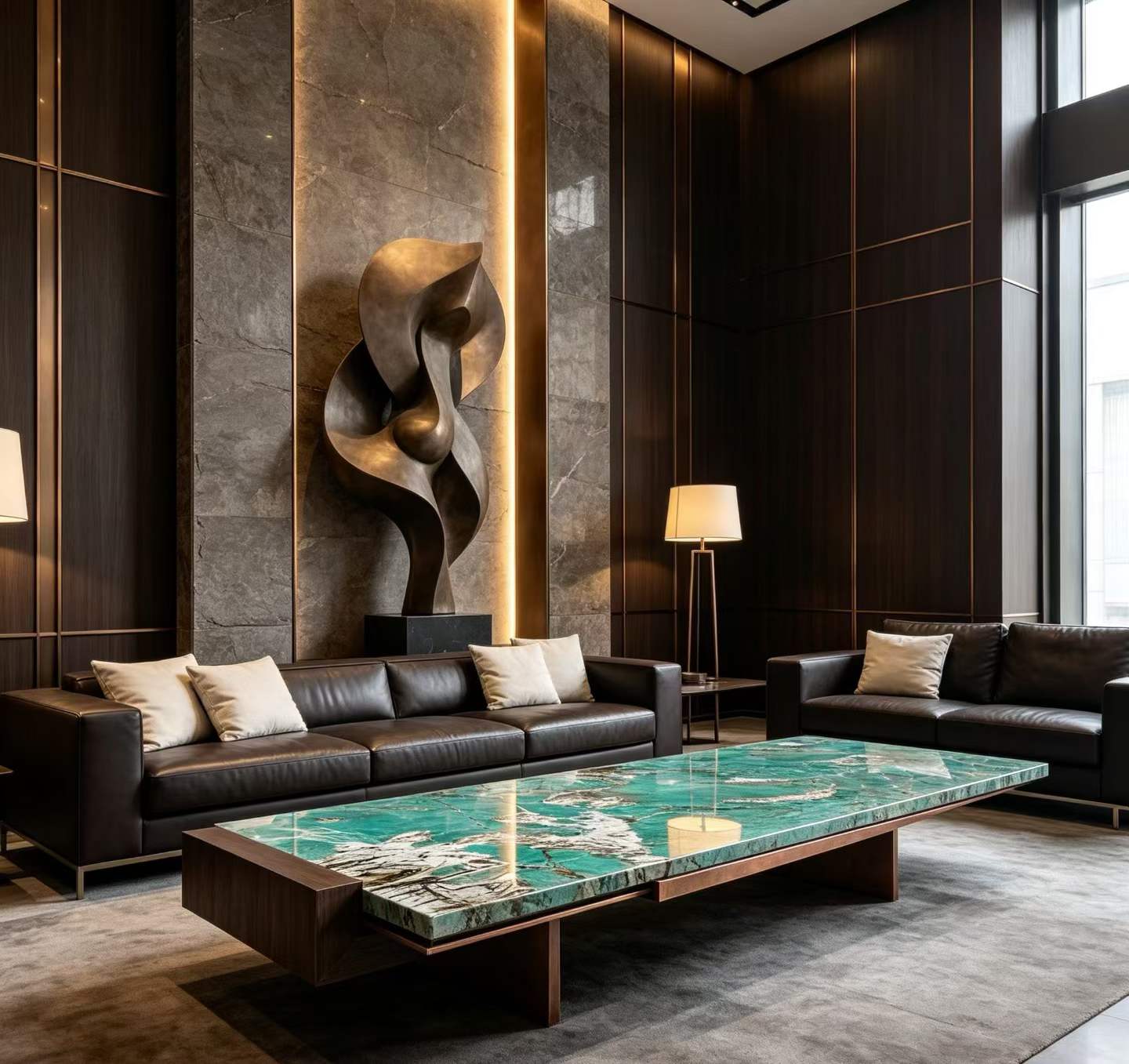
Amazonita Granite kitchen countertops combine the practical function of a work surface with the visual impact of an exotic natural stone. The green and turquoise palette can transform an otherwise understated kitchen into a distinctive architectural space.
A successful countertop project begins with the actual slab rather than a small sample. We recommend reviewing the full surface, marking the planned sink and cooktop openings, and deciding where seams and exposed edges will appear.
Confirm the finished countertop dimensions and thickness.
Select and approve the actual slab or slabs.
Mark sink, faucet, and cooktop positions on the cutting layout.
Review the location of prominent green, turquoise, white, and darker mineral areas.
Confirm the seam positions and edge profiles.
Check cabinet support and installation requirements with the fabricator.
Approve the final shop drawings before cutting.
A polished finish can enhance color depth and contrast. A honed or textured finish may create a more subdued appearance, subject to the stone's suitability for the selected treatment.
Because mineral composition and geological structure vary, the finished countertop should also be evaluated for natural fissures, repairs, and other relevant characteristics before fabrication.
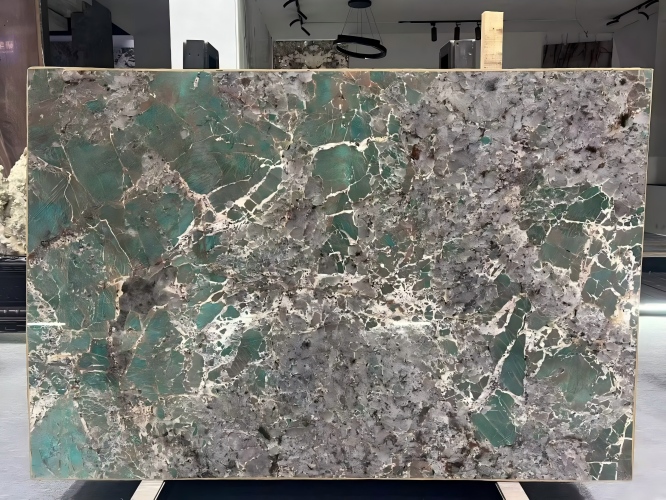
A waterfall island is one of the most visually effective applications for Amazonita Granite. The stone extends from the horizontal countertop down one or both vertical sides, allowing the natural pattern to become a continuous design feature.
The challenge is to coordinate the horizontal top with the vertical returns. A strong turquoise area on the countertop may transition into a white or darker section at the waterfall edge if the cutting layout is not planned carefully.
We recommend allocating the slab in the following order:
Establish the island's finished dimensions and desired overhang.
Identify the most attractive area for the horizontal countertop.
Plan the waterfall panels using the same slab composition.
Confirm mitred edges, seam positions, and grain or mineral orientation.
Check the layout against the actual slab.
Approve the cutting plan and fabrication drawings.
Review dry-laid components when visual continuity is a major project requirement.
A waterfall island can be coordinated with cream cabinetry, natural oak, dark walnut, matte black fixtures, or warm metallic details. The final combination should be selected after reviewing the actual slab, since green saturation and mineral distribution vary naturally.
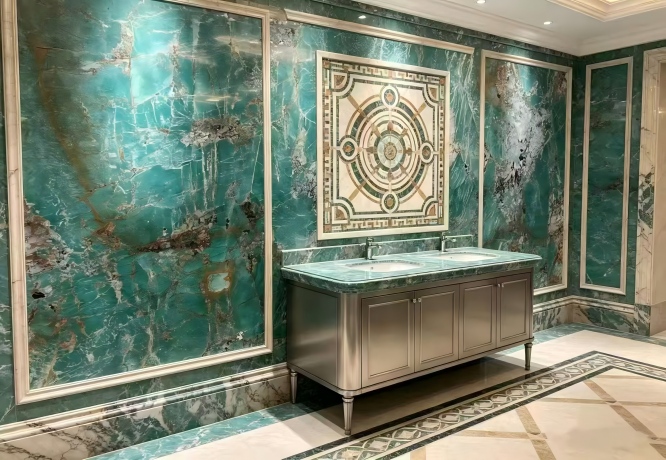
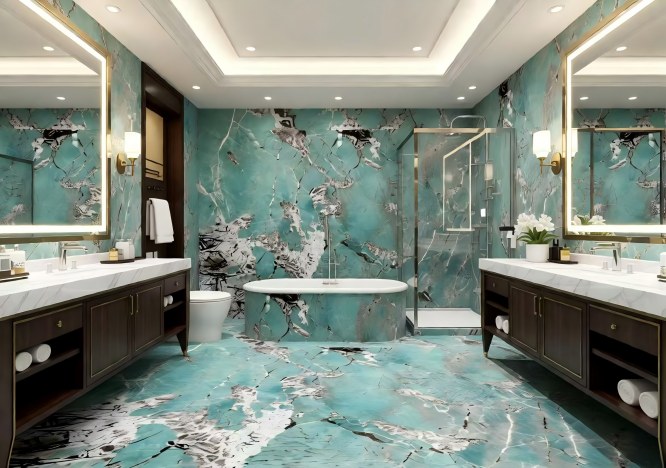
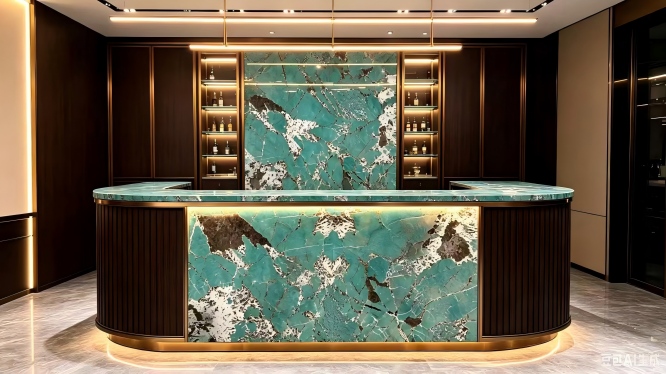
Amazonita Granite can provide a distinctive surface for primary bathroom vanities, powder rooms, hotel suites, and bespoke bathroom furniture.
Vanity fabrication requires careful coordination of the basin, faucet holes, backsplash, edge profile, and cabinet dimensions. Smaller vanity tops may use a selected portion of a larger slab to emphasize a particular green or turquoise feature.
Before production, we recommend confirming:
Basin type and cutout dimensions.
Faucet and accessory-hole positions.
Finished countertop depth and width.
Backsplash dimensions and exposed edges.
Surface finish and cleaning requirements.
Natural fissures or repaired areas near cutouts.
Installation support and sealing recommendations.
The suitability of the selected material for a wet environment should be confirmed through its technical documentation and appropriate fabrication and installation practices.
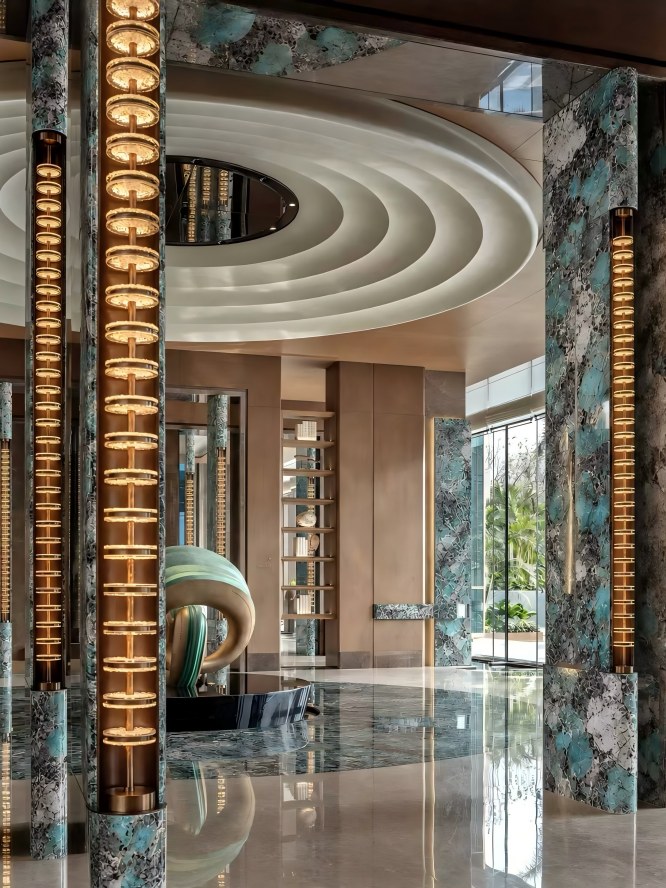
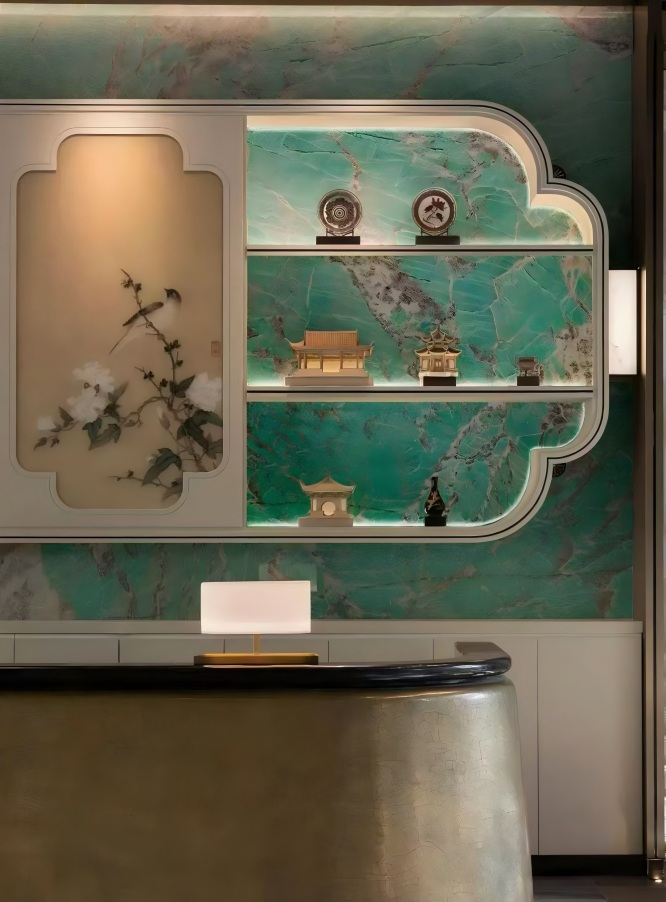
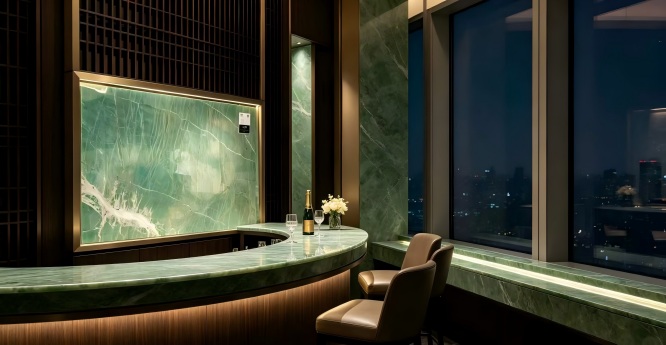
A feature wall allows the natural pattern of Amazonita Granite to become the principal decorative element in a room. Suitable locations include hotel reception areas, living rooms, entrance halls, executive offices, premium retail interiors, and residential entertainment spaces.
Large panels can reveal the broader geological composition of the slab, while smaller cut-to-size panels provide greater flexibility for walls with doors, niches, or architectural recesses.
For large installations, we recommend developing a wall elevation before cutting. The elevation should identify panel sizes, joints, visible edges, lighting positions, and the intended sequence of the selected slabs.
Bookmatching is a layout technique in which complementary slab faces are arranged to create a mirrored visual composition. It can be considered for selected materials and slab pairs when the natural structure permits a suitable result.
Bookmatching should never be assumed from the stone name alone. We recommend reviewing the actual slab faces and confirming the desired arrangement before production.
For high-visibility walls, a dry layout or an approved digital slab layout can help identify inconsistencies before the panels are packed and shipped.
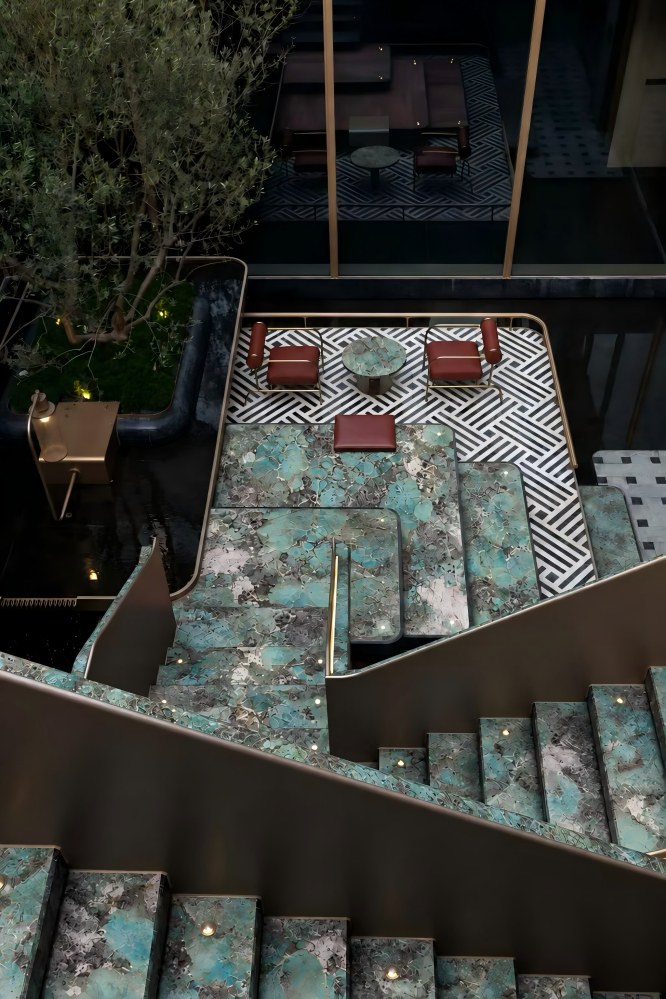
Amazonita Granite may also be considered for selected flooring, wall-tile, stair, and other architectural applications when the material's verified properties and the specified finish meet project requirements.
For flooring, we recommend reviewing the intended traffic level, surface texture, slip resistance, cleaning requirements, and maintenance plan. A finish that works well on a decorative vertical panel may not be appropriate for a wet or heavily trafficked floor.
For stairs, the fabricator should confirm tread and riser dimensions, exposed edges, support conditions, and installation details. Where multiple pieces are visible together, numbering and sequence references can help maintain the planned color balance.
For tile projects, we recommend grouping pieces by overall tone and pattern density. Natural variation can be attractive, but an uncontrolled mixture of predominantly green pieces and predominantly white pieces may produce an unintended result.
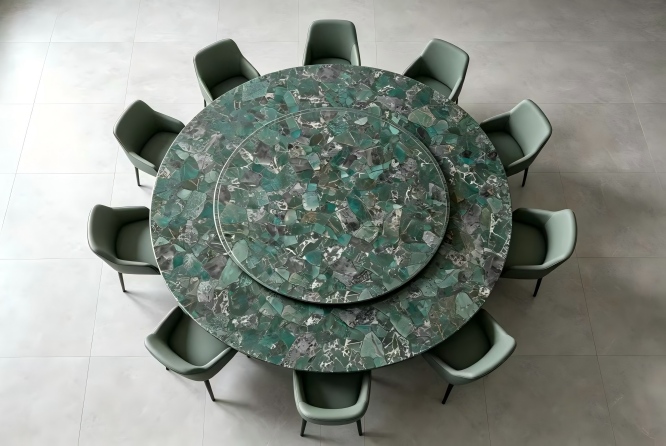
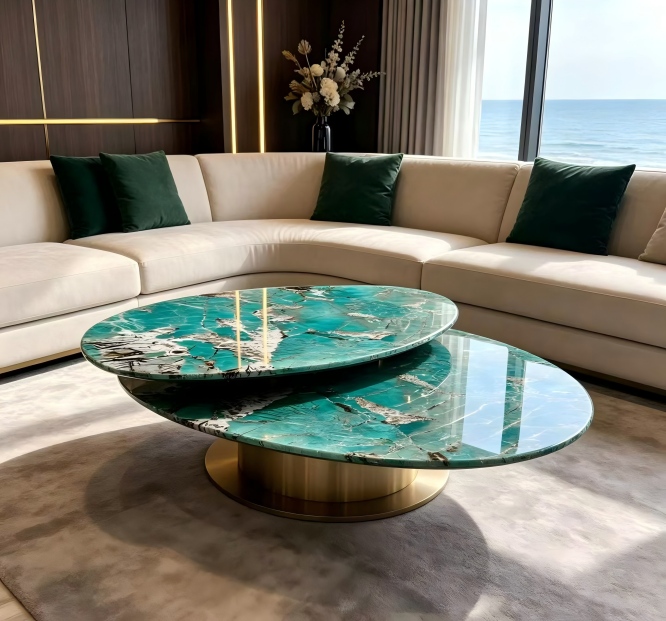
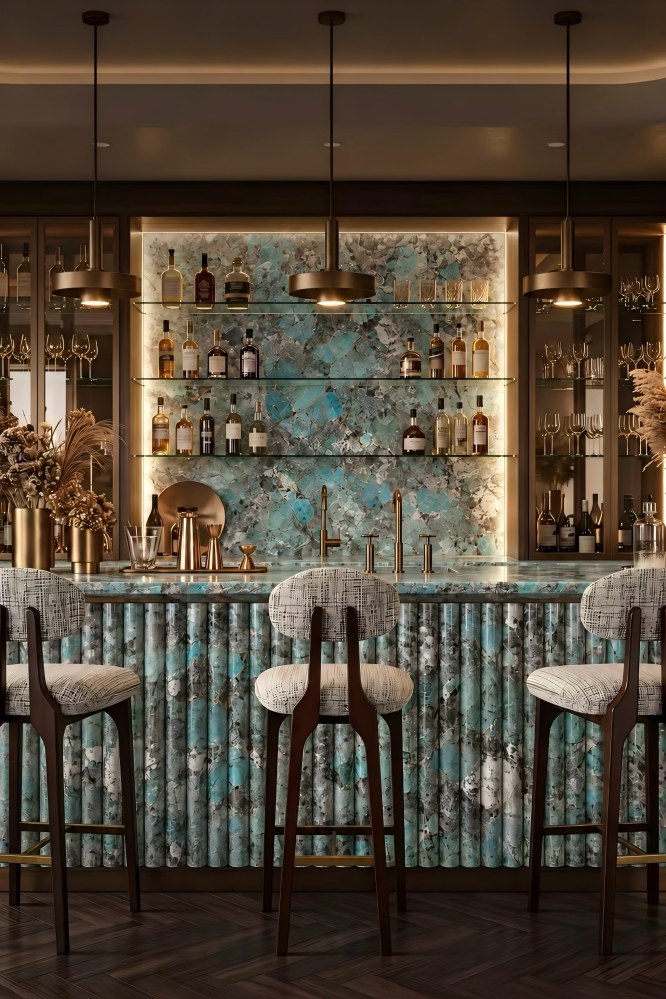
Amazonita Granite is also suitable for bespoke stone furniture when the selected slab and fabrication method meet the requirements of the design.
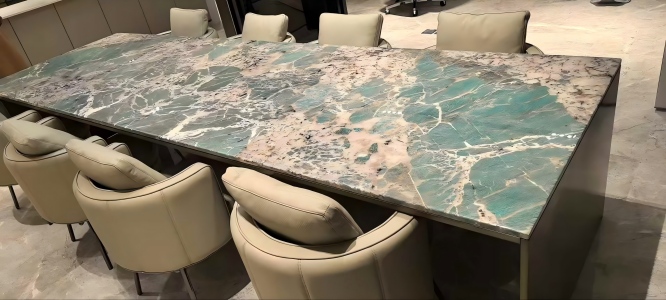
A dining table can showcase a large portion of the natural pattern, while a coffee table can emphasize a concentrated turquoise or emerald area. Bar tops and reception counters can use elongated sections to display the direction and movement of the mineral structures.
For custom furniture, the finished outline should be positioned on the slab before cutting. The layout should account for the table's shape, support structure, exposed edges, thickness, weight, and transportation requirements.
For unusually large or complex pieces, the fabricator should verify the structural design and support system rather than assuming that the stone alone can safely span the intended distance.
The surface finish influences how the stone's color, texture, and mineral contrast appear under different lighting conditions.
Finish | Visual effect | Considerations |
|---|---|---|
Polished | Reflective surface that can emphasize color depth and mineral contrast | Shows reflections and may require more frequent attention to fingerprints and surface marks |
Honed | Lower-reflection, softer appearance | Confirm the finish quality and cleaning requirements on the selected material |
Brushed | Textured appearance with a more tactile character | Availability and final texture depend on the stone and processing method |
Leathered | Textured, less reflective appearance where suitable | Confirm the actual sample, cleanability, and suitability for the application |
We recommend approving a finish sample made from the actual material whenever possible. The same nominal finish can appear different on slabs with different mineral compositions, surface conditions, and lighting.
The price of Amazonita Granite depends on the selected material, slab quality, dimensions, thickness, finish, fabrication requirements, quantity, packaging, and destination.
A raw slab quotation is not directly comparable with a quotation for a completed countertop or custom island. The latter may include cutting, edge profiling, openings, mitred returns, quality control, protective packaging, and other services.
1. Slab appearance and selection
Green saturation, turquoise distribution, white mineral contrast, and the overall composition can influence the desirability of a particular slab.
2. Thickness and dimensions
Thickness affects material usage, weight, fabrication, and installation. Larger finished components may require special handling or a more complex cutting plan.
3. Surface finish
Different finishes can require different processing steps and quality checks.
4. Fabrication complexity
Simple rectangular pieces are generally less complicated to process than islands with multiple cutouts, mitred waterfall ends, curved edges, or detailed CNC work.
5. Material yield
The usable area of a slab depends on its dimensions, natural characteristics, defects, and the layout of the finished components. Projects that prioritize specific mineral patterns may require additional material.
6. Packaging and transportation
Crating, protective materials, handling, freight, insurance where applicable, and delivery terms all affect the total project cost.
For a useful quotation, provide the following information:
Application: countertop, island, vanity, wall, floor, table, or another component.
Finished dimensions and quantity.
Required thickness.
Preferred surface finish.
Edge profiles, cutouts, mitres, and other fabrication details.
Drawings in CAD or PDF format, where available.
Destination port or delivery address.
Any specific color, pattern, or slab-selection requirements.
We can then assess the requested supply format, fabrication scope, material yield, and shipping requirements before confirming a project quotation.
Selecting a suitable supplier involves more than comparing the quoted price per square meter. The supplier should be able to identify the actual material, document the selected slabs, coordinate fabrication requirements, and explain the quality-control process.
We recommend assessing suppliers against the following criteria.
Confirm the commercial name, actual geological classification where required, origin information when available, and relevant technical documentation. If a specification calls for quartzite rather than granite, the supplier should provide documentation consistent with that requirement.
Request clear images of the complete slabs, with slab identification numbers and enough detail to evaluate color distribution and surface condition. For important projects, confirm how the selected slabs will be allocated to individual finished components.
Review the supplier's ability to process the requested thickness, dimensions, edge profiles, openings, mitres, and custom shapes. Complex projects should be supported by approved drawings and a documented cutting layout.
Confirm the inspection points for dimensions, surface finish, exposed edges, openings, natural characteristics, and finished-piece identification.
For international projects, confirm the packing method, crate identification, component numbering, shipping terms, and responsibilities for transportation and delivery.
A reliable supplier should communicate clearly about natural variation, production tolerances, drawing approval, lead time, packaging, and any limitations that could affect the finished project.
The correct care procedure depends on the actual stone, its surface finish, any applied treatment, and the manufacturer's recommendations. We recommend obtaining material-specific care instructions before the stone is installed.
General care practices include:
Remove spills promptly, especially oils, strongly colored liquids, and acidic substances.
Use a cleaner approved for the specific stone and finish.
Avoid abrasive pads or aggressive cleaning chemicals unless the manufacturer confirms they are suitable.
Use cutting boards and appropriate heat protection on kitchen work surfaces.
Follow the supplier's recommendations for sealing, if sealing is suitable or required.
Inspect joints, sealants, and installation details periodically.
Consult a qualified stone-care professional before attempting to remove persistent stains or repair surface damage.
Natural stone should not be assumed to have identical resistance to staining, acids, heat, or scratching simply because it is sold under a granite-related trade name. Where performance is critical, obtain relevant technical data for the exact material.
At Xiamen HRC Stone Co., Ltd., we provide natural-stone supply, processing, export coordination, and customized solutions for residential and commercial applications.
Our product range and processing services cover natural stone and other architectural surface materials, with project requirements determining the appropriate material, fabrication scope, and supply format.
For Amazonita Granite and related green natural stones, we focus on the following project considerations:
Slab selection according to the intended color balance and application.
Customized slab, tile, panel, and cut-to-size requirements.
Coordination of dimensions, cutouts, edge profiles, and mitred components.
Review of fabrication drawings before production.
Quality checks for finished dimensions, surface condition, and exposed edges.
Protective packing and export coordination for international orders.
We work with professional buyers, including stone importers, wholesalers, fabricators, architects, designers, contractors, developers, and project procurement teams. Our aim is to coordinate material selection and fabrication requirements so that the supplied stone is appropriate for the intended project.
For accurate availability, technical details, and pricing, we recommend sharing the required dimensions, quantity, finish, destination, and any relevant drawings.
Amazonita Granite is a commercial natural-stone name associated with striking green, turquoise, aqua, and blue-green coloration, often combined with white, grey, and darker mineral structures. The actual geological classification should be confirmed for the specific product.
Amazonita Granite and Amazonite Granite are commonly used as spelling variations in the natural-stone trade. Related names can also include Amazon Green Granite and Amazon Green Quartzite. Buyers should verify the exact material rather than assuming that all products sold under these names are geologically identical.
Some products marketed as Amazonita Granite or Amazonite Granite are classified as Amazon Green Quartzite. Trade listings document this overlap in naming. The actual classification should be confirmed through supplier documentation and appropriate testing where required.
The stone is associated with green, turquoise, aqua, and blue-green tones, with white, grey, and darker mineral structures. The proportions of these colors vary naturally between slabs.
Selected material can be fabricated into kitchen countertops when its verified properties, finish, and installation details are suitable. Sink openings, cooktop cutouts, seams, and exposed edges should be planned against the actual slab before fabrication.
Yes, suitable slabs can be fabricated into waterfall islands. The countertop and vertical returns should be coordinated through an approved cutting layout to control color placement and the visual relationship between the pieces.
Yes, suitable material can be fabricated into vanity tops, backsplashes, and related components. Basin cutouts, faucet positions, moisture exposure, and care requirements should be confirmed before production.
Selected slabs can be processed into wall panels for residential and commercial interiors. Large installations benefit from advance planning of panel sizes, joint positions, slab sequence, fixing systems, and visible mineral patterns.
Bookmatching may be possible when suitable complementary slab faces are available. The actual slabs should be reviewed before approval because the natural pattern may not create a perfectly symmetrical mirror image.
Polished finishes provide a reflective appearance, while honed and selected textured finishes offer lower-reflection alternatives. The choice should reflect the desired design, application, maintenance requirements, and suitability of the actual stone.
Availability depends on the specific material and supplier. The project specifications may include 15 mm or 18 mm material, while other market offerings use different thicknesses. We recommend confirming the available thickness and suitability for the finished application before ordering.
Sealing requirements depend on the actual material, porosity, finish, and intended use. We recommend following the material-specific guidance provided by the supplier or a qualified stone-care professional rather than assuming that every slab requires the same treatment.
Review the complete slab selection together, group slabs by color balance and pattern density, and approve the finished-piece allocation before cutting. Numbered drawings and dry-lay checks can help maintain the intended visual sequence.
Pricing depends on material selection, dimensions, thickness, finish, quantity, usable yield, fabrication complexity, packaging, and delivery destination. A project quotation should clearly distinguish raw slab supply from finished and fabricated components.
Suitable material can be processed into custom countertops, islands, vanity tops, wall panels, tiles, bar tops, tables, and other components. Custom fabrication should be based on approved drawings, confirmed material suitability, and the fabricator's production capabilities.
We welcome inquiries for Amazonita Granite slabs, green natural-stone surfaces, custom-cut components, and project-based fabrication.
To help us prepare a relevant quotation, please include the intended application, dimensions, quantity, thickness, finish, fabrication details, and destination. If you have CAD drawings, reference photographs, or a preferred green-turquoise color balance, please include those details as well.
Xiamen HRC Stone Co., Ltd.
Jason@hrcstone.com
We look forward to discussing your Amazonita Granite requirements and coordinating a suitable material and fabrication solution for your project.
Contact: Jason Wu
Phone: +8613313887269
E-mail: jason@hrcstone.com
Whatsapp:+8613338485850
Add: Room 401-6, No.751, Fanghu Road, Huli District, Xiamen
We chat