jason@hrcstone.com
+8613338485850
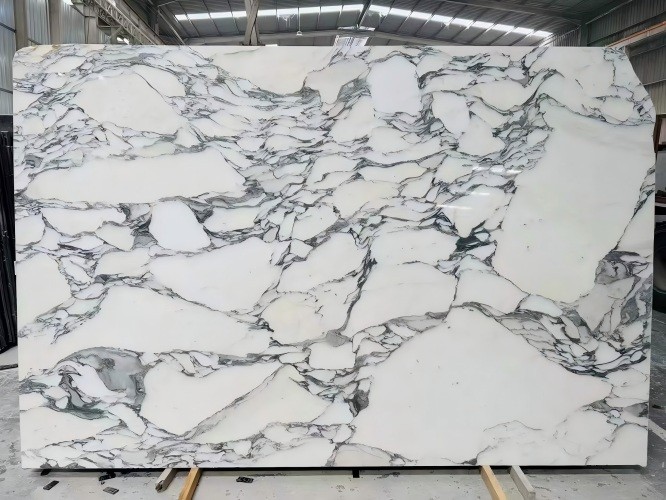
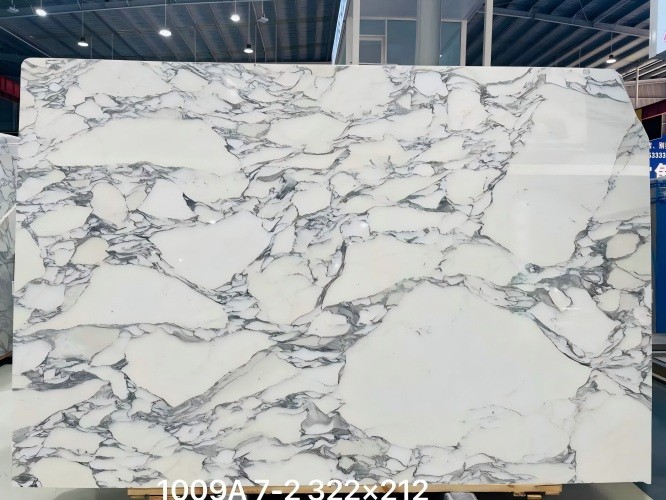
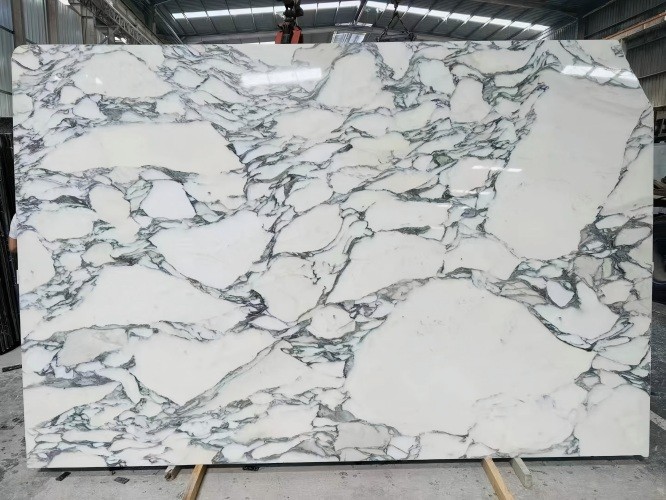
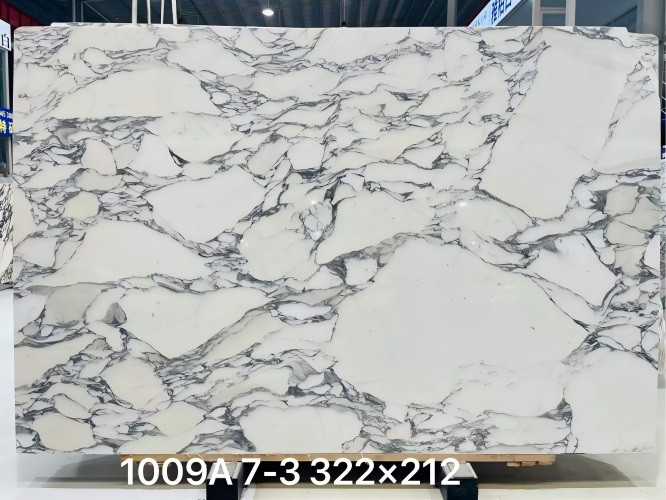
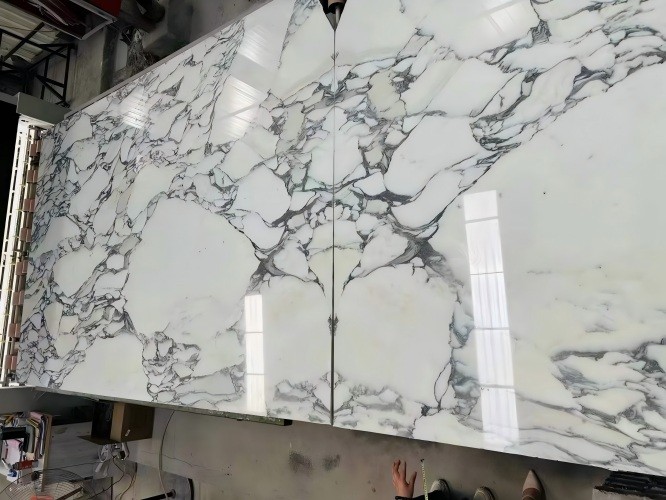
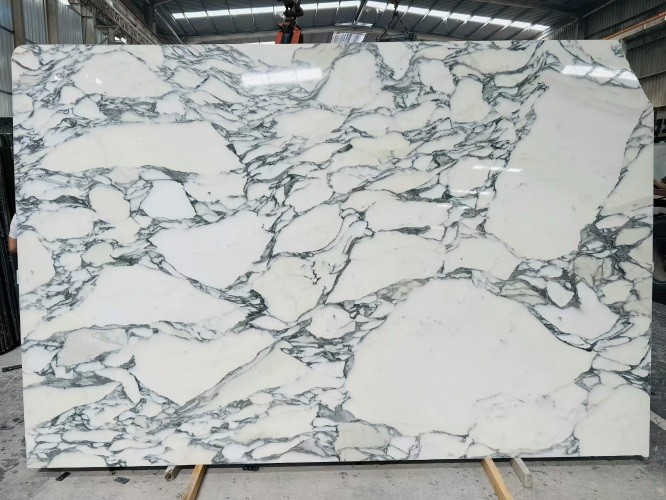
In the pursuit of elite distinction and uncompromising quality within modern high-end environments, Arabescato Corchia Marble has firmly established itself as a premier aesthetic focal point. Quarried from the historical Apuan Alps in Tuscany, Italy, this exotic natural stone features a bold, heavily brecciated pattern where deep gray and charcoal charcoal mesh into continuous, egg-shaped orbital veins across a luminous milky white field. It infuses architectural projects with a dynamic, sculptural sense of high-end movement.Whether you are an interior designer crafting an award-winning residential portfolio, an architecture and construction firm delivering commercial prestige landmarks, a luxury homeowner executing a premium estate master remodel, or a stone wholesaler and distributor managing high-demand luxury inventories, Arabescato Corchia represents the pinnacle of premium natural stone investments.
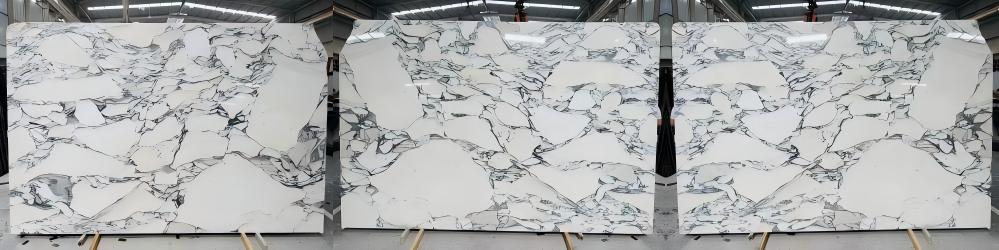
Arabescato Corchia Marble is one of Italy’s most expressive luxury white marbles, recognized for its luminous white-to-ivory background and dramatic network of grey, charcoal, and occasionally blue-grey veining. Rather than presenting the restrained linear movement associated with many conventional white marbles, Arabescato Corchia develops bold, interlocking patterns that can transform an entire slab into an architectural composition.
For architects, interior designers, stone distributors, developers, fabricators, and luxury residential clients, the appeal of Arabescato Corchia lies in more than its Italian origin. Its combination of strong visual identity, large-format slab availability, bookmatching potential, and architectural versatility makes it particularly suitable for projects where natural stone is intended to become a defining design element.
We approach Arabescato Corchia not simply as another white marble, but as a material that requires deliberate slab selection, vein planning, fabrication control, and installation coordination to achieve its full potential.
Arabescato Corchia is a premium natural marble associated with the Apuan Alps marble-producing region of Tuscany, Italy, an area internationally recognized for prestigious white marble varieties.
Its appearance typically combines:
White, milky white, or soft ivory background tones
Medium-to-dark grey veining
Charcoal accents
Occasional blue-grey mineral tones
Brecciated and web-like movement
Large sweeping veins mixed with smaller branching patterns
Significant natural variation between blocks and slabs
The word Arabescato is associated with the arabesque-like movement created by the stone's complex veining. In Arabescato Corchia, this movement can become particularly pronounced, producing interconnected formations rather than simple isolated veins.
This is precisely why high-quality slabs are frequently selected for bookmatched marble walls, luxury kitchen islands, fireplaces, hotel interiors, reception areas, bathroom walls, and other statement surfaces.
| Property | Typical Description |
|---|---|
| Material | Natural Marble |
| Commercial Name | Arabescato Corchia Marble |
| Origin | Italy |
| Geological Family | Metamorphic carbonate stone |
| Primary Color | White / Milky White / Soft Ivory |
| Vein Colors | Grey / Charcoal / Blue-Grey |
| Pattern | Dramatic, brecciated, web-like |
| Natural Variation | High |
| Common Slab Thickness | 20 mm / 30 mm |
| Common Finishes | Polished / Honed |
| Bookmatching | Excellent with suitable sequential slabs |
| Interior Walls | Excellent |
| Feature Walls | Excellent |
| Fireplace Surrounds | Excellent |
| Bathroom Applications | Excellent with appropriate detailing |
| Kitchen Countertops | Possible with appropriate care |
| Flooring | Suitable subject to application and finish |
| Exterior Use | Project-specific technical evaluation required |
Because natural marble varies by quarry section and production batch, actual slab dimensions, background whiteness, vein density, fissures, resin treatment, and physical properties should always be confirmed against the specific material being supplied.
Many buyers initially search for terms such as Italian white marble, white marble with grey veins, or luxury white marble slabs. However, these descriptions cover materials with dramatically different appearances.
Arabescato Corchia belongs to the more expressive end of the white-marble spectrum.
Its defining feature is not simply the presence of grey veins. It is the scale, density, interaction, and movement of those veins across the slab.
A single slab may contain broad sweeping grey formations surrounded by smaller branching lines, fragmented mineral structures, and areas of relatively clean white background. When several consecutive slabs are installed together, the pattern can continue across a much larger architectural surface.
This gives designers the ability to work with the stone almost as though they were composing a natural mural.
Premium selections generally display a bright white, milky white, or slightly warm white background. Natural mineral composition means that absolute uniformity should never be expected.
Depending on the block, some areas may appear cooler while others contain subtle cream or ivory undertones.
For large projects, background-tone consistency should therefore be evaluated across the entire required slab quantity rather than from a single reference photograph.
Arabescato Corchia is characterized by stronger grey movement than many conventional Carrara-type marbles.
Veins can range from:
Light silver grey
Medium grey
Blue-grey
Graphite
Deep charcoal
Their irregular interaction creates the stone's recognizable architectural character.
One of the most valuable visual characteristics of Arabescato Corchia is its brecciated appearance.
Instead of simple parallel veins, the mineral pattern can divide and reconnect, forming loops, islands, fractured shapes, and flowing networks.
This makes individual slabs visually complex while giving designers considerable flexibility for bookmatch and vein-match compositions.
Bookmatching is one of the most effective ways to use Arabescato Corchia Marble.
When sequential slabs are opened from the same block and polished on corresponding faces, they can be positioned as mirrored pairs.
The resulting pattern may create:
Butterfly formations
Symmetrical grey-vein compositions
Large central focal patterns
Mirrored branching veins
Continuous architectural movement
This technique is particularly effective for large vertical surfaces where the entire slab can remain visible.
Arabescato Corchia bookmatched marble can be particularly effective for:
Hotel lobby feature walls
Luxury residential entrance walls
Fireplace walls
Master bathroom walls
Shower feature walls
Elevator lobby walls
Reception backdrops
Restaurant interiors
Luxury retail stores
Executive office reception areas
Staircase feature walls
Double-height residential spaces
For major bookmatched installations, we recommend planning the slab sequence before cutting begins.
Two Arabescato Corchia slabs can both be commercially classified under the same material name while creating very different finished spaces.
The reason is natural variation.
Important slab-selection criteria include:
Some projects require a crisp white appearance, while others benefit from a warmer ivory background.
A highly active slab may work beautifully for a feature wall but become visually overwhelming when repeated throughout an entire floor.
The dominant movement should complement the architecture and cutting layout.
Designers may prefer either strong charcoal contrast or a more balanced distribution of white space.
Dramatic marble formations can contain natural fissures and structural characteristics that require professional reinforcement or resin treatment.
When bookmatching or vein continuity is important, consecutive slabs from the same block become considerably more valuable than randomly selected individual slabs.
For this reason, we recommend reviewing full-slab photographs or videos with slab numbers visible rather than approving Arabescato Corchia solely from a small sample.
A polished finish maximizes contrast between the white field and grey veins.
The reflective surface tends to emphasize:
Mineral depth
Crystal structure
Vein definition
Color contrast
Dramatic pattern movement
Polished Arabescato Corchia is especially effective in luxury interiors where lighting can interact with the surface.
Typical applications include hotel lobbies, fireplace surrounds, residential feature walls, vanity tops, decorative walls, luxury retail interiors, and statement kitchen islands.
Honing creates a smoother, lower-reflectivity surface.
Rather than maximizing contrast, the finish generally produces a softer architectural appearance.
Honed Arabescato Corchia works particularly well in:
Contemporary minimalist interiors
Modern European residences
Bathrooms
Flooring
Spa environments
Quiet-luxury interiors
Transitional architecture
Boutique hospitality projects
The reduced reflection can allow the natural vein structure to remain prominent without dominating the surrounding furniture, lighting, and architectural finishes.
Arabescato Corchia can create exceptionally dramatic kitchen surfaces, particularly when the island is designed as the visual centerpiece of the room.
Popular applications include:
Large kitchen islands
Waterfall islands
Countertops
Backsplashes
Full-height splash walls
Butler's pantry surfaces
Dining counters
A waterfall island allows the pattern to continue from the horizontal worktop down the vertical side panel.
For premium fabrication, the objective should not simply be to cut the pieces efficiently. The cutting layout should preserve the visual relationship between adjacent surfaces.
Where possible, vein direction can be coordinated across:
Top → Edge → Waterfall Panel
This creates a much more intentional architectural result.
It can be used successfully, but clients should understand that Arabescato Corchia is natural marble rather than quartzite or engineered quartz.
Marble is calcium-carbonate based and can react with acidic substances such as lemon juice, vinegar, wine, and certain cleaning products.
Therefore, kitchen installations should include appropriate sealing, maintenance guidance, and realistic expectations regarding natural patina and etching.
For clients prioritizing the appearance of Italian marble, these characteristics are often accepted as part of the material's natural aging process.
Arabescato Corchia is particularly suitable for high-end bathrooms because large-format stone surfaces can dramatically reduce visual fragmentation.
Common applications include:
Vanity tops
Integrated stone basins
Shower walls
Bathtub surrounds
Feature walls
Bathroom flooring
Wall cladding
Decorative niches
For master bathrooms and luxury hotel bathrooms, matching the vein movement between adjacent wall panels can create a far more sophisticated result than random tile placement.
Waterproofing, substrate preparation, adhesive selection, joint design, sealing, and movement accommodation remain critical installation considerations.
Few applications demonstrate the character of Arabescato Corchia as effectively as a full-height fireplace wall.
The vertical format provides enough area for the large grey formations to develop naturally.
Possible design approaches include:
Single-Slab Feature
One carefully selected slab becomes the visual centerpiece.
Two-Slab Bookmatch
Two consecutive slabs create a symmetrical composition.
Four-Slab Bookmatch
Four coordinated slabs create a larger mirrored installation for double-height spaces.
Vein-Matched Fireplace
Multiple cut pieces are positioned to maintain visual continuity around the fireplace opening.
For luxury residences, this can transform a functional fireplace into a major architectural element.
Arabescato Corchia can also be fabricated into floor tiles and large-format flooring.
Potential applications include:
Luxury residential foyers
Hotel reception areas
Boutique interiors
Executive offices
Luxury retail environments
Formal living areas
Residential corridors
However, flooring requires more technical consideration than decorative wall cladding.
Finish, traffic level, slip requirements, maintenance expectations, substrate stability, tile dimensions, and installation system should all be evaluated before specifying the stone.
For commercial projects, project-specific testing and specification requirements should take priority over generic material descriptions.
Although both belong to the broader family of Italian white marbles, their visual personalities can be very different.
| Feature | Arabescato Corchia | Carrara Marble |
| Background | White to ivory | White to light grey |
| Veining | Bold, dramatic, interconnected | Generally softer and finer |
| Movement | High | Low to moderate |
| Bookmatching Impact | Very strong | More restrained |
| Visual Character | Statement luxury | Classical versatility |
| Feature Walls | Excellent | More understated |
| Design Focus | Dramatic architectural surfaces | Broad interior applications |
Carrara is often selected when designers require subtle movement.
Arabescato Corchia is usually considered when the stone itself should become an important part of the visual composition.
The distinction becomes more nuanced when comparing Arabescato Corchia with Calacatta varieties.
Many Calacatta marbles are characterized by relatively open white backgrounds with broad but more isolated veins.
Arabescato Corchia often develops a denser interconnected network.
In simplified design terms:
Calacatta: open, sculptural veining.
Arabescato Corchia: complex, energetic, interconnected movement.
Both can occupy premium positions in luxury architecture, but the final choice should be based on the actual slab rather than the commercial name alone.
Calacatta Gold typically introduces warmer beige, taupe, or golden mineral accents.
Arabescato Corchia usually presents a cooler architectural palette dominated by white, grey, and charcoal.
Therefore, Calacatta Gold may coordinate naturally with brass, warm oak, cream upholstery, and warmer interior palettes.
Arabescato Corchia works particularly well with:
Black metal
Brushed stainless steel
Dark timber
Walnut
White oak
Grey plaster
Neutral fabrics
Contemporary lighting
Minimalist cabinetry
Neither approach is inherently more luxurious. They create different architectural moods.
Statuario is traditionally associated with a cleaner white field and comparatively distinct grey veins.
Arabescato Corchia generally contains more complicated and interconnected movement.
Designers seeking relatively open negative space may prefer Statuario-type selections, while projects requiring stronger natural patterning can benefit from Arabescato Corchia.
Large hospitality and commercial projects require a different procurement strategy from single-residence installations.
A designer may approve one beautiful slab, but a project requiring hundreds of square meters must consider whether that aesthetic can be reproduced consistently across the required quantity.
For commercial specifications, we focus on:
Block and batch consistency
Required total quantity
Slab dimensions
Thickness tolerance
Background-color range
Vein-density range
Surface finish
Resin treatment
Reinforcement
Cutting optimization
Dry-lay inspection
Piece numbering
Packing sequence
Installation coordination
This is particularly important for hotel lobbies, luxury retail projects, multi-residential developments, restaurants, and large private estates.
Designers frequently need more than a small stone sample.
For highly patterned materials, a 100 × 100 mm or 300 × 300 mm sample cannot communicate the full slab composition.
Where available, our project-selection workflow can include:
Current slab photographs
Full-slab videos
Slab dimensions
Batch identification
Sequential slab numbers
Bookmatch arrangement
Cutting-layout discussion
Finish samples
Physical stone samples
Mock-up coordination
For statement surfaces, these steps allow the design team to evaluate the actual stone rather than relying exclusively on catalogue photography.
Wholesale buyers usually require a different balance between aesthetic quality, commercial consistency, slab yield, and price.
Important purchasing considerations include:
Commercial grade
Background whiteness
Vein intensity
Slab dimensions
Thickness
Mesh backing
Resin treatment
Polishing quality
Cracks and repaired fissures
Container loading quantity
Batch consistency
Market preference
A dramatic slab that performs extremely well in a designer showroom may require different selection criteria from stock intended for broad countertop fabrication.
We therefore recommend defining the target customer segment before selecting a container.
Both thicknesses are widely used within the natural-stone industry, but availability varies by production batch.
Commonly considered for:
Wall cladding
Bathroom walls
Feature walls
Some countertops
Furniture surfaces
Commercial interiors
Its lower weight can be advantageous for large wall panels.
Frequently preferred for:
Kitchen countertops
Islands
Vanity tops
Furniture
Projects requiring a visually heavier edge
Final thickness selection should consider fabrication details, structural support, transportation, local building requirements, and the desired edge profile.
Arabescato Corchia should be fabricated with the same attention given to other premium natural marbles.
Before cutting, we recommend reviewing:
Final shop drawings
Slab photographs
Visible surface orientation
Vein direction
Joint positions
Cut-out locations
Edge profiles
Bookmatch requirements
Finished piece numbering
Packing sequence
For complicated projects, optimizing only for maximum material yield can compromise the finished appearance.
A better strategy balances yield efficiency with vein continuity and architectural intent.
Natural marble can contain mineral fissures, structural veins, and other geological characteristics.
Depending on the slab, professional processing may include:
Resin filling
Mesh backing
Localized reinforcement
Epoxy repair
Surface refinishing
These treatments do not automatically indicate defective material. In many expressive natural marbles, they are standard processing techniques used to stabilize naturally occurring features.
However, significant repaired areas should be evaluated during slab inspection, particularly around countertop cut-outs, narrow strips, mitred edges, and transportation-sensitive sections.
Premium stone deserves equally controlled installation.
The installation system should be designed according to panel size, substrate, location, structural requirements, and applicable local standards.
For light-colored marble, installers should pay particular attention to adhesive compatibility because inappropriate installation materials can contribute to discoloration or staining.
For large wall panels, additional considerations may include:
Mechanical fixing
Panel anchoring
Substrate flatness
Movement joints
Panel weight
Handling equipment
Joint alignment
Vein alignment
Dry laying or digital layout confirmation before final installation is strongly recommended for complicated vein-matched projects.
Arabescato Corchia is a natural marble and should be maintained accordingly.
Recommended practices generally include:
Use a suitable natural-stone sealer where appropriate
Clean spills promptly
Use pH-neutral stone cleaners
Avoid acidic cleaning products
Avoid abrasive household chemicals
Protect heavily used countertop areas where necessary
Periodically review sealing performance
Acidic substances can etch marble even when the material has been sealed because sealing primarily reduces absorption; it does not make calcium-carbonate stone acid-proof.
This distinction is particularly important for kitchen countertop clients.
For architectural projects, material selection should progress systematically from aesthetic intent to production control.
flowchart TD
A[Project Drawings & Design Intent] --> B[Confirm Application and Quantity]B --> C[Define Color and Vein Criteria]C --> D[Review Available Arabescato Corchia Blocks or Slabs]D --> E[Select Matching Production Batch]E --> F[Photograph and Number Slabs]F --> G[Prepare Cutting / Bookmatch Layout]G --> H[Client or Designer Approval]H --> I[Fabrication]I --> J[Dry-Lay & Quality Inspection]J --> K[Piece Numbering]K --> L[Export Packing]L --> M[Installation Coordination]
This workflow becomes increasingly important as project size and design complexity increase.
Arabescato Corchia Marble does not have one universal price.
Cost can vary substantially depending on:
Quarry block
Background whiteness
Vein composition
Slab dimensions
Thickness
Grade
Surface finish
Sequential slab availability
Required quantity
Fabrication complexity
Bookmatching requirements
Packing
Shipping destination
Premium blocks with strong white backgrounds and visually balanced grey movement may command significantly different prices from more commercial selections.
For accurate project pricing, the quotation should therefore be based on the actual available batch and required fabrication scope.
Before purchasing slabs or fabricated material, buyers should confirm:
Is the material genuine Italian-origin Arabescato Corchia?
Are current slab photographs available?
Are photographs identified by slab number?
Are the slabs consecutive?
Can they be bookmatched?
What are the actual slab dimensions?
What thickness is available?
Are slabs resin-treated?
Is mesh backing present?
Are there visible repaired fissures?
What finish is supplied?
What quantity belongs to the same batch?
Can the supplier provide cutting optimization?
Can pieces be dry-laid before packing?
How will finished pieces be numbered?
How will fragile pieces be reinforced and packed?
For large projects, these questions are often more important than comparing prices on a square-meter basis alone.
Yes. Arabescato Corchia is a natural Italian marble rather than an engineered stone or printed porcelain product.
It is associated with the marble-producing region of the Apuan Alps in Tuscany, Italy.
It generally combines a white to soft-ivory background with grey, blue-grey, graphite, and charcoal veining.
Yes. Variation can be significant between slabs and blocks, making full-slab approval particularly important.
Yes. Suitable sequential slabs can create highly dramatic bookmatched compositions.
Yes, but it should be treated as natural marble. Proper sealing and realistic expectations regarding etching and patina are important.
Yes. Large islands and waterfall islands are among its strongest statement applications.
Yes. Large-format bathroom walls and vanity applications are popular uses.
It can be used where the installation system, waterproofing, sealing, maintenance, and local technical requirements are properly addressed.
Neither finish is universally better. Polished surfaces emphasize contrast and depth, while honed surfaces produce a softer, more architectural appearance.
Yes, subject to finish selection, traffic conditions, maintenance requirements, slip considerations, and project specifications.
20 mm and 30 mm are common slab thicknesses, although actual availability should be confirmed for each batch.
No. They are commercially distinct Italian marble varieties with different typical pattern characteristics.
Arabescato Corchia often shows denser, more interconnected grey movement, while many Calacatta selections have more open white areas with broader isolated veins.
Generally, yes. Its stronger contrast and brecciated movement typically create a more expressive architectural appearance.
Sealing is commonly recommended for many interior applications, depending on the installation environment and selected stone-care system.
No. Sealers can reduce liquid absorption but generally do not make marble resistant to acidic etching.
For premium residential and architectural projects, full-slab selection is strongly recommended.
Yes. Background tone, vein intensity, mineral coloration, and pattern density naturally vary.
Consistency can be improved by selecting sufficient material from compatible blocks or production batches and controlling slab allocation carefully.
Yes. It is particularly effective for luxury hotel lobbies, reception areas, bathrooms, feature walls, fireplaces, and selected flooring applications.
Yes, provided the stone and installation specification are evaluated for the intended traffic, environment, and technical requirements.
For visually important areas, approval should ideally include full-slab images, slab numbering, dimensions, finish, proposed slab sequence, and bookmatch or cutting layout where applicable.
The real value of Arabescato Corchia often emerges when slab selection and fabrication are considered as one process.
We can plan material around architectural drawings for applications such as:
Custom countertops
Waterfall islands
Vanity tops
Stone basins
Fireplace surrounds
Large-format wall panels
Staircases
Reception desks
Decorative furniture
Hotel bathroom packages
Luxury residential stone packages
For complex projects, slab allocation should be completed before production begins so the most visually important areas receive the strongest slab compositions.
For premium natural stone, the final result depends on more than choosing an attractive marble name.
Arabescato Corchia demands coordination between the designer, stone supplier, fabricator, contractor, and installer.
A successful project should connect five decisions:
Material Selection → Slab Allocation → Cutting Layout → Fabrication → Installation
When these stages are coordinated correctly, the veins continue naturally through the architecture rather than appearing as unrelated fragments.
That distinction is especially visible in bookmatched walls, large kitchen islands, fireplaces, hotel lobbies, and luxury bathrooms.
We supply natural stone for international residential, hospitality, commercial, wholesale, and customized architectural projects.
For Arabescato Corchia inquiries, project information such as the following allows us to prepare a more accurate material proposal:
Required quantity
Slab or cut-to-size requirement
20 mm or 30 mm thickness
Polished or honed finish
Application area
Project drawings
Bookmatch requirements
Preferred background and vein characteristics
Delivery destination
For specification-sensitive projects, we recommend selecting from the actual available slabs rather than relying solely on generic catalogue images.
Arabescato Corchia is not a material where every slab should look identical. Its value comes from natural individuality. The objective is to select the right variation and control it intelligently across the finished architecture.
When this process is handled correctly, Arabescato Corchia becomes more than a white Italian marble with grey veins. It becomes a continuous architectural surface—one in which geology, craftsmanship, and design are deliberately aligned.
Contact: Jason Wu
Phone: +8613313887269
E-mail: jason@hrcstone.com
Whatsapp:+8613338485850
Add: Room 401-6, No.751, Fanghu Road, Huli District, Xiamen
We chat