jason@hrcstone.com
+8613338485850
In the pursuit of luxurious and enduring bathroom design, natural stone offers an unparalleled sense of sophistication and permanence. Among the most robust and visually captivating options for a bathroom centerpiece is the granite bathtub. For homeowners, interior designers, architects, and contractors seeking a statement fixture that combines exceptional durability with timeless natural beauty, a granite bathtub represents the pinnacle of elegance and practicality. This guide addresses the search for a high-performance, aesthetically rich bathing solution, exploring the unique properties of granite, its suitability for bathtubs, design possibilities, fabrication nuances, and essential care instructions. It is crafted to provide comprehensive information, targeting search intents such as "granite bathtubs for luxury bathrooms," "durable natural stone tubs," "custom granite soaking tubs," and "benefits of granite in wet areas."
Granite is an igneous rock, formed from the slow cooling of magma deep within the Earth's crust. This process results in a very hard, dense, and durable natural stone composed primarily of quartz, feldspar, and mica. When sculpted into a bathtub, granite offers a unique combination of aesthetic appeal and exceptional resilience, making it ideal for the high-moisture environment of a bathroom. The natural variations in color, pattern, and veining found in granite mean that each bathtub is a unique masterpiece.
Geological Composition: Granite is an intrusive igneous rock, primarily composed of quartz (20-60%), feldspar (up to 60%), and mica (up to 20%), along with smaller amounts of other minerals.
Hardness: Granite ranks 6-7 on the Mohs scale of hardness, making it exceptionally resistant to scratches and wear.
Density: Granite is a very dense stone, typically ranging from 2.65 to 2.75 g/cm³.
Water Absorption: Granite has a very low water absorption rate, typically between 0.1% and 0.4%. This low porosity makes it highly resistant to staining, especially when properly sealed.
Origin: Granite is quarried worldwide, with notable sources including Brazil, India, Italy, Norway, and the United States. The specific origin influences the color and pattern.
(Placeholder for visualizations: Images of various granite colors and patterns suitable for bathtubs, close-ups of granite texture, and a diagram illustrating granite's composition.)
Creating a granite bathtub is a bespoke process, ensuring the final piece perfectly matches your vision and bathroom specifications.
Material Selection: Choose from a wide array of granite colors and patterns. Consider the overall bathroom aesthetic, desired mood, and how the granite will complement other materials.
Design Consultation: Work with designers to determine the bathtub's style (e.g., freestanding, undermount), dimensions, depth, interior shape (ergonomic curves, straight edges), and any unique features (e.g., integrated seating, specific drain placement).
CAD Modeling: Detailed Computer-Aided Design (CAD) drawings are created to visualize the final product and ensure precise measurements and structural integrity.
Block Selection: A high-quality granite block is selected based on the chosen color and pattern, ensuring it meets the aesthetic and structural requirements for a bathtub.
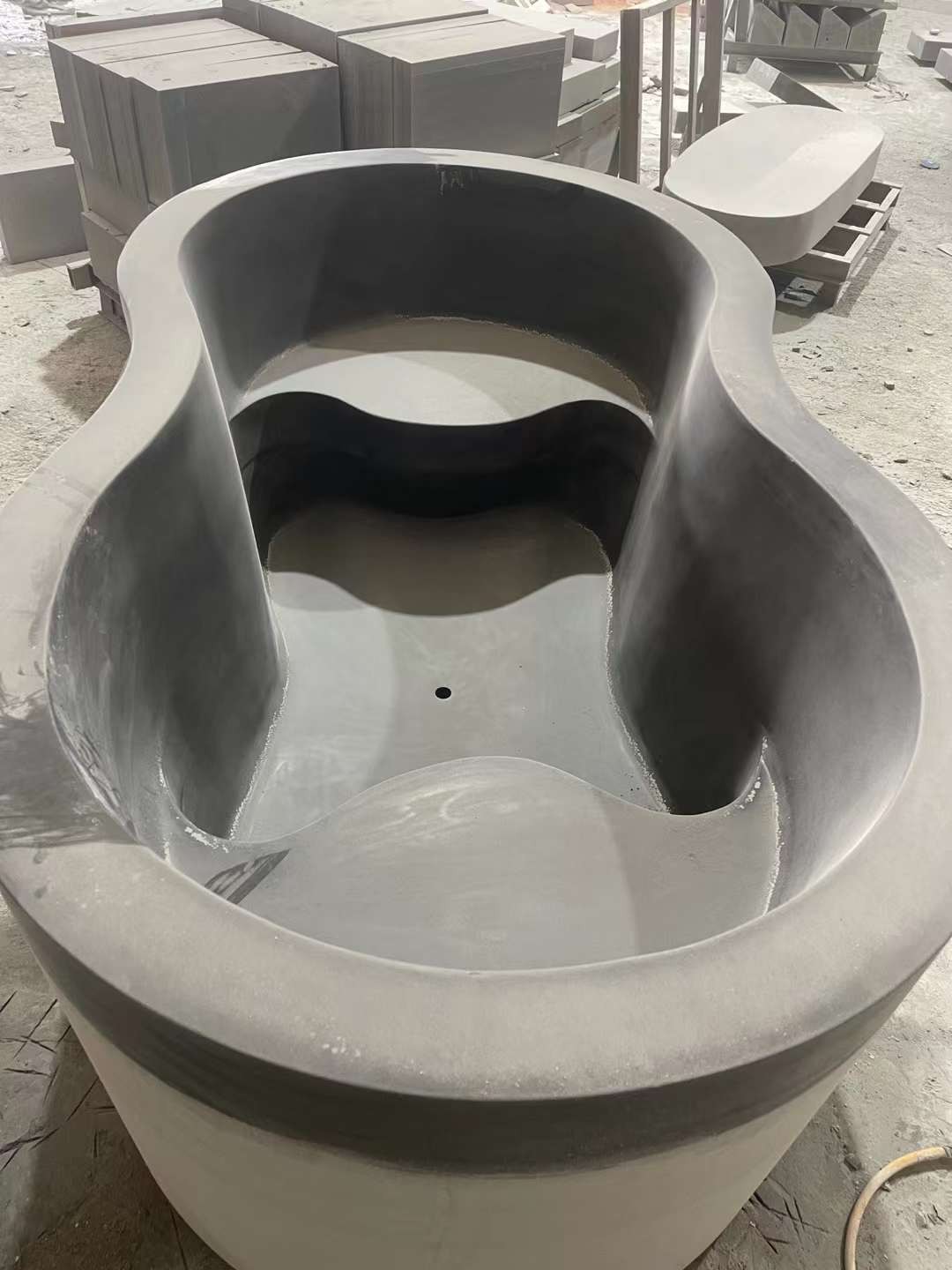
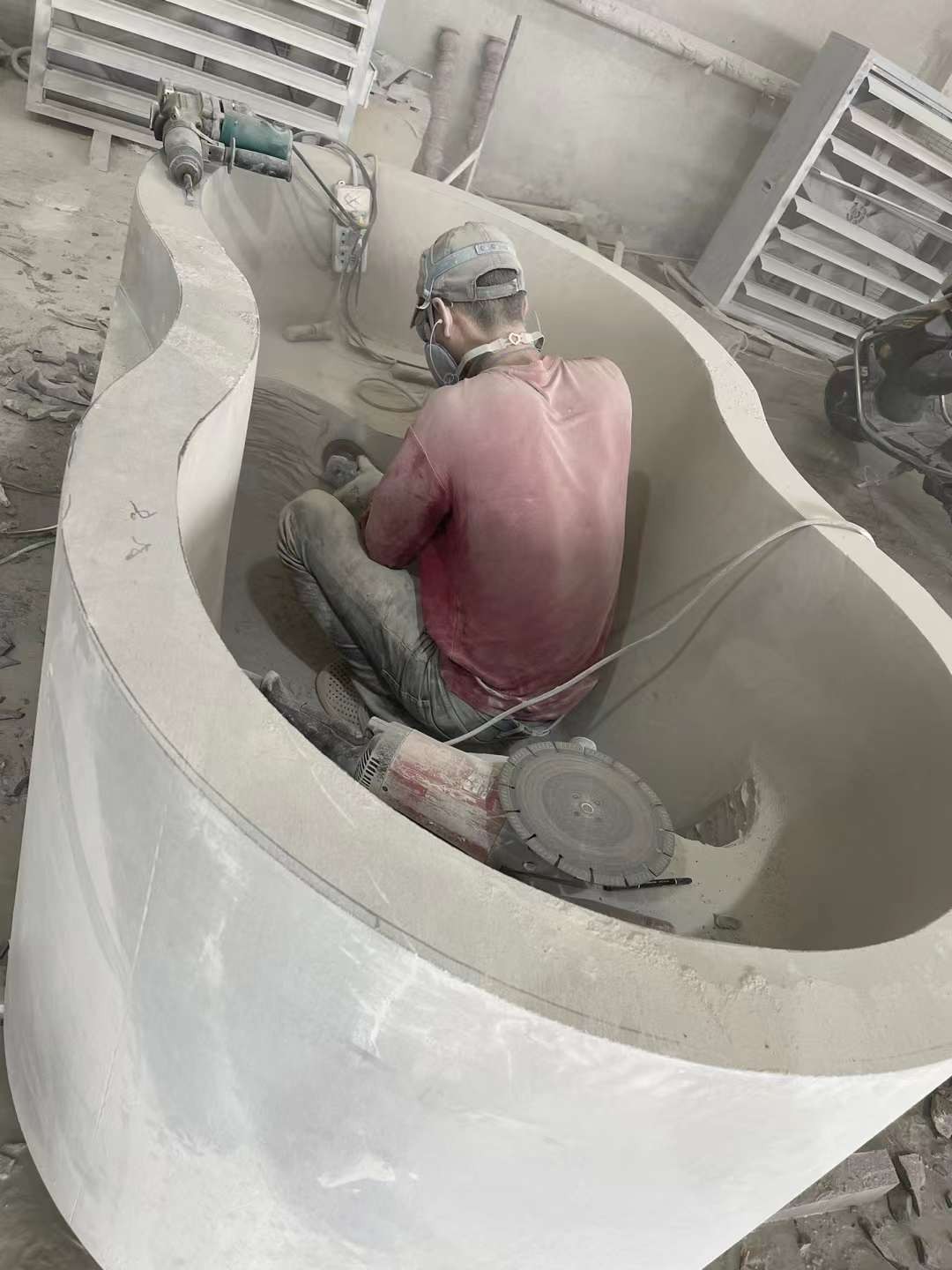
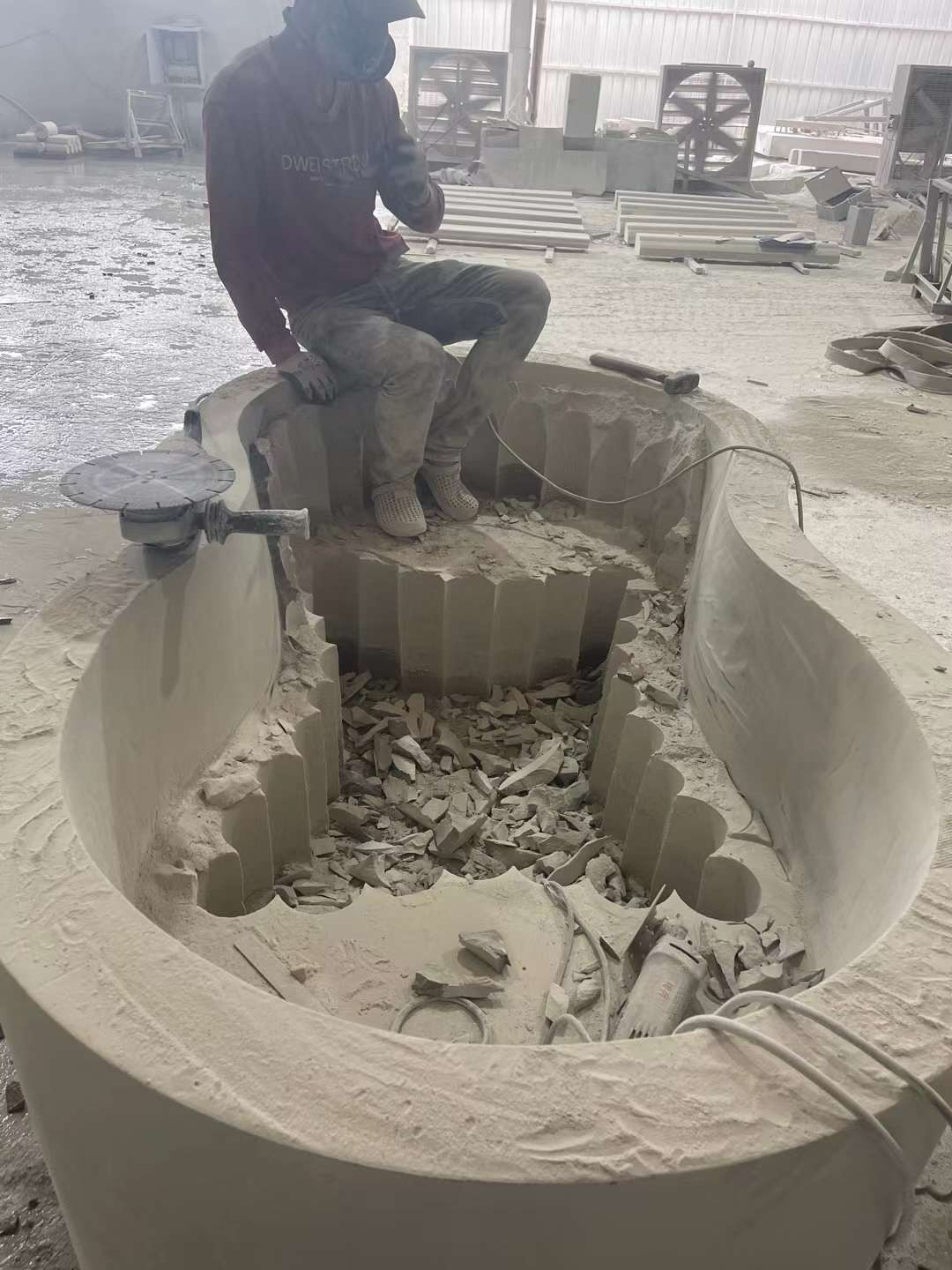
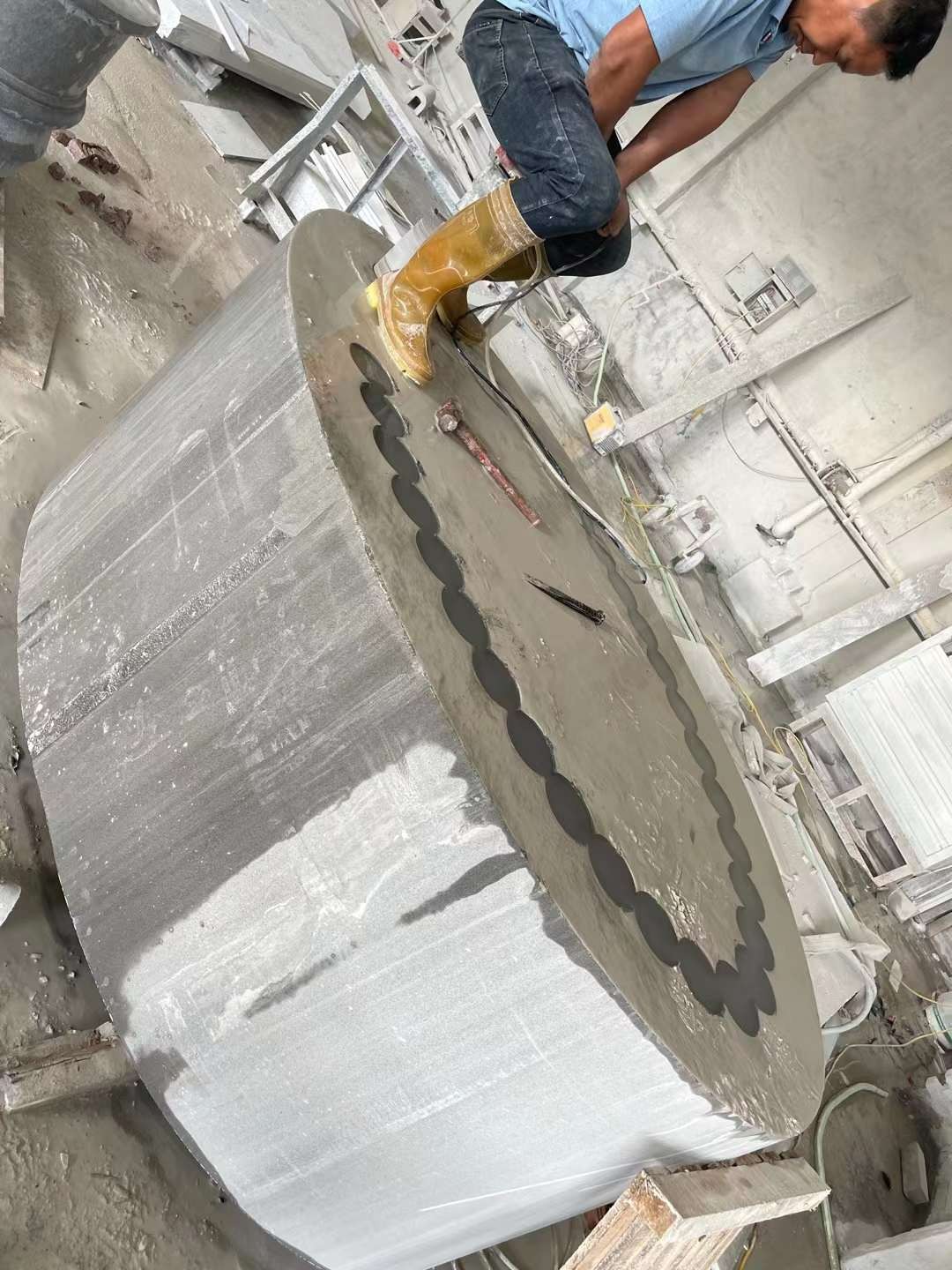
Fabrication: Skilled artisans use advanced CNC machinery and traditional carving techniques to shape the granite block into the bathtub design, followed by meticulous hand-finishing.
Finishing: The interior and exterior surfaces are finished to the desired smoothness and sheen (e.g., polished, honed).
Quality Inspection: Each custom granite bathtub undergoes rigorous quality checks before final delivery.
Granite offers a vast palette of colors and patterns, each providing a unique character to a bathroom.
Classic Whites & Grays: Stones like White Galaxy, River White, or Moon White offer lighter, often subtly veined or speckled appearances.
Bold Blues & Greens: Exotic granites such as Blue Pearl, Verde Ubatuba, or New Caledonia offer rich, deep colors with striking patterns.
Warm Earth Tones: Varieties like Tan Brown, Ubatuba, or Baltic Brown provide rich browns, reds, and golds, often with complex speckling and veining.
Dramatic Blacks: Absolute Black, Black Galaxy, or Black Forest granite offer deep, dark bases, often with subtle patterns or dramatic contrasts.
Exotic & Rare: Unique granites with unusual colors and dramatic movement, such as Azul Macaubas (often classified as quartzite but sometimes sold as granite) or unique speckled patterns.
The chosen finish greatly influences the look and feel of a granite bathtub.
Polished: This high-gloss finish creates a reflective surface that enhances the granite's color saturation and pattern, offering a luxurious and sleek appearance.
Honed: A smooth, matte finish with a subtle sheen. It provides a more understated, contemporary look and can feel warmer to the touch. It's also less likely to show water spots or minor imperfections.
Leathered/Brushed: These textured finishes impart a tactile quality and a soft sheen. They offer a unique look, can enhance durability perception, and are excellent at masking fingerprints and minor water marks.
Flamed/Bush-hammered: Primarily used for outdoor or very textured applications, these finishes create a rough, non-slip surface. Less common for bathtub interiors but could be used for exterior bases.
Crafting and installing a granite bathtub requires specialized expertise and careful planning.
Weight: Granite is extremely heavy. A typical granite bathtub can weigh between 1,500 to over 4,000 pounds (approx. 680 to 1800+ kg), depending on size and thickness. Floor Support: Adequate structural support for the subfloor is critical to bear the immense weight of the tub, especially when filled with water. Engineering assessments may be necessary.
Carving Precision: Granite bathtubs are typically carved from solid blocks using CNC machines for initial shaping, followed by detailed hand-finishing by skilled stonemasons to achieve smooth curves, ergonomic interiors, and the chosen surface finish.
Plumbing Integration: Custom plumbing solutions, including drain placement and overflow channels, are integrated during the fabrication process to ensure a seamless fit with the bathroom's plumbing system.
Professional Installation: Due to the weight and bespoke nature of these tubs, professional installation is essential. Specialized teams are required for transport, positioning, and final plumbing connections to prevent damage to the tub and the surrounding bathroom.
Granite's inherent durability makes it relatively low-maintenance, but proper care ensures its longevity and pristine appearance.
Daily Cleaning: Wipe the tub dry with a soft cloth after each use to prevent water spots. For regular cleaning, use a pH-neutral stone cleaner and a soft cloth or sponge. Avoid abrasive cleaners, acidic substances (like vinegar, lemon juice, or harsh bathroom chemicals), and scouring pads, which can dull the finish or etch the stone over time.
Stain Resistance: Granite's low porosity makes it highly stain-resistant. However, promptly wipe up any spills, especially oily or acidic ones, to prevent potential absorption or etching.
Sealing: While granite is dense, sealing is recommended, particularly for polished finishes, to enhance stain resistance and protect the stone's integrity. Reapply a quality penetrating sealer every 1-2 years, or as recommended by the sealer manufacturer, depending on usage frequency.
Preventing Damage: Avoid dropping heavy or sharp objects into the tub, which could chip or scratch the surface. Use waterproof mats or trays for toiletries to prevent prolonged contact with potentially staining or etching substances.
| Feature | Granite Bathtub | Marble Bathtub | Quartzite Bathtub | Cast Iron Bathtub | Acrylic Bathtub |
|---|---|---|---|---|---|
| Material | Natural Granite | Natural Marble | Natural Quartzite | Enameled Cast Iron | Acrylic/Fiberglass |
| Aesthetics | Durable beauty, varied patterns | Classic elegance, unique veining | Exotic beauty, bold veining | Classic, durable finish | Versatile, modern look |
| Hardness (Mohs) | 6-7 | 3-4 | 7-8 | 4-5 (enamel) | 3-4 |
| Durability | Excellent | Moderate | Excellent | Excellent | Good |
| Heat Resistance | Excellent | Moderate | Excellent | Excellent | Fair |
| Stain Resistance | Excellent | Fair (needs sealing) | Very Good | Excellent | Good |
| Scratch Resistance | Excellent | Moderate | Excellent | Good (enamel can scratch) | Fair |
| Maintenance | Low (sealing recommended) | Moderate (sealing required) | Low (sealing recommended) | Easy to clean | Easy to clean |
| Weight | Very Heavy | Very Heavy | Very Heavy | Very Heavy | Lightweight |
| Cost (approx.) | $15,000 - $50,000+ | $15,000 - $50,000+ | $20,000 - $60,000+ | $3,000 - $10,000 | $500 - $3,000 |
| Water Absorption | Very Low | Moderate | Very Low | Very Low | Low |
1. Is a granite bathtub a good choice for a bathroom?
Yes, a granite bathtub is an excellent choice for those seeking ultimate luxury, durability, and a unique aesthetic. Granite's natural hardness, resistance to scratches, heat, and stains, combined with its stunning visual appeal, makes it a highly desirable and long-lasting fixture.
2. How much does a granite bathtub typically cost?
The cost of a custom granite bathtub is significant, reflecting the material's premium nature, the complexity of fabrication, and the required engineering for installation. Prices generally range from $15,000 to over $50,000 USD, depending on the granite type, size, design complexity, and finish.
3. How do I clean and maintain my granite bathtub?
Clean daily with a pH-neutral stone cleaner and a soft cloth. Avoid abrasive cleaners and acidic substances. Periodic sealing (every 1-2 years) is recommended to maintain stain resistance and protect the stone's integrity. Promptly wipe up spills.
4. What is the difference between a granite bathtub and a marble bathtub?
Granite is significantly harder, denser, and less porous than marble. This makes granite much more resistant to scratches, stains, and etching, requiring less maintenance. Marble, while beautiful, is softer and requires more careful cleaning and regular sealing to prevent damage.
5. Is a granite bathtub too heavy for a standard bathroom floor?
Granite bathtubs are extremely heavy, often weighing over 1,500 pounds when empty, and significantly more when filled with water. Standard bathroom floors may require reinforcement or structural upgrades to safely support this weight. Professional assessment and engineering consultation are crucial during the planning phase.
A granite bathtub is the ultimate expression of luxury, durability, and natural artistry in bathroom design. Its inherent strength, resistance to wear and moisture, and unique aesthetic appeal make it a timeless investment piece that elevates any bathroom into a sanctuary of enduring elegance. While the investment is substantial, the unparalleled beauty, longevity, and low maintenance of granite ensure a bathing experience that is both practical and profoundly luxurious.
To embark on creating your bespoke granite bathtub, we invite you to:
Request a detailed consultation with our granite specialists to discuss your design aspirations and explore material options.
View our gallery of custom granite bathtubs for inspiration and examples of our craftsmanship.
Contact HRCSTONE today to receive a personalized quote and begin the journey towards owning a truly exceptional granite bathing masterpiece.
Contact: Jason Wu
Phone: +8613313887269
E-mail: jason@hrcstone.com
Whatsapp:+8613338485850
Add: Room 401-6, No.751, Fanghu Road, Huli District, Xiamen
We chat