jason@hrcstone.com
+8613338485850
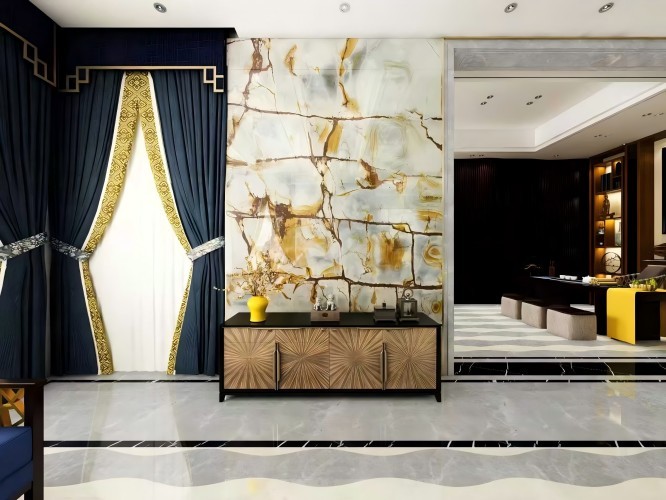
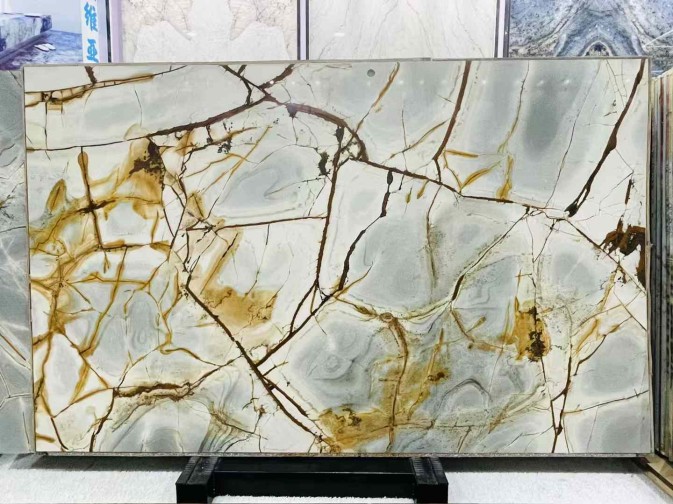
Imagine a countertop where the deep, serene blue of a twilight sky is elegantly traced with veins of warm copper and gold. Blue Roma Quartzite is not just a surface; it's a statement piece, a slice of geological artistry that transforms kitchens and bathrooms into luxurious sanctuaries. Sourced from Brazil's renowned quarries, this natural stone captivates with its unique beauty and offers a compelling blend of durability and design potential. This definitive guide explores everything you need to know about Blue Roma Quartzite slabs and countertops, from its origins and technical specifications to design trends and essential care tips.
Blue Roma Quartzite is a premium natural stone quarried from Brazil . It is a metamorphic rock, meaning it began as sandstone and was transformed under immense heat and pressure over millions of years, resulting in an extremely hard and dense material. This process gives it exceptional durability, making it harder than granite and highly resistant to scratches.
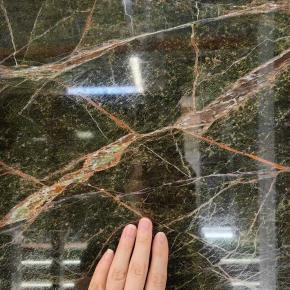
The stone's defining characteristic is its captivating color palette. It features a rich blue or steel-blue background, elegantly interlaced with dramatic veining in shades of copper, gold, gray, and ivory. Some slabs may exhibit a matte, opaque robin's egg blue ground with branching veins of golden cedar and teak. No two slabs are identical, ensuring a one-of-a-kind focal point for any project.
Blue Roma Quartzite is typically available in large slabs suitable for kitchen islands, waterfall edges, and expansive countertops. Standard slab dimensions can vary by supplier but generally follow industry norms.
| Slab Type | Typical Dimensions (Length x Width) | Common Thickness |
|---|---|---|
| Jumbo Slab | Up to 130" (330 cm) x 65" (165 cm) | 2 cm (3/4"), 3 cm (1 1/4") |
| Standard Slab | Approx. 118" (300 cm) x 70" (178 cm) | 2 cm (3/4"), 3 cm (1 1/4") |
The most common thicknesses are 2 cm (approximately 3/4 inch) and 3 cm (approximately 1 1/4 inch). Thicker slabs (3 cm) are often preferred for kitchen countertops as they provide a more substantial feel and require no additional laminating for edge profiles. Custom sizing is frequently available from suppliers.
While primarily known for slabs, Blue Roma Quartzite can also be fabricated into tiles for backsplashes, feature walls, and flooring. Common tile sizes include:
12" x 24": A popular modern subway tile size, perfect for kitchen backsplashes.
24" x 24" & 24" x 48": Large-format tiles that minimize grout lines, creating a seamless, expansive look for walls and floors.
Mosaic Sheets: Available in various patterns (herringbone, chevron, brick) for creating intricate and detailed accent areas.
Tiles are typically available in thinner gauges, such as 10mm, 15mm, or 18mm. The availability of specific tile sizes should be confirmed with your stone supplier or fabricator.
The finish applied to Blue Roma Quartzite dramatically alters its appearance and functionality. The most common finishes include:
Polished: This is the most popular finish. It creates a high-gloss, reflective surface that enhances the stone's color depth and makes the veins pop. It offers a sleek, luxurious look but can show fingerprints and water spots more easily.
Honed: A honed finish provides a smooth, matte surface with little to no shine. It gives the stone a softer, more contemporary feel and is excellent at hiding smudges and scratches, making it ideal for busy kitchens.
Brushed/Leathered: This texture is achieved by brushing the stone with diamond-tipped brushes, creating a slightly textured, tactile surface with a soft sheen. It highlights the stone's natural texture while providing superior slip resistance.
Other specialized finishes like flamed, bush-hammered, or sandblasted may also be available for specific architectural applications.
As a natural, exotic stone, Blue Roma Quartzite is typically not held in massive, ready-to-ship inventory like more common granites. It is often sourced per project or available in limited stock. It's crucial to check with suppliers like HRCSTONE for current availability and to view actual slab photos or videos before purchase, as veining and color can vary significantly from lot to lot.
To ensure safe transit, slabs are packed securely in fumigated, strong wooden crates suitable for both sea and air freight. Each slab is carefully separated with protective foam or cardboard to prevent damage during shipping. Tiles are typically packed in sturdy cardboard cartons.
Shipping is usually arranged FOB (Free On Board) from major ports like Xiamen, China, for international orders. Delivery times vary based on destination, shipping method (sea vs. air), and customs clearance. For domestic (U.S.) projects, slabs are transported from port to local fabricators via specialized freight companies.
Standard payment terms for natural stone often include a deposit (e.g., 30-50%) to secure the material and initiate production, with the balance due before shipment. Common payment methods include bank transfer (T/T), Letter of Credit (L/C), or secure online platforms. Always confirm specific terms with your supplier.
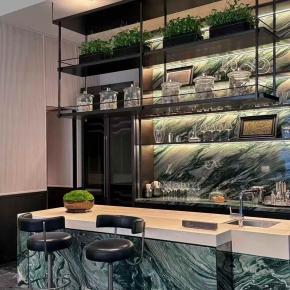
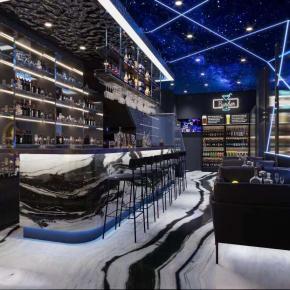
Blue Roma Quartzite's durability and stunning aesthetics make it versatile for high-end residential and commercial projects.
Kitchen Countertops & Islands: Its heat resistance makes it perfect for kitchen workspaces.
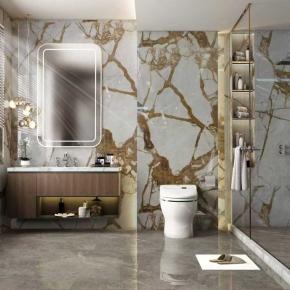
Bathroom Vanities & Wet Walls: Creates a spa-like, luxurious atmosphere.
Statement Backsplashes & Feature Walls: Used as a full-height backsplash or an accent wall to create a dramatic focal point.
Fireplace Surrounds & Flooring: Adds elegance to living areas and entryways.
Due to its hardness, fabricating Blue Roma Quartzite requires diamond-tipped tools and experienced professionals. Key considerations include:
Seaming: Plan slab layout carefully to minimize visible seams, ideally placing them in less conspicuous areas.
Edge Profiles: Popular edges include eased, beveled, ogee, and waterfall edges. A 3cm slab allows for more elaborate edge details without lamination.
Support: Ensure cabinetry is level and structurally sound to support the significant weight of the stone.
Blue Roma Quartzite aligns perfectly with current design movements:
Organic Modern: Pairing its natural veining with clean lines, matte black fixtures, and warm wood tones.
Jewel-Tone Accents: Its blue hue complements brass, gold, and smoked bronze hardware for a luxurious feel.
Bookmatched Slabs: Using two consecutive slabs mirrored to create a symmetrical, dramatic pattern for large islands or feature walls.
Honed & Textured Finishes: Moving away from high-gloss to matte and leathered finishes for a more tactile, contemporary look.
While durable, Blue Roma Quartzite is a porous natural stone and requires proper care to maintain its beauty.
Sealing: Apply a high-quality, impregnating sealer upon installation and re-apply periodically (typically annually, but follow your fabricator's recommendation). This creates a protective barrier against stains.
Daily Cleaning: Use a soft cloth or sponge with warm water and a mild, pH-neutral stone cleaner or dish soap. Avoid acidic or abrasive cleaners (vinegar, lemon juice, bleach, scouring powders).
Spill Management: Wipe up spills immediately, especially from oils, wine, coffee, and citrus juices, to prevent potential staining or etching.
Protection: Use trivets or hot pads under hot cookware and cutting boards for food prep to prevent thermal shock and scratches.
1. Is Blue Roma Quartzite good for kitchen countertops?
Yes, it is an excellent choice. It is harder than granite, making it highly scratch-resistant, and it has good heat tolerance. However, it requires sealing to prevent stains from spills.
2. How does Blue Roma Quartzite compare to quartz?
Blue Roma is a 100% natural stone, while quartz is an engineered product. Quartzite is generally more heat and scratch-resistant but requires periodic sealing. Quartz is non-porous and lower maintenance but can be damaged by high heat.
3. What is the price range for Blue Roma Quartzite?
As a premium, imported natural stone, it is on the higher end of the cost spectrum. Prices can vary widely based on slab quality, thickness, finish, and supplier. It is generally more expensive per square foot than standard granite or quartz.
4. How often does Blue Roma Quartzite need to be sealed?
It should be sealed upon installation. Re-sealing frequency depends on usage; for kitchen countertops, an annual application of a quality impregnating sealer is a common recommendation. Always follow your fabricator's specific advice.
5. Can Blue Roma Quartzite be used outdoors?
While durable, it is not typically recommended for exterior applications in freeze-thaw climates. The stone's porosity can allow water absorption, which may lead to cracking in freezing temperatures. Consult with a stone professional for exterior use in your specific region.
Blue Roma Quartzite represents the pinnacle of natural stone luxury, offering a breathtaking blend of dramatic beauty and robust performance. Its unique blue canvas adorned with metallic veins makes it a timeless investment for any high-end kitchen or bathroom renovation. While it commands a premium price and requires committed maintenance, its ability to create a truly singular and awe-inspiring space is unparalleled. By understanding its properties, proper care requirements, and current design applications, homeowners and designers can confidently choose Blue Roma Quartzite to craft interiors that are as enduring as they are exquisite.
For those seeking this exceptional material, partnering with a reputable supplier like HRCSTONE ensures access to premium-quality slabs and expert guidance from selection through to completion of your project.
Contact: Jason Wu
Phone: +8613313887269
E-mail: jason@hrcstone.com
Whatsapp:+8613338485850
Add: Room 401-6, No.751, Fanghu Road, Huli District, Xiamen
We chat