jason@hrcstone.com
+8613338485850
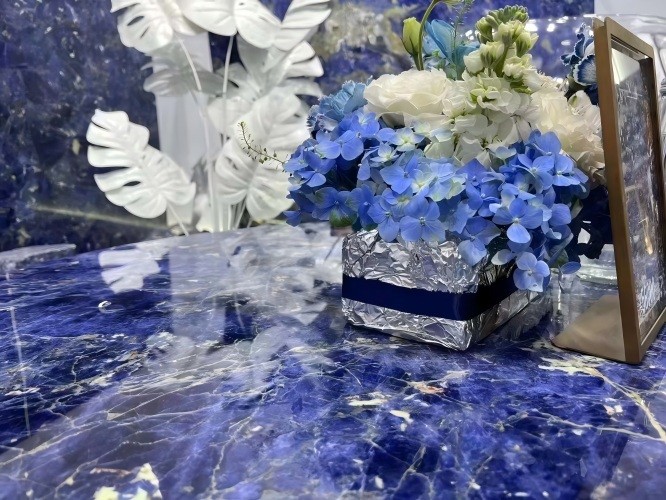
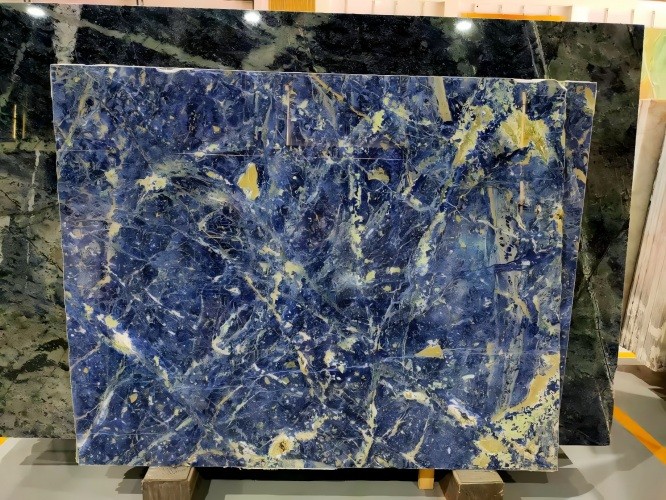
The Timeless Elegance of Natural Blue Marble: A Definitive Guide for Luxury Interiors
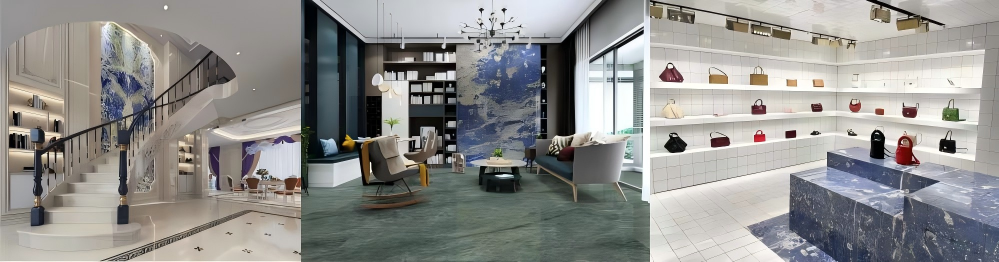
Natural Blue Marble is more than just a building material; it is a geological masterpiece. Characterized by its rarity and striking spectrum of hues—from the serene whispers of a summer sky to the dramatic depths of the midnight ocean—blue marble has become the ultimate statement piece for high-end residential and commercial architecture. In this guide, we explore why this "semiprecious" stone continues to dominate global design trends and how to integrate it into your next project.
Natural blue stone occurs in two primary geological forms: true crystalline marble and highly silicified quartzite (often commercially categorized as marble due to its aesthetic). The blue coloration is typically the result of rare mineral inclusions such as lazulite, sodalite, or dumortierite.
Unlike common Carrara or Calacatta, blue marble is found in very few quarries worldwide—primarily in Brazil, Italy, and Africa. This scarcity makes every slab a unique work of art.
Azul Macaubas: A world-renowned blue quartzite from Brazil, famous for its linear, sky-blue veining.
Blue Sodalite: An exotic, deep cobalt stone often featuring white calcite veins and occasional golden flecks.
Palissandro Blue: An Italian classic with a cloudy, shimmering texture that transitions between blue, grey, and gold.
To accommodate grand-scale architectural features, we provide slabs in various dimensions. Large-format slabs are essential for "book-matching," where two mirror-image slabs are placed side-by-side to create a continuous, symmetrical pattern.
Standard Slabs: 2400mm up x 1200mm up (95" x 47")
Jumbo Slabs: 3000mm up x 1800mm up (118" x 71")
Thickness Options: 18mm (standard), 20mm, and 30mm for heavy-duty countertop applications.
For flooring and wall cladding, precision-cut tiles ensure ease of installation and a cohesive aesthetic.
Standard Square: 305 x 305mm (12" x 12"), 610 x 610mm (24" x 24")
Rectangular Formats: 305 x 610mm (12" x 24"), 600 x 1200mm (24" x 48")
Custom Cuts: Tailored sizes for mosaics, chevrons, or herringbone patterns are available upon request.
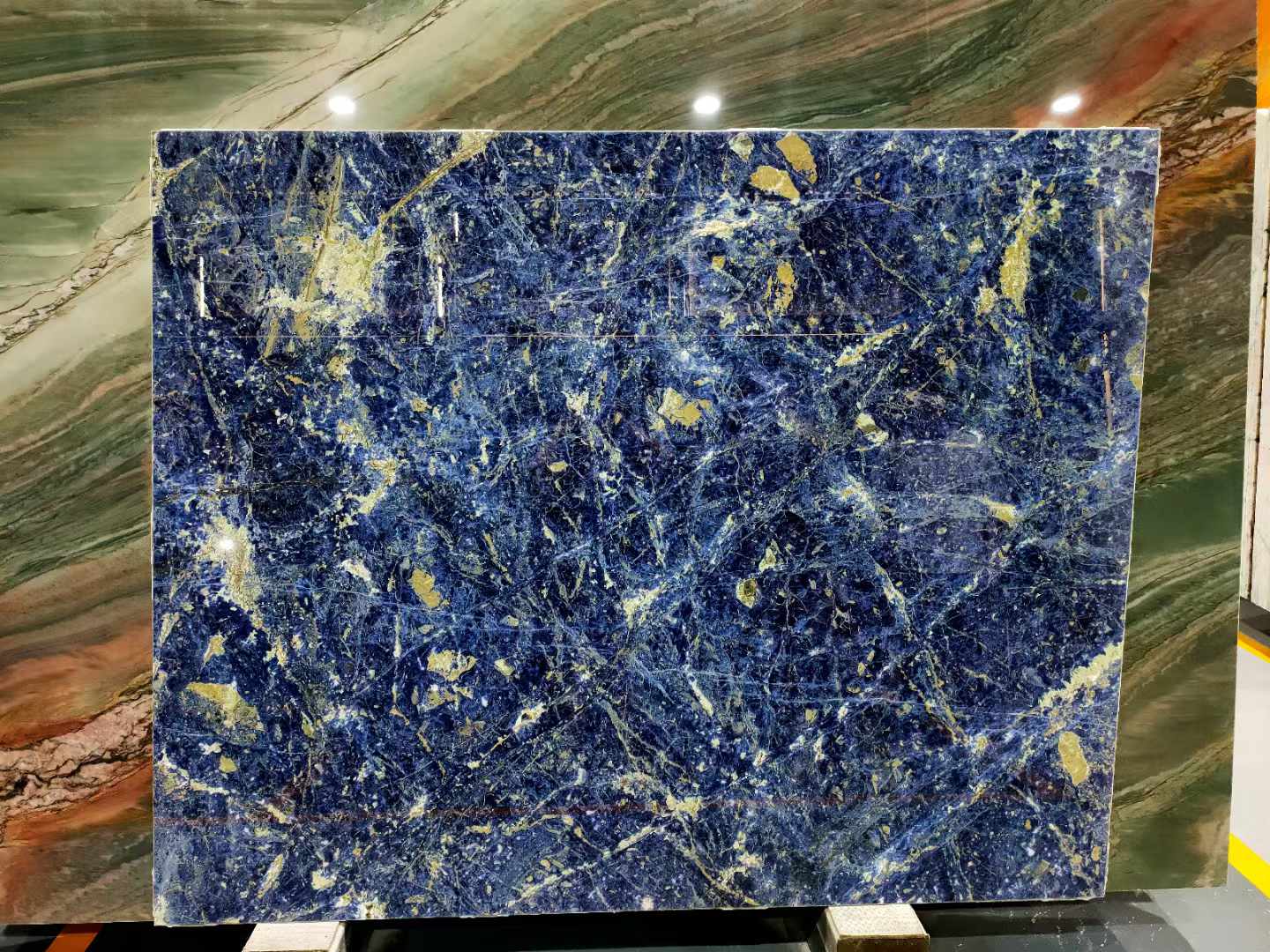
The finish of the stone dictates its visual impact and slip resistance.
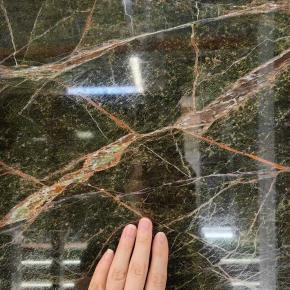
Polished: The most popular choice for blue marble. It saturates the colors and provides a mirror-like reflection, highlighting the stone's depth.
Honed: A smooth, matte finish that is less reflective. Ideal for high-traffic flooring where scratches might be more visible on a polished surface.
Leathered: A textured finish that feels soft to the touch and hides fingerprints and water spots—excellent for kitchen islands.
Brushed/Antique: Gives the stone a slightly weathered, "lived-in" feel, enhancing the natural grain.
Natural Blue Marble is versatile, yet its rarity often dictates its use as a focal point.
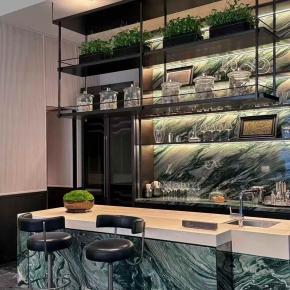
Kitchen & Bar Tops: Especially when using blue quartzites like Azul Macaubas, which offer the beauty of marble with the hardness of granite.
Feature Walls: Book-matched slabs in living rooms or hotel lobbies create a "natural painting" effect.
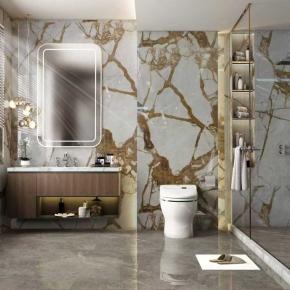
Luxury Bathrooms: Blue marble vanity tops and walk-in showers evoke a spa-like, aquatic serenity.
Furniture Design: High-end designers often use blue marble for dining tables, coffee tables, and pedestals.
In 2024 and beyond, "Biophilic Design" is at the forefront. Natural blue stones connect interior spaces with the elements of water and sky. Current trends include:
Monochromatic Blue: Using varying shades of blue marble to create a layered, sophisticated look.
Mixed Metals: Pairing blue marble with brushed brass or gold hardware for a "Royalty" aesthetic.
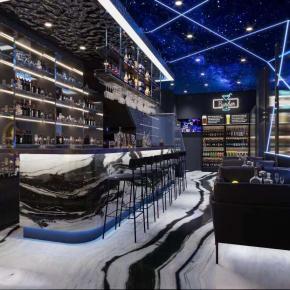
Curved Islands: Using CNC technology to carve blue marble into organic, flowing countertop shapes.
Blue marble requires expert craftsmanship. Because some blue stones (like Sodalite) are more brittle than white marble, they require:
Back-Meshing: A fiberglass mesh is applied to the back of the slab to increase structural integrity during transit and cutting.
Resin Treatment: High-quality vacuum resining fills micro-fissures, ensuring a glass-smooth surface.
Bridge Saw Precision: Water-jet cutting is recommended for intricate patterns to prevent edge chipping.
To preserve the vivid blue pigment and prevent etching:
Sealing: Must be sealed with a high-grade oleophobic sealer upon installation and re-sealed every 12 months.
pH-Neutral Cleaning: Avoid acidic cleaners (vinegar, lemon, or bleach). Use only stone-specific soaps.
Spill Management: Wipe away wine, coffee, or oils immediately to prevent deep-pore staining.
We maintain a consistent inventory of 5,000+ square meters of premium blue marble slabs in our warehouse to ensure color consistency for large-scale projects.
Slabs: Secured in fumigated, "A-frame" wooden bundles with plastic film protection between faces.
Tiles: Packed in reinforced, sea-worthy wooden crates with internal foam padding to prevent movement.
Port of Loading: Xiamen Port, China.
Lead Time: 7-15 days for in-stock items; 21-30 days for custom-cut orders.
Global Reach: Full container load (FCL) shipping to North America, Europe, Middle East, and Australia.
Terms: 30% T/T deposit, 70% balance against copy of B/L or L/C at sight.
Samples: Free small samples (10x10cm) are available; shipping costs are covered by the client.
When selecting blue marble, always request a "dry-lay" photo or video. Since it is a natural product, the veining can vary significantly between the top and bottom of a block.
1. Is natural blue marble more expensive than white marble?
Yes, generally. Due to its geological rarity and the specific mineral conditions required for blue coloration, it is considered an exotic stone. Prices are typically 3x to 10x higher than standard white marbles like Carrara.
2. Can blue marble be used for kitchen countertops?
Yes, but with caveats. If you choose a blue quartzite (like Azul Macaubas), it is highly durable. If you choose a true marble (like Blue Celeste), it is softer and prone to etching from acids, so it requires meticulous sealing and care.
3. Does the blue color in the stone fade over time?
No. The color is derived from stable minerals formed millions of years ago. However, exposure to harsh UV light (direct outdoor sun) may slightly dull the finish of the resin used in the stone over decades.
4. How do I choose the best slab for book-matching?
Look for slabs with strong, directional veining. Book-matching involves taking two consecutive slabs from the same block and polishing opposite sides so they mirror each other when opened like a book.
5. Is blue marble suitable for heated floors?
Absolutely. Like all natural stones, blue marble has excellent thermal conductivity, making it an ideal companion for radiant underfloor heating systems in luxury bathrooms.
Choosing Natural Blue Marble from HRCSTONE is an investment in timeless artistry. Whether you are a designer seeking a breathtaking feature wall or a homeowner looking for a one-of-a-kind kitchen island, these stones offer a blend of geological history and modern luxury. By understanding the specific needs of blue stone—from professional sealing to strategic lighting—you can ensure your space remains a sanctuary of elegance for generations to come.
Contact: Jason Wu
Phone: +8613313887269
E-mail: jason@hrcstone.com
Whatsapp:+8613338485850
Add: Room 401-6, No.751, Fanghu Road, Huli District, Xiamen
We chat